Fine motor skills development Normal Upper & Lowercase Letters Worksheets for 6-Year-Olds
3 filtered results
-
From - To
Boost your 6-year-old's fine motor skills with our engaging Upper and Lowercase Letters Worksheets! Designed specifically for early learners, these printable resources help children practice letter formation while enhancing their hand-eye coordination and dexterity. Each worksheet features fun activities that promote letter recognition and improve writing precision, making learning enjoyable and effective. As kids trace, color, and write, they'll enjoy a hands-on approach to mastering the alphabet. Perfect for classroom or home use, our finely crafted worksheets will support your child's growth while laying a solid foundation for future literacy. Start their learning adventure today with our developmental letter worksheets!
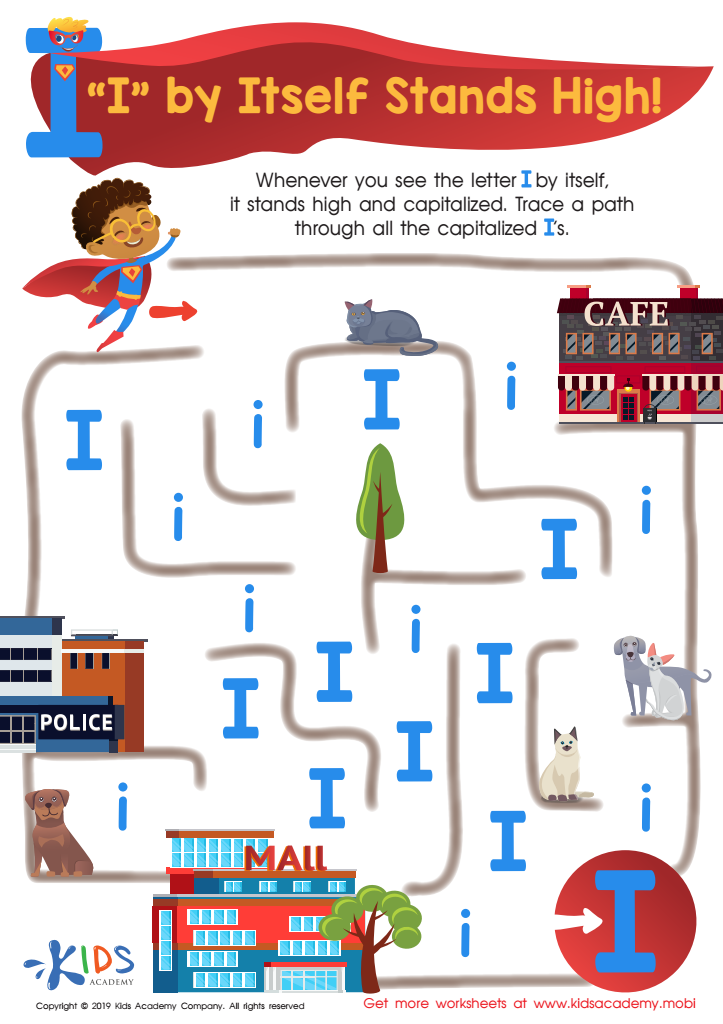
I Stands High Worksheet
 Assign to My Students




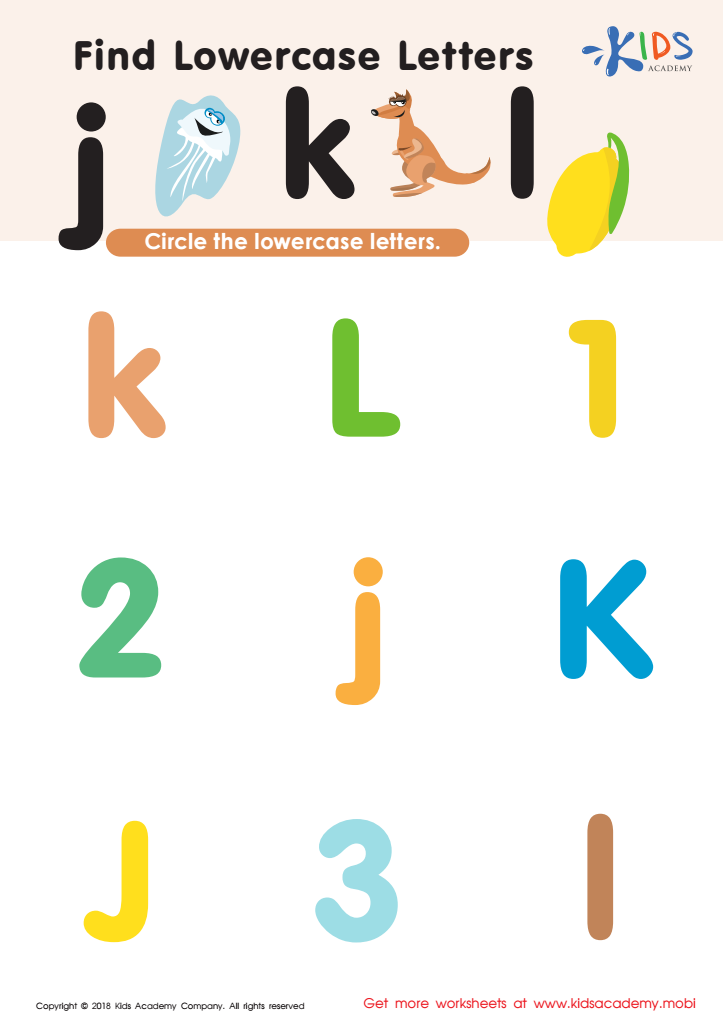
Find Lowercase Letters j k l Worksheet
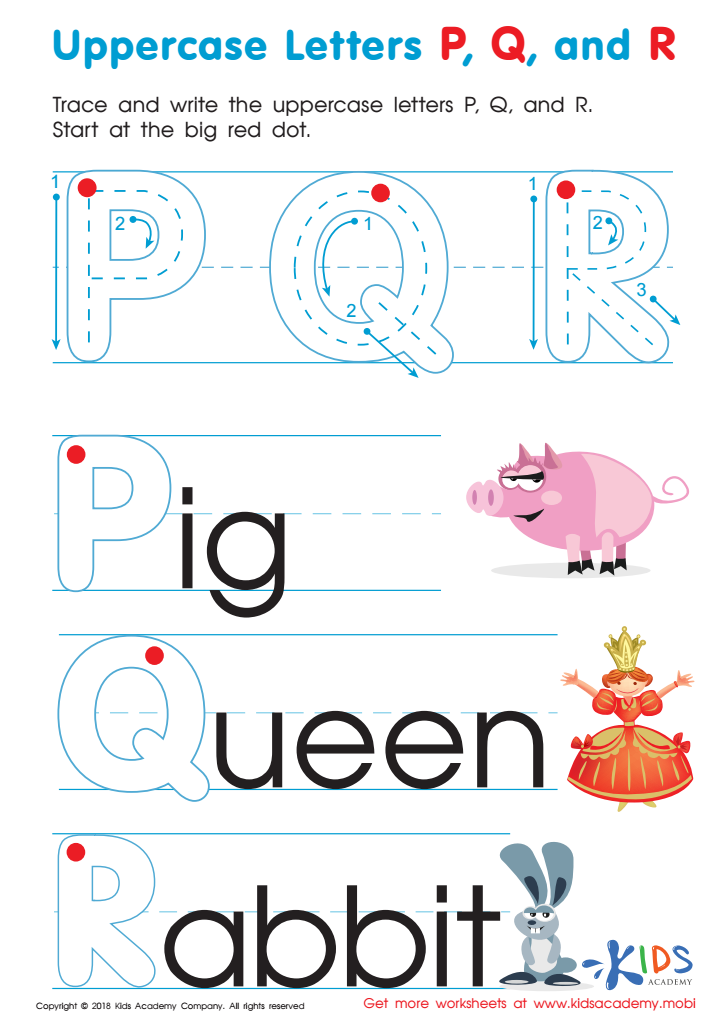
Uppercase Letters P, Q, and R Worksheet






Fine motor skills development is crucial for 6-year-olds, especially regarding their ability to write normal uppercase and lowercase letters. These skills, which involve the small muscles in the hands and fingers, are foundational for various everyday activities, including writing, drawing, and manipulating objects effectively. As children begin to learn letter formation, strong fine motor skills help them produce clear, legible writing, fostering confidence in their academic abilities.
When parents and teachers prioritize fine motor skill development, they are not just supporting handwriting; they are also enhancing overall cognitive and physical development. Mastery in writing letters serves as a building block for other literacy skills, including reading and spelling, which are vital components of education. Effective handwriting lays the groundwork for creating more complex written expressions as children's communication skills evolve.
Furthermore, children with well-developed fine motor skills are less likely to experience frustration while engaging in writing tasks, which can lead to a positive learning atmosphere. With the rise of technology, many children may not engage as much in traditional handwriting practices, making it essential for educators and parents to create opportunities that promote fine motor skill enhancement. This proactive approach better equips 6-year-olds for academic success and lifelong learning.







