Lowercase letter writing Normal Upper & Lowercase Letters Worksheets for 6-Year-Olds
3 filtered results
-
From - To
Unlock your 6-year-old’s potential with our Lowercase Letter Writing Worksheets, designed to make learning both fun and effective. These engaging resources focus on proper lowercase letter formation, ensuring young learners master the building blocks of handwriting while enhancing their reading skills. Each worksheet combines clear, illustrative guides and ample practice space, encouraging neat and consistent writing habits. Suitable for home or classroom use, our printable worksheets support active learning and provide an excellent foundation for continued academic success. Start shaping your child’s literacy journey today with our expertly crafted lowercase letter writing worksheets!
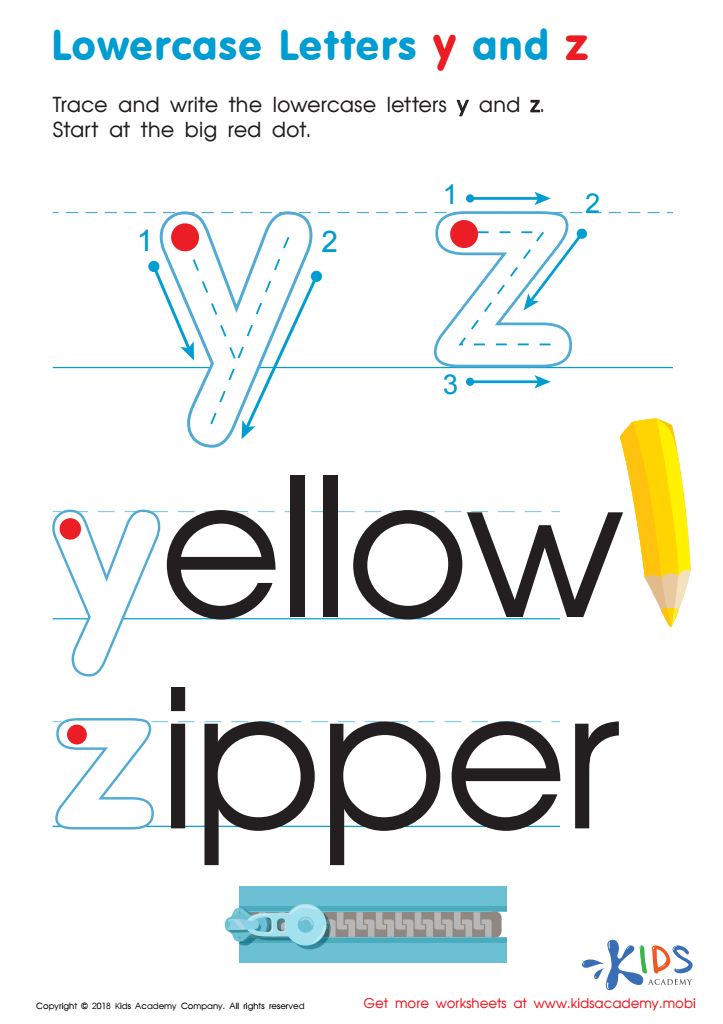
Lowercase Letters y z Worksheet
 Assign to My Students

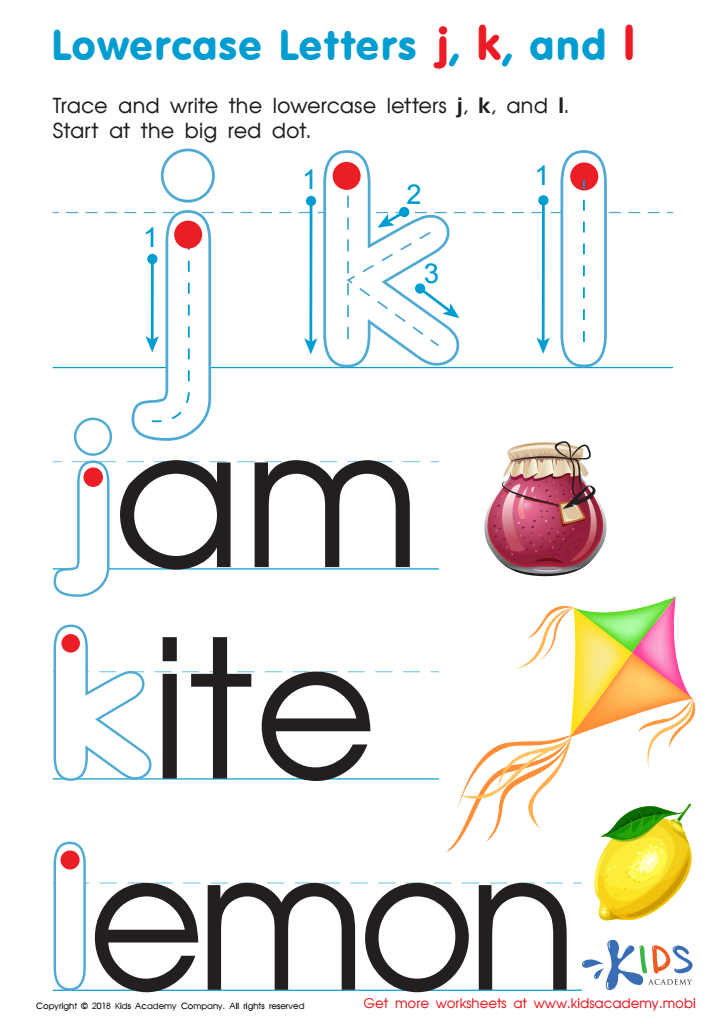
Lowercase Letters j k l Worksheet

Lowercase Letters m n o Worksheet






At around six years old, children are typically in their first years of formal schooling, where foundational skills, including writing, are crucial. Learning to write both lowercase and uppercase letters properly is vital for several reasons:
-
Basic Literacy: Lowercase letters make up about 95% of text in children's books and written communication. Mastery of both cases is essential for reading fluency and comprehension.
-
Developmental Appropriateness: At this age, children's fine motor skills are developing. Practicing writing helps strengthen these skills, promoting better control and precision in their movements.
-
Communication Skills: Proficient writing enables clear written communication. Knowing how and when to use uppercase letters (e.g., at the beginning of sentences, for proper nouns) establishes the foundation of good grammar and professionalism.
-
Self-Expression and Confidence: When children can write clearly and correctly, they feel more confident in their abilities to express their thoughts, leading to a positive attitude towards learning.
-
Educational Milestones: Mastery of basic writing skills aligns with educational standards and prepares children for more complex literacy tasks in subsequent grades.
Investing time in teaching both lowercase and uppercase writing to six-year-olds ensures they build a robust foundation for future academic and personal success.







