Visual discrimination Normal Upper & Lowercase Letters Worksheets for 6-Year-Olds
4 filtered results
-
From - To
Enhance your child's visual discrimination skills with our engaging Upper and Lowercase Letters Worksheets designed specifically for 6-year-olds. These worksheets provide a fun and interactive way for young learners to distinguish between uppercase and lowercase letters. Each activity encourages children to recognize and differentiate letter forms, boosting their reading and writing confidence. Tailored to meet early educational standards, these printable resources promote fine motor skills and cognitive development through colorful illustrations and playful exercises. Download our worksheets today to support your child’s literacy journey and make learning an enjoyable experience! Perfect for home or classroom use.
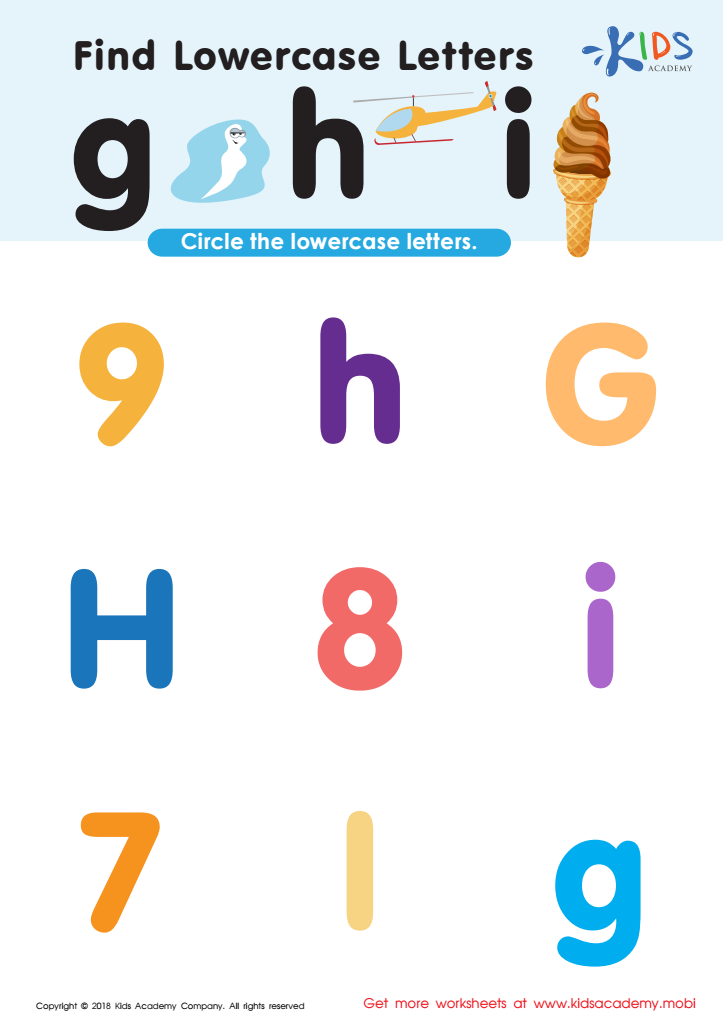
Find Lowercase Letters g h i Worksheet
 Assign to My Students

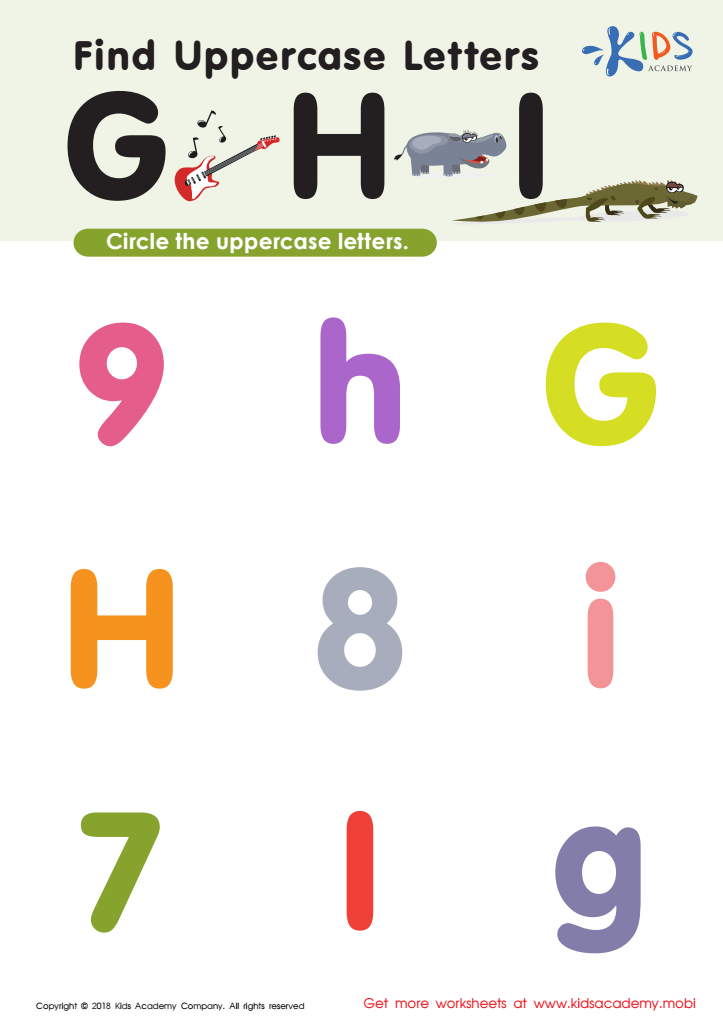
Find Uppercase Letters G, H, and I Worksheet
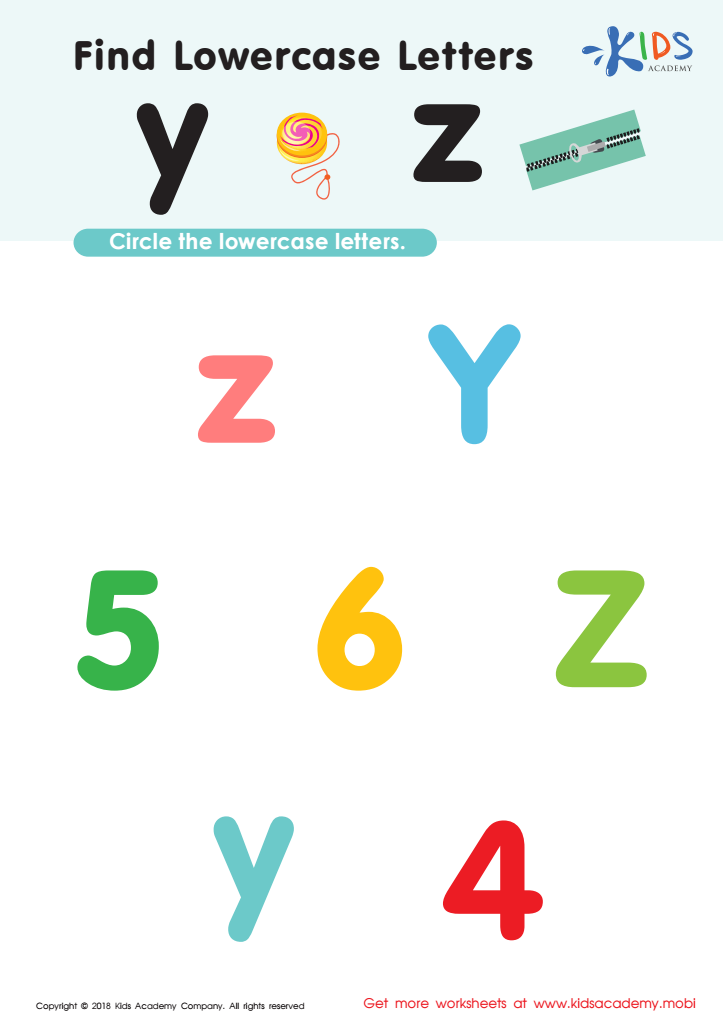
Find Lowercase Letters y z Worksheet
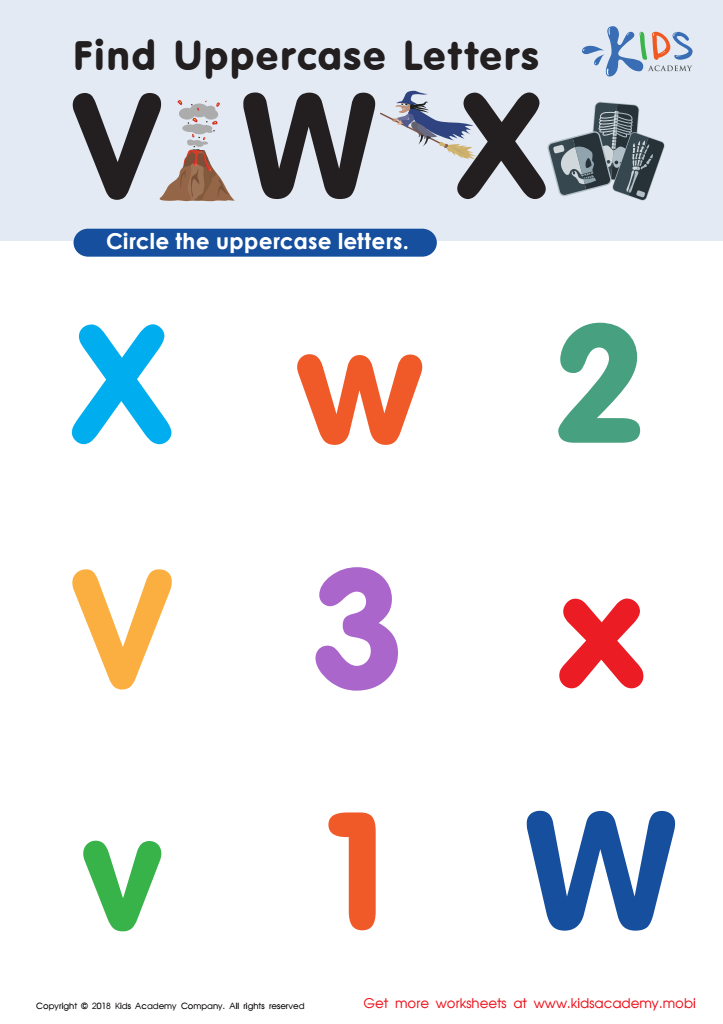
Find Uppercase Letters V, W, X Worksheet






Visual discrimination, the ability to distinguish differences and similarities in visual inputs, is crucial for 6-year-olds as they develop key literacy skills. For parents and teachers, fostering this skill, particularly with uppercase and lowercase letters, is vital for several reasons.
First, children at this age are laying the foundation for reading and writing. Recognizing that "b" is not the same as "d," for example, can prevent common mistakes and build confidence in their literacy abilities. Strong visual discrimination helps kids understand letter formation and improves spelling, which ultimately impacts their overall literacy.
Furthermore, visual discrimination contributes to students’ ability to decode words quickly. When children can easily differentiate between similar-looking letters, they can concentrate on understanding the meaning of words rather than getting stuck on their appearance.
Encouraging the development of this skill also enhances children’s overall cognitive functioning. It promotes critical thinking as they learn to compare and contrast visual information, which is important not only in literacy but also in other subjects.
In summary, prioritizing visual discrimination of letters will empower young learners, making reading and writing an enjoyable process, while equipping them with fundamental skills for academic success.







