Understanding light sources Normal Science Worksheets for 6-Year-Olds
3 filtered results
-
From - To
Explore the fascinating world of light sources with our "Understanding Light Sources" Normal Science Worksheets designed specifically for 6-year-olds! These engaging worksheets provide young learners with fun activities to differentiate between natural and artificial light sources, enhancing their curiosity about the environment. Filled with colorful illustrations and interactive tasks, children will identify everyday examples of light sources like the sun, lamps, and stars. Perfect for supporting literacy and critical thinking, these worksheets make it easy for teachers and parents to foster a love for science while building essential skills. Download and spark your child’s interest in scientific exploration today!
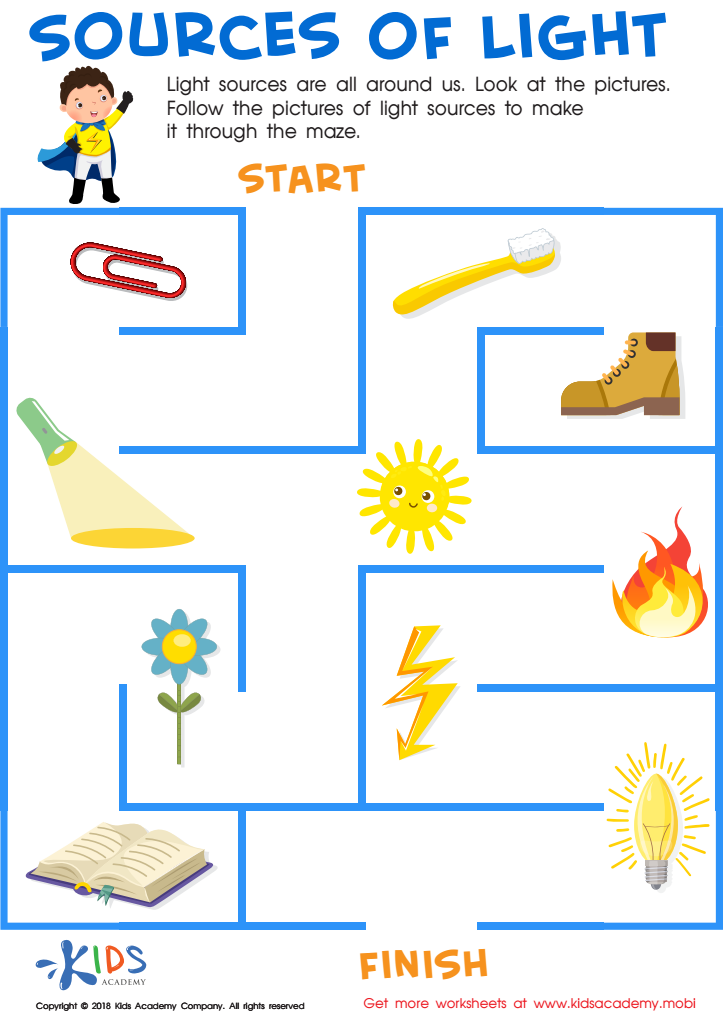
Sources of Light Worksheet
 Assign to My Students
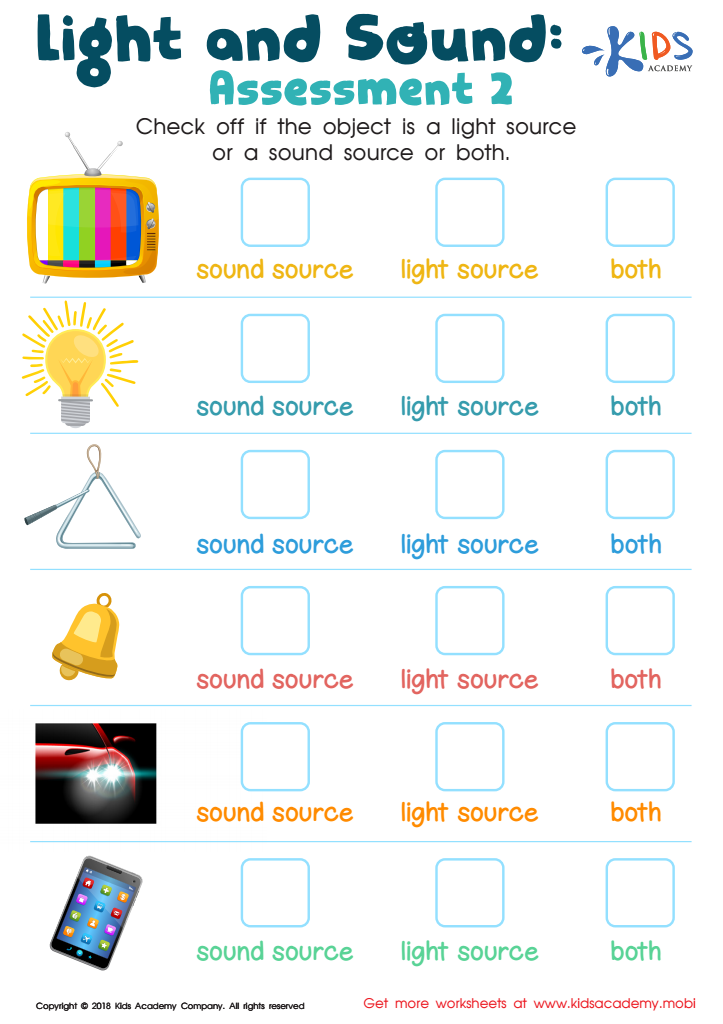
Light and Sound: Assessment 2 Worksheet
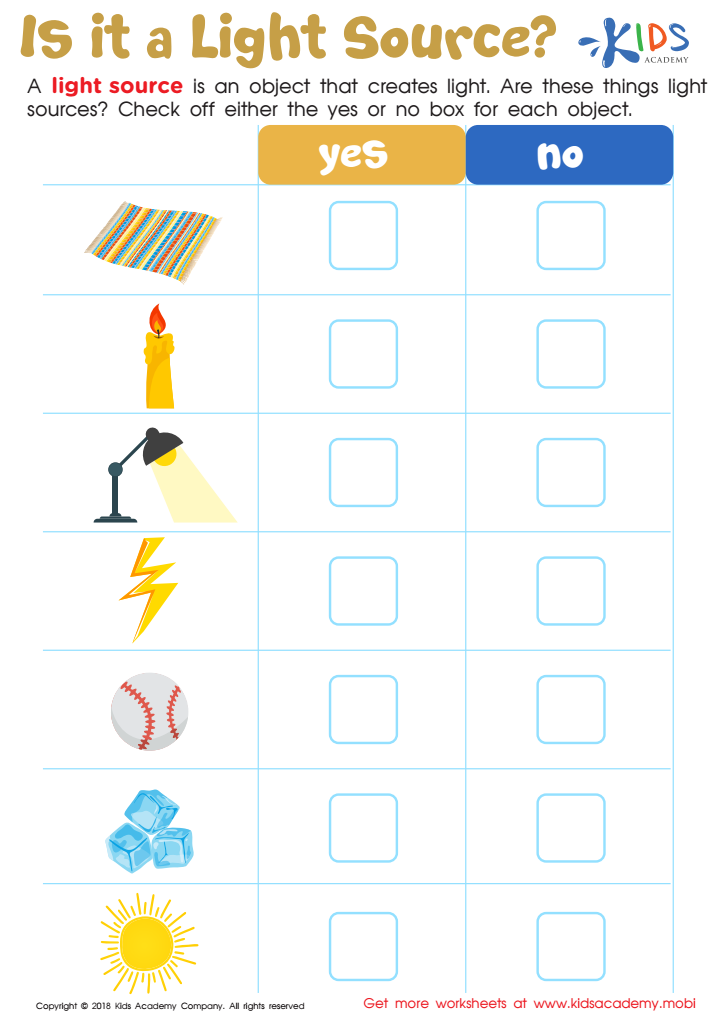
Is It a Light Source? Worksheet








Understanding light sources is crucial for 6-year-olds as it lays the foundation for their scientific curiosity and daily experiences. At this age, children are naturally curious about how the world works. By learning about different sources of light, such as the sun, light bulbs, and even fireflies, they begin to grasp essential concepts about observation and energy.
Teachers and parents play a vital role in nurturing this interest. Engaging children in hands-on activities, like exploring shadows or creating simple fixed and movable light sources, allows them to make connections between what they see and the underlying science. This practical understanding not only fosters critical thinking but also enhances vocabulary and communication skills as they discuss their observations.
Additionally, understanding light sources paves the way for learning other scientific principles, such as reflection, refraction, and color. It teaches them about safety (like not looking directly at the sun) and encourages an appreciation for the environment. Knowledge of light can even inspire creativity in art and storytelling, making it a valuable interdisciplinary topic. By introducing these concepts early on, parents and teachers cultivate a lifelong love for learning and exploration, empowering children to observe and understand the world around them.







