Vocabulary enhancement Normal Physical Science Worksheets for 6-Year-Olds
4 filtered results
-
From - To
Our "Vocabulary Enhancement Physical Science Worksheets for 6-Year-Olds" at Kids Academy are perfect for young learners diving into the fascinating world of physical science. These engaging, printable worksheets not only introduce basic physical science concepts but also boost reading and comprehension through vocabulary-building activities. Designed by educators with a keen understanding of early learning, each worksheet combines science facts with interactive exercises that make word retention fun and effective. Tailored for curious 6-year-olds, these worksheets nurture a love for science while enhancing essential language skills, setting a strong foundation for future learning. Discover new scientific terms together and spark curiosity today!
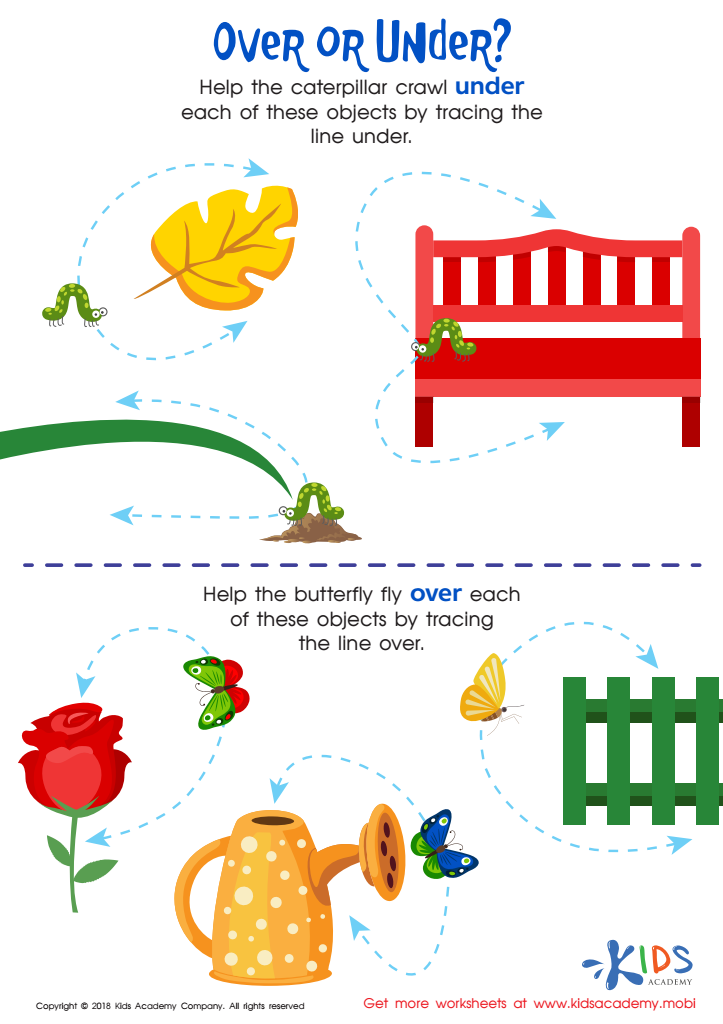
Over or Under? Worksheet
 Assign to My Students
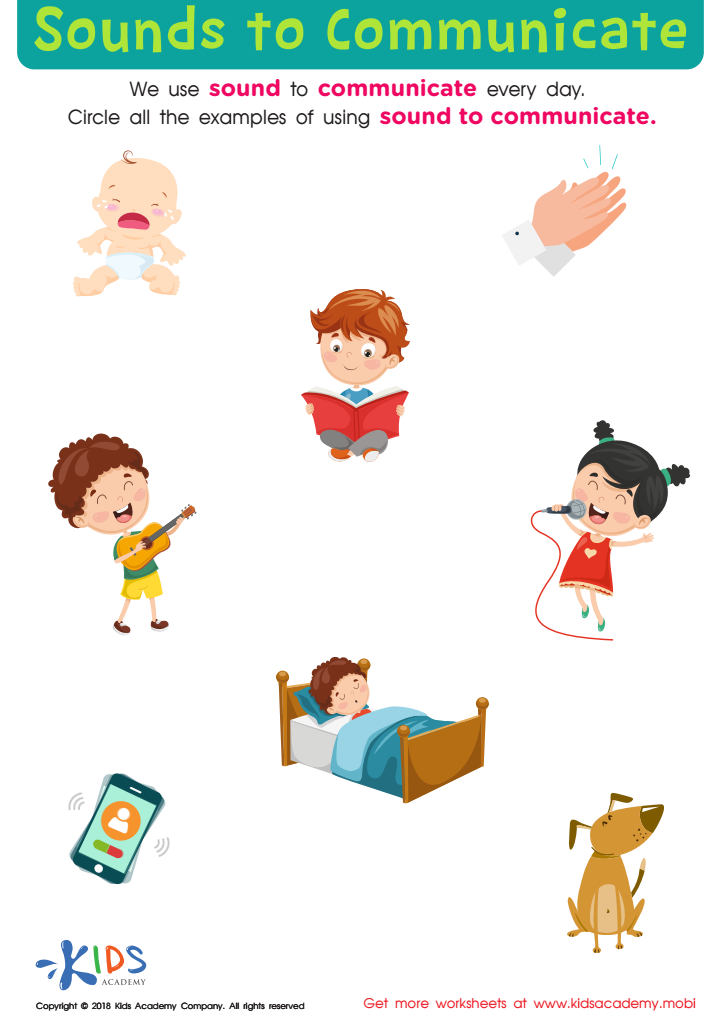
Sounds to Communicate Worksheet
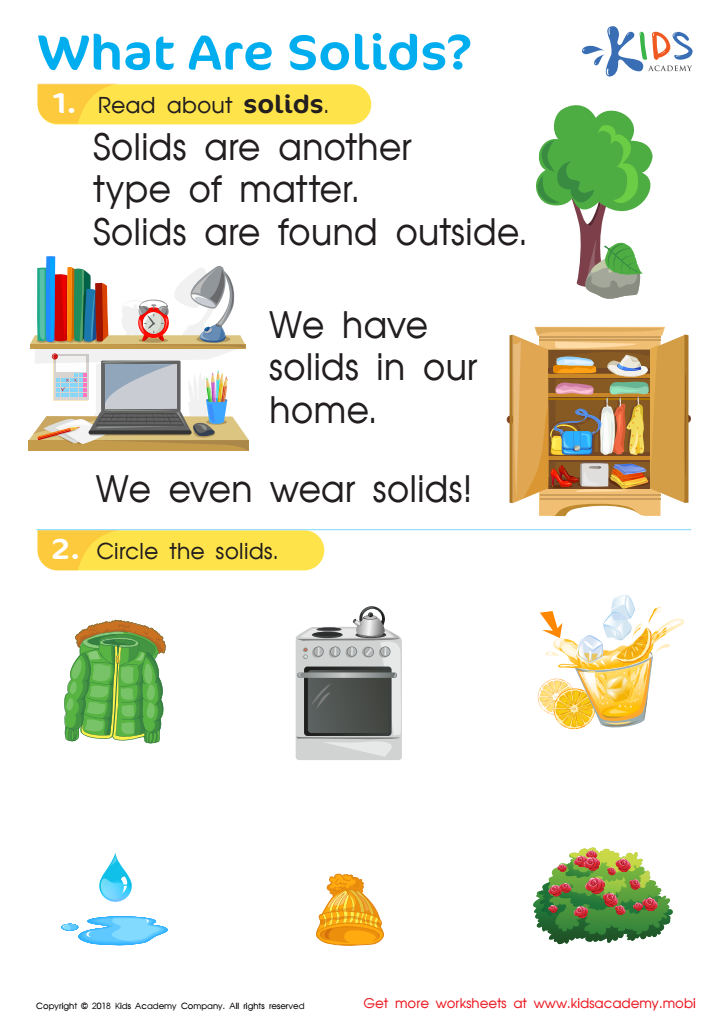
What Are Solids? Worksheet
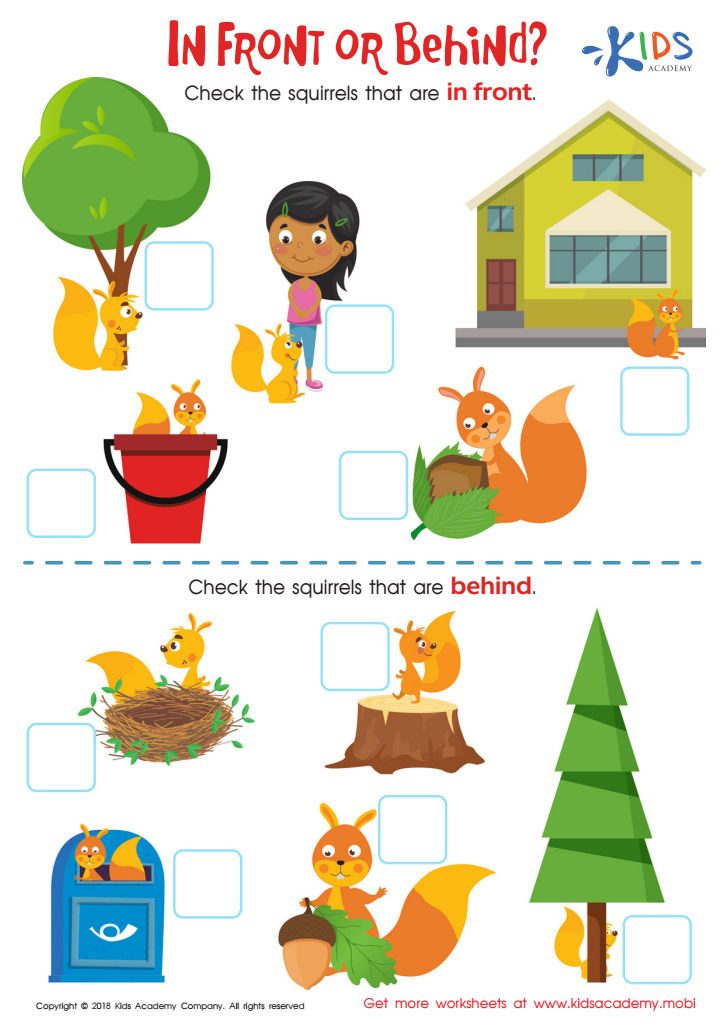
In Front or Behind: Part 2 Worksheet






.jpg)

Enhancing vocabulary in normal physical science for 6-year-olds is crucial for several reasons. First, a robust vocabulary forms the foundation of early literacy skills. When children comprehend and accurately use scientific terms, they foster cognitive development and language skills simultaneously. This foundational vocabulary aids in reading comprehension, critical thinking, and effective communication, all essential skills for academic success and daily life.
Second, an enriched scientific vocabulary sparks curiosity and enthusiasm for learning. When children are familiar with terms like "evaporation," "gravity," or "habitat," they can engage more deeply with the material, asking questions and forming connections between new and existing knowledge. This engagement accelerates their understanding and interest in science, fostering a lifelong love for learning.
Moreover, early science education promotes problem-solving and analytical thinking. When children comprehend vocabulary correctly, they can more effectively understand and follow scientific methods and experiments, fundamental components of the subject. These skills extend beyond science, benefit broader academic purposes, and equip children with a systematic approach to problem-solving applicable in diverse scenarios.
Lastly, vocabulary enhancement at a young age prepares children for future educational endeavors. A strong scientific lexicon offers a smoother transition into more complex topics in later grades, ensuring they have a solid grounding from which to expand their knowledge and explore deeper concepts with confidence.
By valuing vocabulary enhancement in physical science for young children, parents and teachers lay the groundwork for not just academic excellence but also a well-rounded, critical mindset essential for lifelong learning and curiosity about the world.







