Vowel Recognition Normal ABC Letters Worksheets for Ages 7-8
3 filtered results
-
From - To
Introduce your child to the essential skill of vowel recognition with our "Normal ABC Letters Worksheets for Ages 7-8." These engaging worksheets focus on identifying and understanding vowels, which are crucial for developing reading and writing proficiency. Designed for children aged 7-8, our printable activities incorporate fun and educational exercises that keep young learners motivated. With colorful illustrations and variety in tasks, these worksheets help reinforce vowel sounds within a captivating context. Perfect for classroom or at-home practice, our worksheets enhance alphabet knowledge and build a strong foundation for literacy. Help your child master vowels with these enjoyable and effective learning tools!
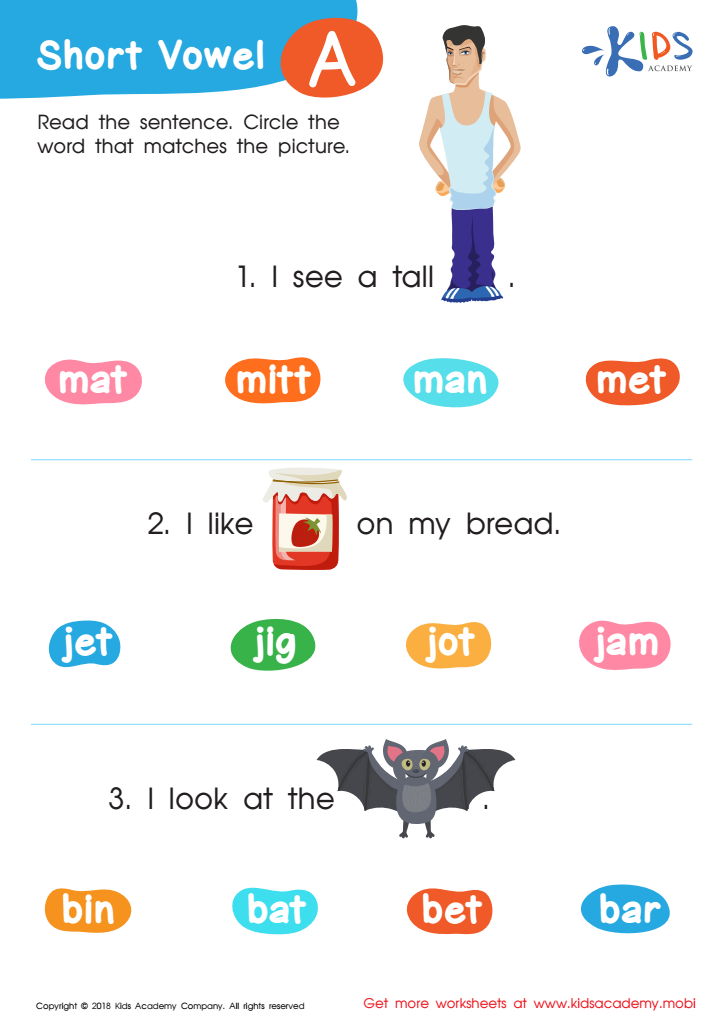
Short Vowel /a/ Worksheet
 Assign to My Students






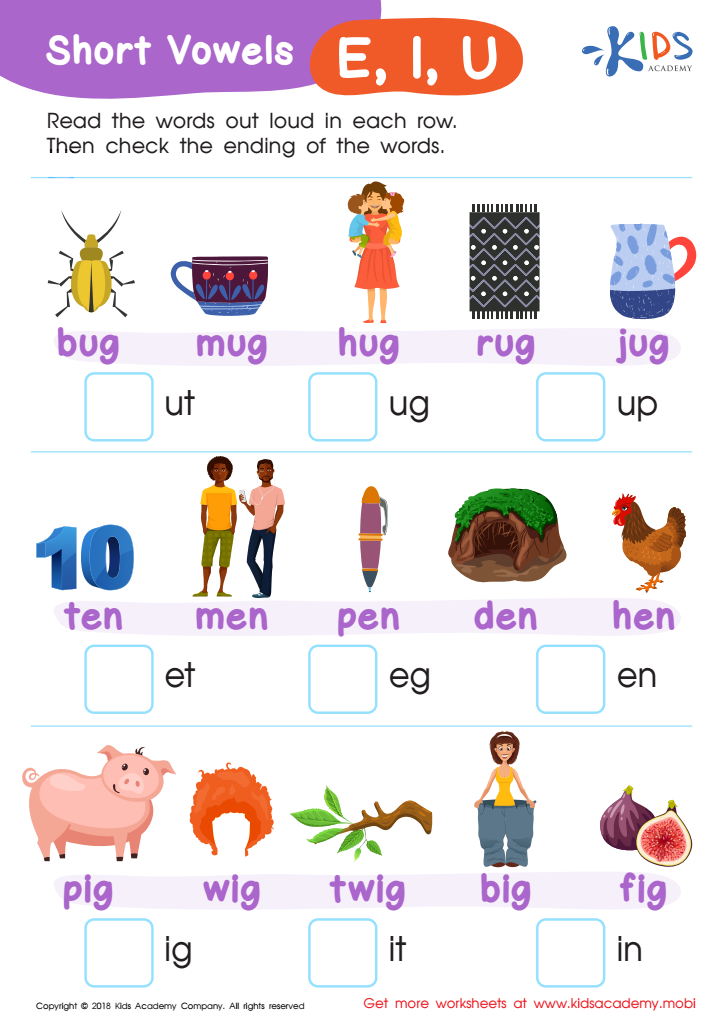
Short Vowels /e/, /i/, and /u/ Worksheet
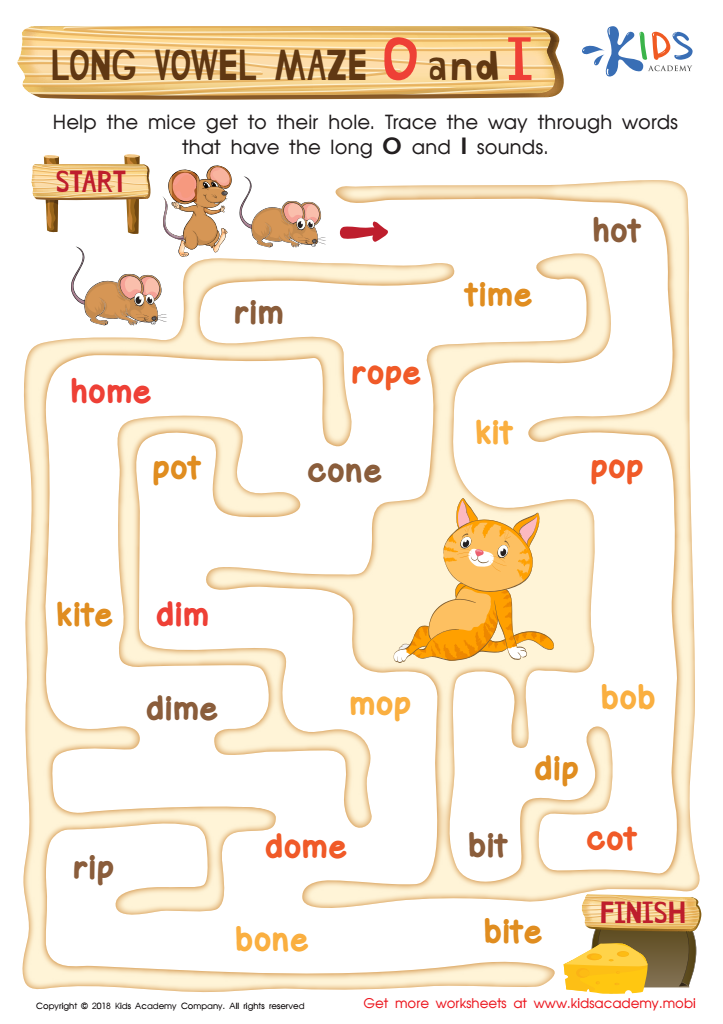
Long Vowel Maze /o/ and /i/ Worksheet








Vowel recognition and understanding normal ABC letters is crucial for children aged 7-8 as it forms the foundation for reading and writing proficiency, pivotal skills for their educational development. At this stage, children transition from learning to read to reading to learn. Mastering vowel sounds helps them decode words, enhancing their fluency, accuracy, and comprehension. When children recognize vowels within words, they become better at sounding out unfamiliar words, which boosts their confidence and encourages a love for reading.
Additionally, knowledge of normal ABC letters and vowels plays a significant role in their ability to spell accurately. Familiarity with vowel sounds aids in distinguishing between similarly spelled words, ensuring that children can communicate effectively in writing. This foundational skill contributes to overall literacy, enabling children to engage more deeply with the curriculum across all subjects.
From a cognitive perspective, recognizing letters and vowels enhances phonological awareness, a critical early learning skill linked to later academic success. Engaging with vowels through playful activities ensures learning remains fun, fostering a positive attitude towards education. Parents and teachers need to prioritize vowel recognition to support children's ongoing literacy development, setting them up for lifelong learning and achievement.







