
Sight word recognition Normal Alphabet Worksheets for Ages 7-8
4 filtered results
Difficulty Level
Grade
Age
-
From - To
Subject
Activity
Standards
Enhance your child's reading skills with our Sight Word Recognition Normal Alphabet Worksheets designed for ages 7-8. These engaging and interactive worksheets focus on helping young learners recognize and understand sight words crucial for fluent reading. Each worksheet is tailored to reinforce alphabet recognition and word association, making it easier for children to grasp essential reading concepts. Our materials promote independent learning and build confidence in literacy, providing a fun and effective way to practice. Perfect for home or classroom use, these worksheets make sight word practice enjoyable, ensuring your child is well-prepared for future reading success. Unlock their potential today!
Favorites
With answer key
Interactive
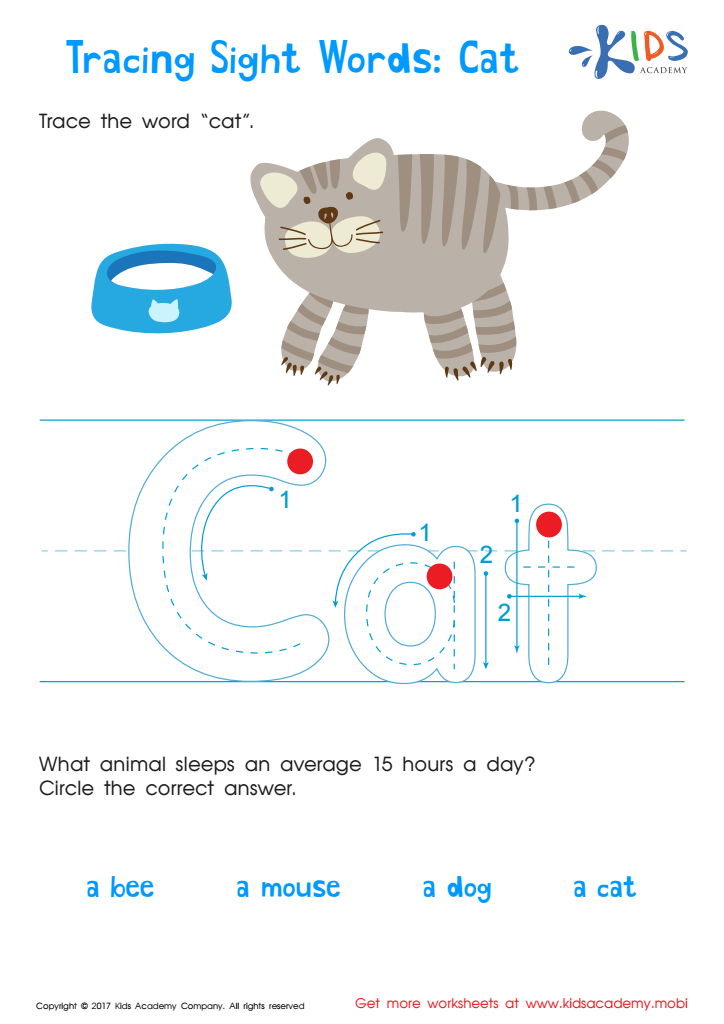
Cat Printable Sight Words Worksheet
Encourage your child's literacy with this fun sight words worksheet: cat PDF! It helps build a solid foundation for reading, featuring activities such as reading and tracing the word cat, and finding it amongst other sight words. With its cute cat, Kids Academy makes learning to read a delight!
 Assign to My Students
Cat Printable Sight Words Worksheet
Worksheet
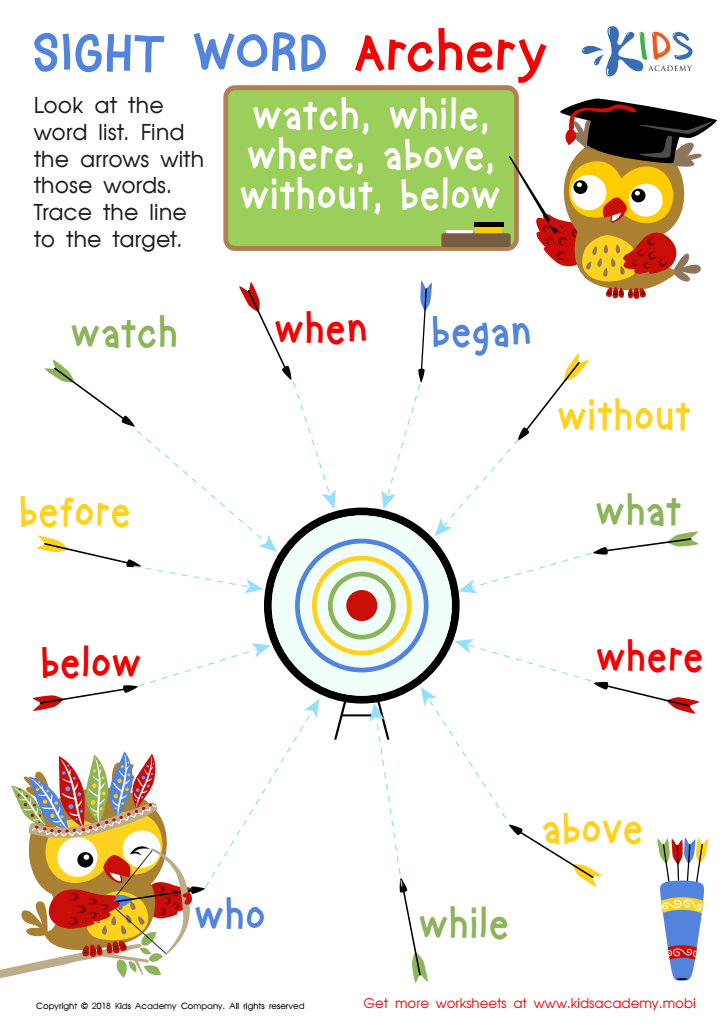
Sight Word Archery Worksheet
Read the words list with your kids, pointing at each one. Ask them to do the same. Help them find the arrows with those words and trace the line to the target in the centre.
Sight Word Archery Worksheet
Worksheet
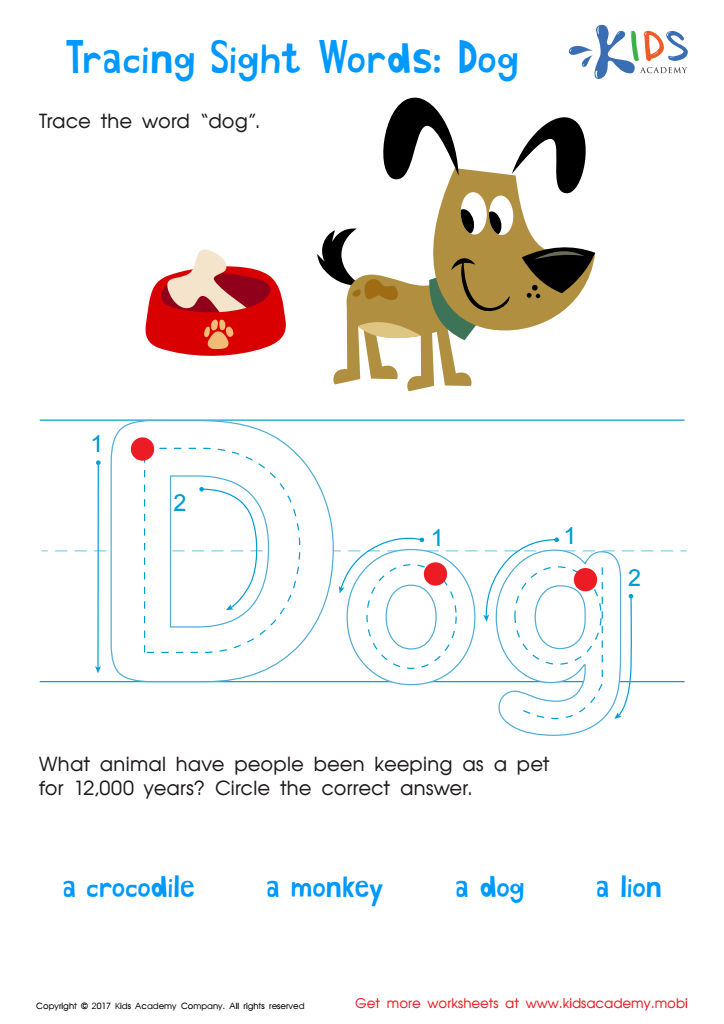
Dog Worksheet Sight Words Worksheet
Get your kids excited to read with our dog-themed sight words worksheet!
Excite your child to read with our sight words worksheet: dog edition! Featuring a lovable dog character to put a smile on any kid's face, this worksheet helps kids practice reading and writing the word "dog". Build a library of words they can read quickly and promote increasing literacy skills with early fluency! Get them ready for reading with our dog-themed sight words worksheet!
Dog Worksheet Sight Words Worksheet
Worksheet
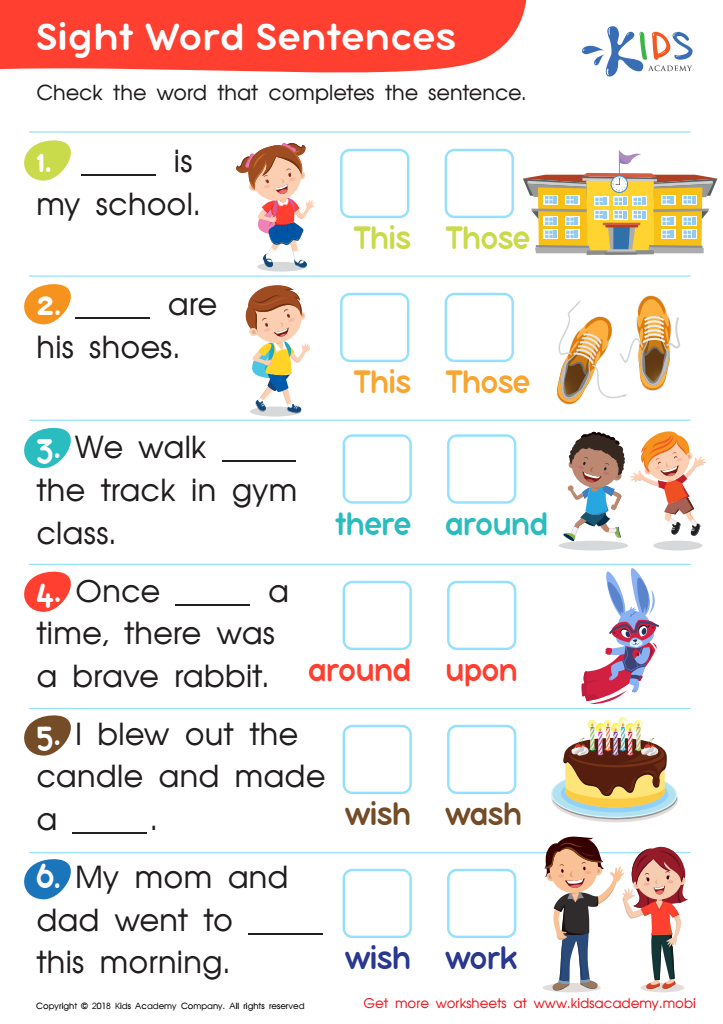
Sight Word Sentences Worksheet
Improve reading fluency! Have students fill in the blank with the correct sight word to complete sentences. Sight words are often tricky to decode - they don't follow phonics or spelling rules. To read smoothly, young learners must know them by memory. Use this printable and help kids master their sight words!
Sight Word Sentences Worksheet
Worksheet
Join Kids Academy for Free
Who is primarily going to use this learning content?







Sight word recognition is crucial for children aged 7-8 as it significantly influences their reading fluency and overall literacy development. At this age, children transition from learning to read to reading to learn, making the ability to quickly recognize common words essential. Sight words often constitute a large percentage of the text children encounter, so proficiency in these words allows for smoother reading experiences. This, in turn, builds their confidence and encourages a love for reading.
When children effortlessly recognize sight words, they can focus on comprehension, critical thinking, and engaging with more complex texts. This is particularly important for academic success across all subjects, as effective reading strategies bolster learning.
Teachers and parents play a pivotal role in promoting sight word recognition by providing targeted activities and resources to support practice. Consistent exposure to normal alphabet letters and sight words through engaging games, reading sessions, and reinforcement can enhance children’s vocabulary and contribute to a strong foundation in literacy. Ultimately, fostering sight word recognition in children not only enriches their reading skills but also lays the groundwork for future academic achievement and effective communication skills, making it a priority for educators and families alike.







