Phonics practice Normal Letter Recognition Worksheets for Ages 7-8
3 filtered results
-
From - To
Boost your child's literacy skills with our Phonics Practice Normal Letter Recognition Worksheets designed for ages 7-8. These engaging and educational worksheets from Kids Academy help young learners master the alphabet, enhance phonemic awareness, and improve reading fluency. Each worksheet focuses on recognizing and pronouncing letters through fun activities, such as matching exercises, tracing, and coloring. Perfect for reinforcing classroom learning at home, our expertly crafted sheets ensure students build a solid foundation in early literacy. Unlock your child’s reading potential today with Kids Academy’s comprehensive phonics practice resources. Explore and download now from our extensive collection!
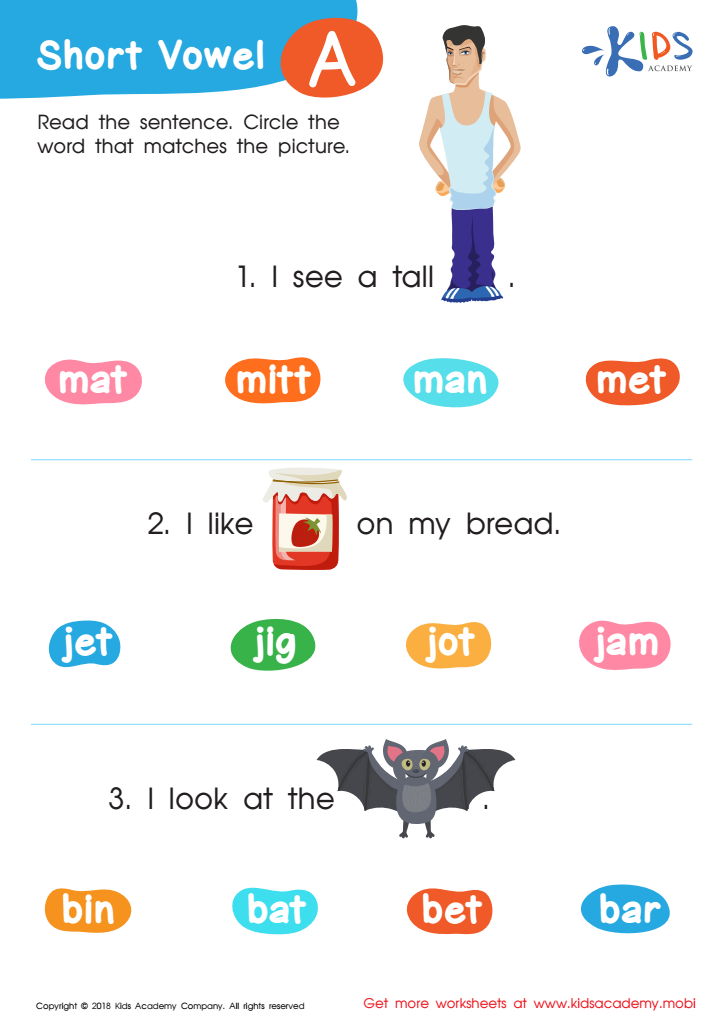
Short Vowel /a/ Worksheet
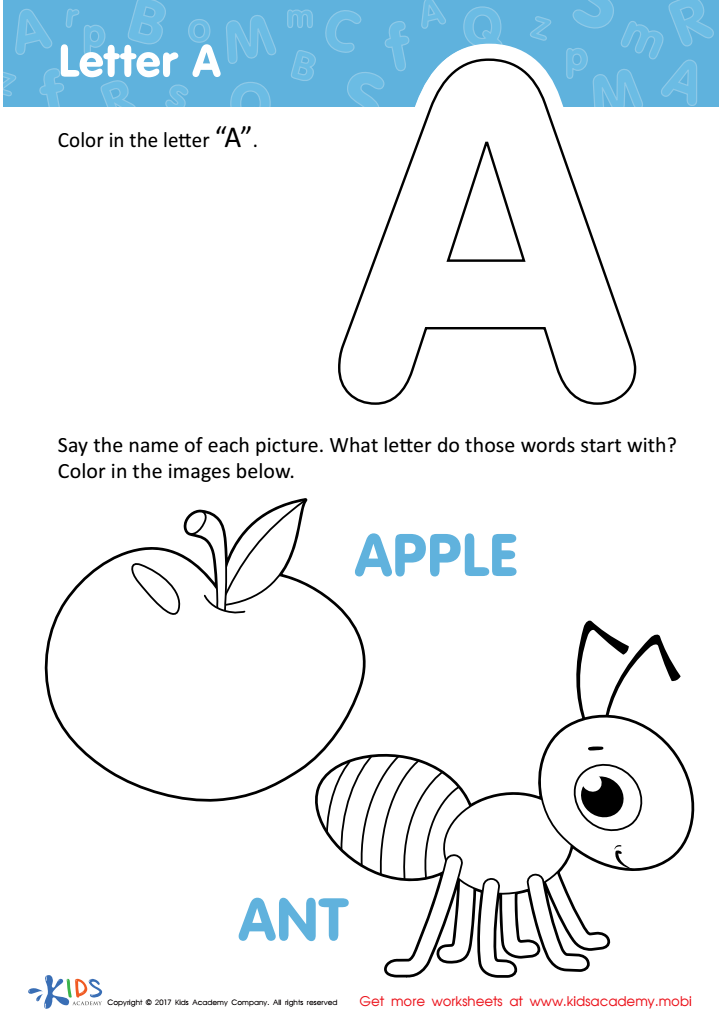
Letter A Coloring Sheet
 Assign to My Students
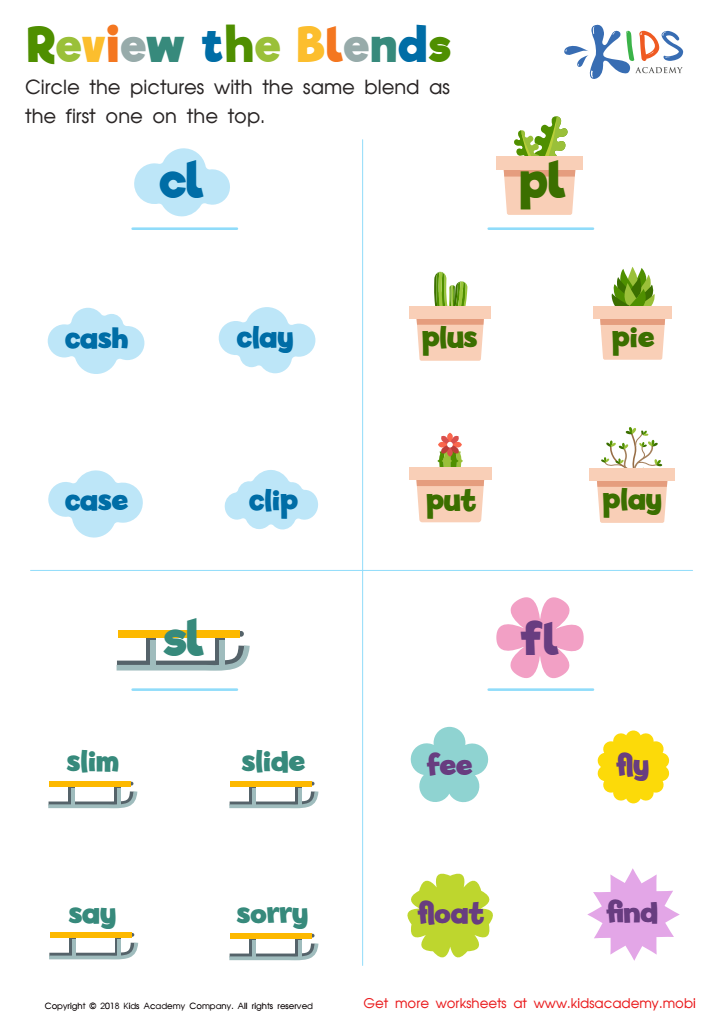
Review the Blends Worksheet








Phonics practice and normal letter recognition are critical educational pillars for children aged 7-8. At this formative stage, children transition from ‘learning to read’ to ‘reading to learn,’ which significantly impacts their academic progress and future literacy. Robust phonics practice ensures that children can decode words efficiently and accurately, enabling them to tackle new or difficult words with greater confidence.
Recognizing letters and understanding their associated sounds is fundamentally essential. This foundational skill helps in improving reading fluency and comprehension. When children are adept at recognizing letters, they can better differentiate between various sounds and letter patterns, expanding their vocabulary and fostering a more meaningful engagement with texts.
Moreover, proficient letter recognition forms the basis for spelling and writing skills. It allows children to effectively encode and decode information, an essential part of developing strong communication skills. For parents and teachers, emphasizing phonics and letter recognition means providing kids with tools for independent learning, which cultivates critical thinking and problem-solving abilities. Additionally, the sense of achievement children experience as they make progress can significantly boost their confidence and love for reading, setting them on a successful educational trajectory and ensuring they are well-equipped for more complex concepts in the future.








