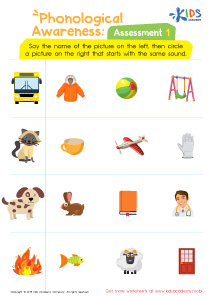
Phonics practice Normal Vowels and Consonants Worksheets for Ages 7-8
3 filtered results
-
From - To
Enhance your child's reading foundation with our Phonics Practice Normal Vowels and Consonants Worksheets for ages 7-8. These engaging and educational worksheets focus on reinforcing the fundamental concepts of vowels and consonants, aiding in the development of essential phonics skills. Perfect for young learners, these printable resources help children recognize, pronounce, and blend sounds effectively. By incorporating fun activities and exercises, these worksheets make learning phonics enjoyable and effective, paving the way for confident reading and spelling abilities. Boost your child's literacy skills with our expertly designed phonics practice worksheets today!
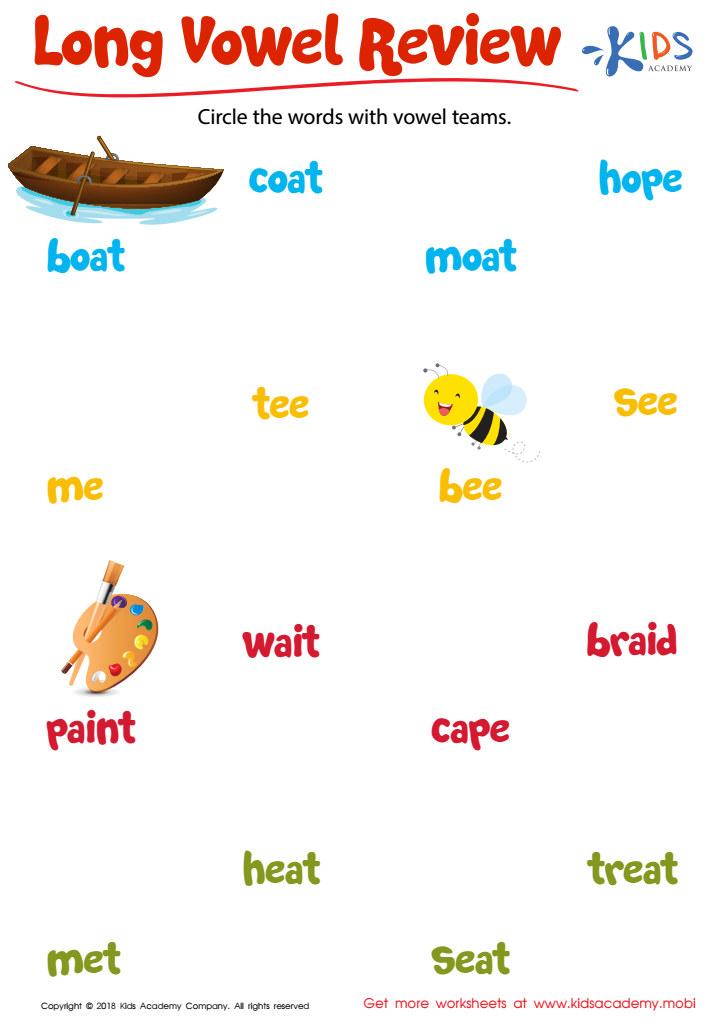
Long Vowel Review Worksheet
 Assign to My Students
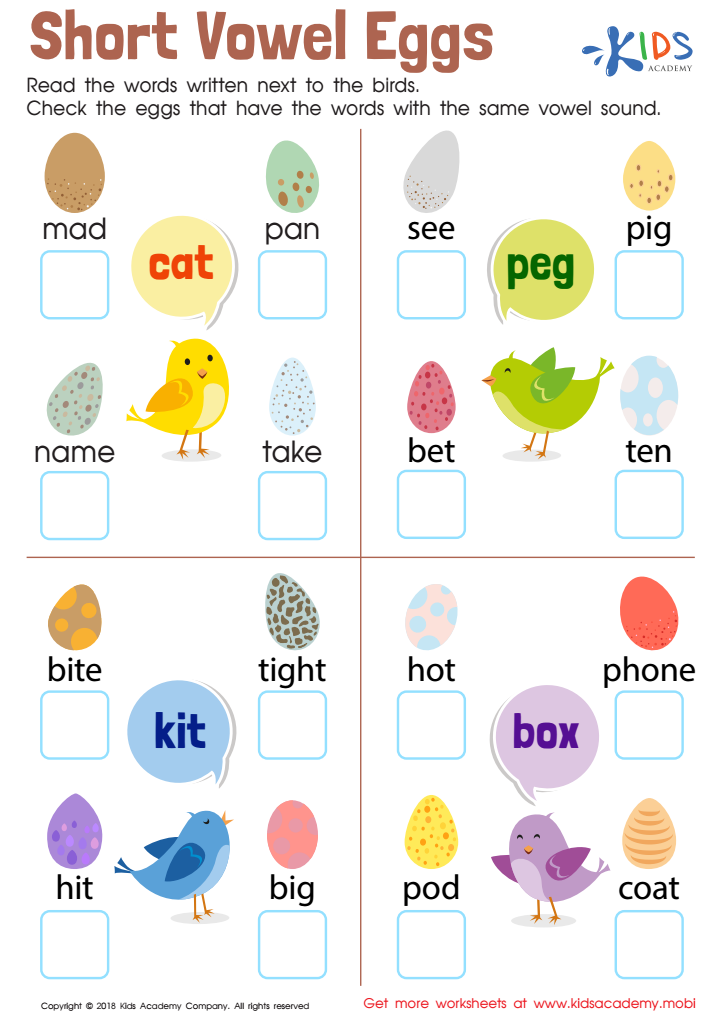
Short Vowel Eggs Worksheet
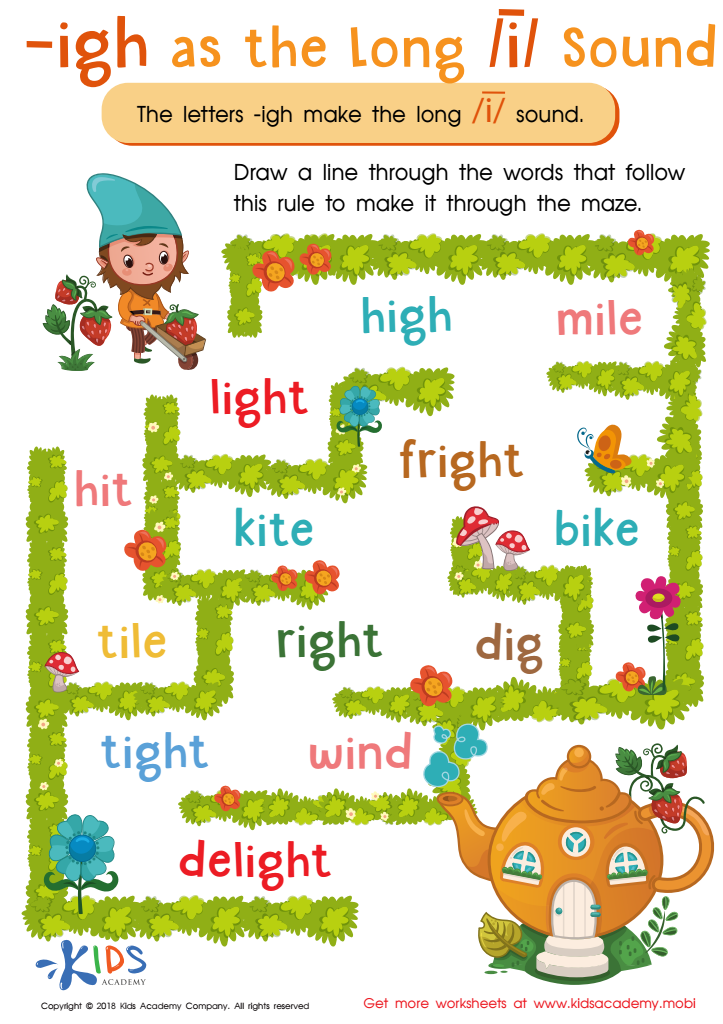
Reading: IGH as Long I Worksheet



Phonics practice focusing on normal vowels and consonants is crucial for children ages 7-8 because it serves as the foundation for successful reading and writing. At this developmental stage, children transition from recognizing letters and sounds to blending them into words, which enhances their literacy skills. Understanding how vowels and consonants work together allows children to decode new words independently, thereby improving their reading fluency.
Moreover, this age group is at a critical period for phonemic awareness, which is the ability to hear, identify, and manipulate phonemes. Strong phonemic skills enable children to recognize familiar patterns in language, facilitating their spelling abilities. By practicing phonics, children learn to distinguish slight differences in sound, which is essential for accurate pronunciation and comprehension.
For parents and teachers, investing time in phonics practice can reduce future reading difficulties, increasing overall academic achievement. Early success in reading fosters a positive attitude toward learning, boosts confidence, and encourages a lifelong love of reading. Additionally, consistent phonics practice supports language development by enriching vocabulary and enhancing listening skills. Therefore, prioritizing phonics practice for normal vowels and consonants sets the stage for a robust educational foundation that benefits children's long-term literacy and communication abilities.