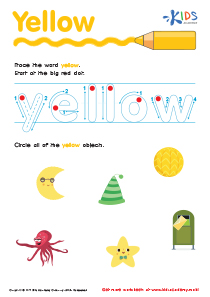
Motor skills development Normal English for Beginners Worksheets for Ages 7-8
3 filtered results
-
From - To
Enhance your child's motor skills development with our comprehensive Normal English for Beginners Worksheets designed for ages 7-8. Our engaging activities are crafted to improve hand-eye coordination, fine motor skills, and overall dexterity, essential for writing and daily tasks. These printable worksheets blend learning with fun, making them ideal for young learners. Suitable for both classroom and home use, each worksheet focuses on practical exercises tailored to beginner English speakers. Foster your child's growth and confidence with Kids Academy's expertly developed resources. Elevate their skills effortlessly while making learning an enjoyable journey.
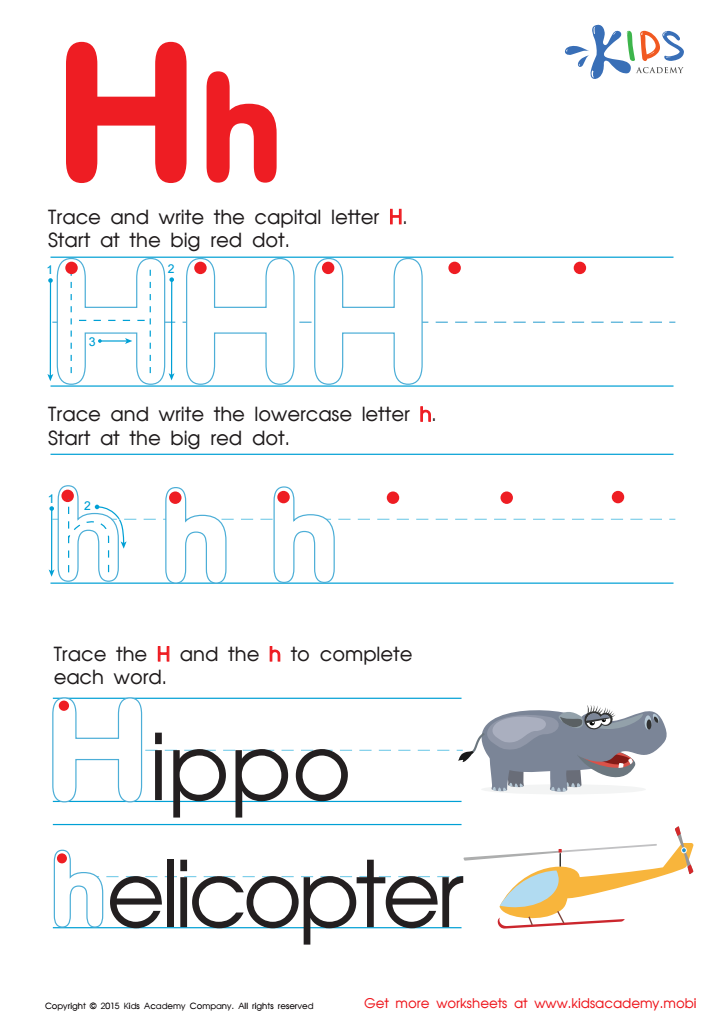
Letter H Tracing Page
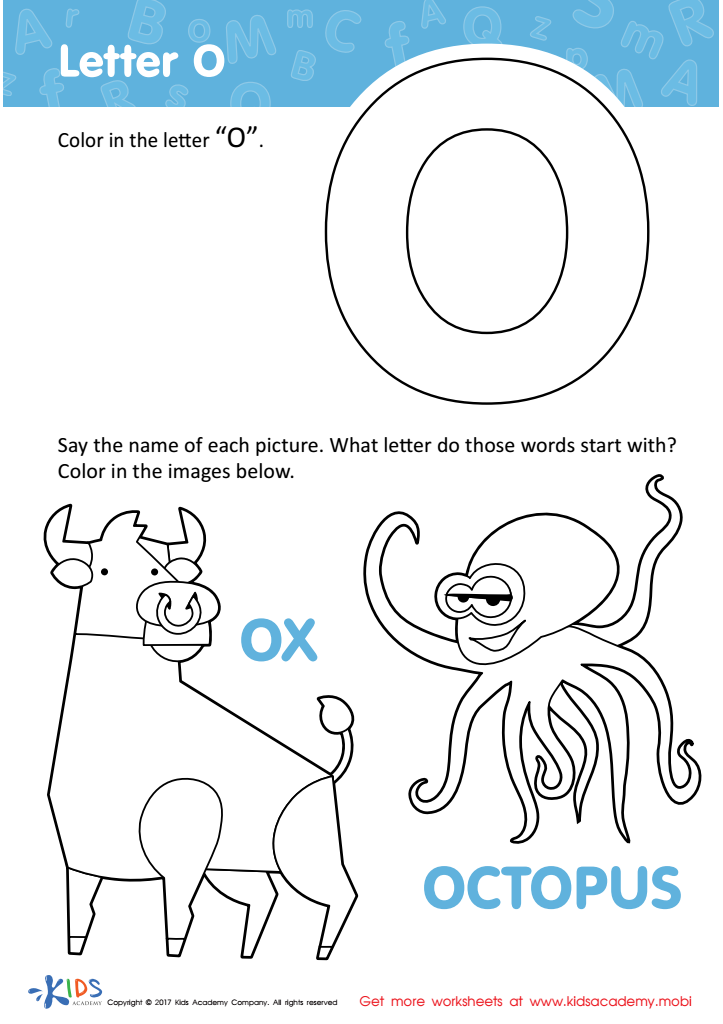
Letter O Coloring Sheet
 Assign to My Students
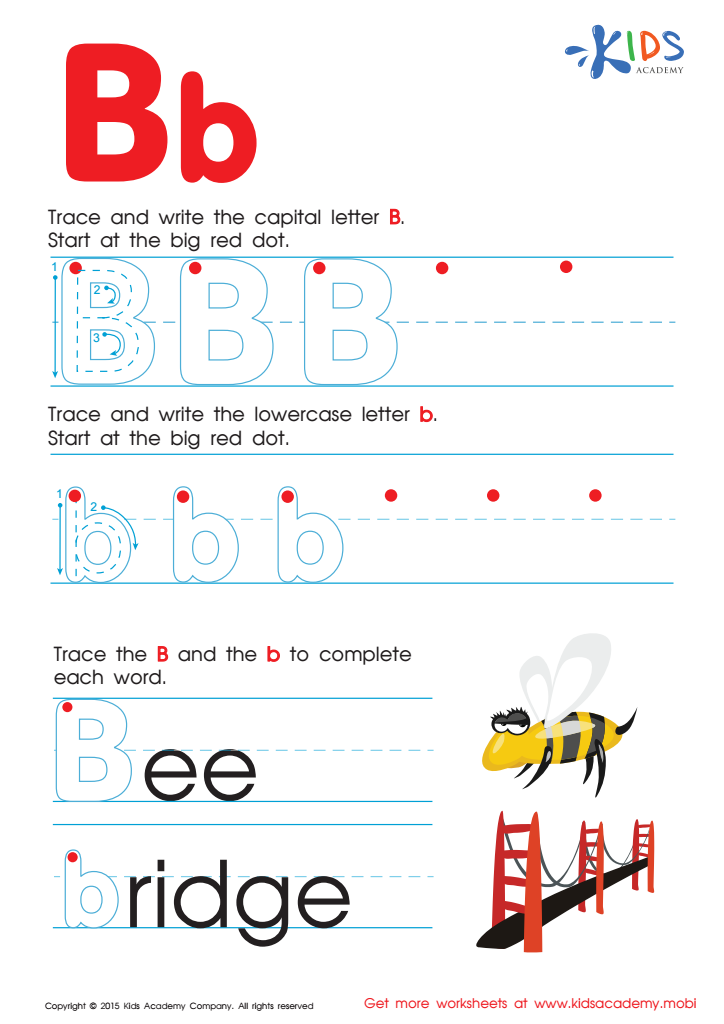
Letter B Tracing Page




Motor skills development is key for kids aged 7-8 because it forms the foundation for many daily activities and helps them grow healthily and effectively. There are two types of motor skills: fine motor skills, which involve small movements (like using a pencil or buttoning a shirt), and gross motor skills, which involve larger movements (like running or jumping).
Parents and teachers should care about these skills because they are vital for a child's independence and academic success. For instance, neat handwriting requires good fine motor skills, which are used in almost all school tasks, from drawing to writing assignments. Improving these skills can prevent children from feeling frustrated or falling behind in school.
Moreover, gross motor skills are just as important. Activities like playing sports, riding a bike, or even balancing on one foot not only keep children fit but also boost their confidence and social interactions. Kids who struggle with these skills might avoid playtime with friends, which can affect their social development.
Encouraging motor skills development helps children build strong muscles, improves coordination, and enhances their ability to concentrate. So, focusing on these skills through fun activities and exercises can make a big difference in a child's overall development.