Moral lesson understanding Normal Building Vocabulary Worksheets for Ages 7-8
3 filtered results
-
From - To
Enhance your child's vocabulary and moral understanding with our "Moral Lesson Understanding Normal Building Vocabulary Worksheets" designed specifically for ages 7-8. These engaging worksheets blend language development with valuable life lessons, fostering critical thinking and empathy in young learners. By exploring themes of honesty, kindness, and respect through fun exercises, children not only expand their word bank but also learn the importance of positive values in everyday situations. Each worksheet is tailored to match their developmental stage, ensuring an enjoyable and educational experience. Equip your child with the skills to express themselves effectively while embracing the teachings of moral integrity.
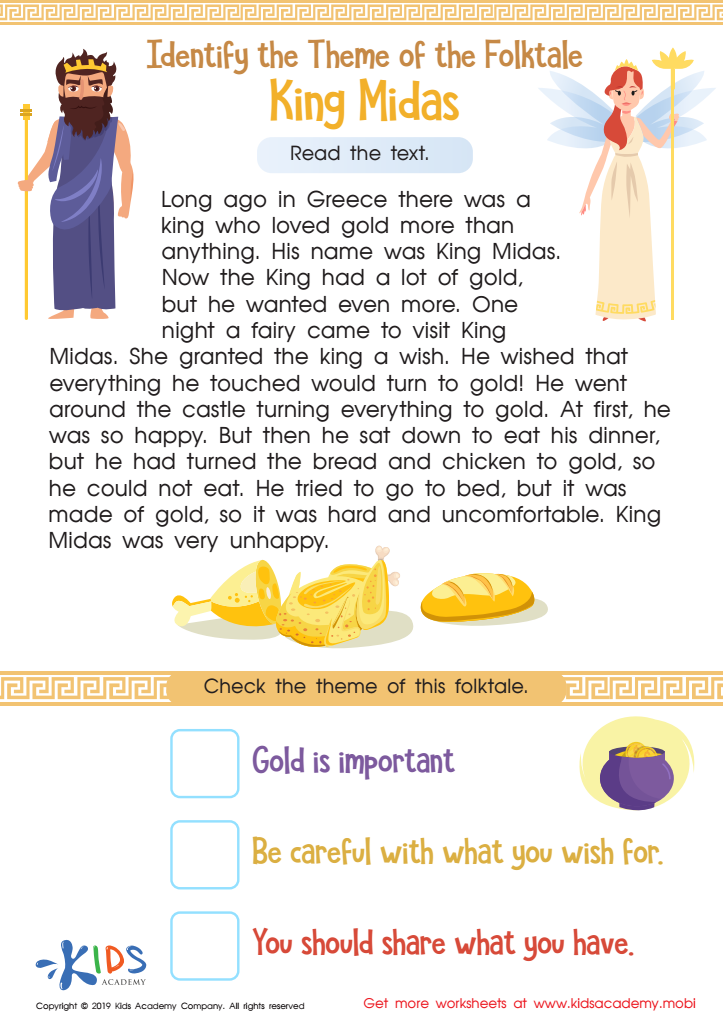
King Midas Worksheet
 Assign to My Students











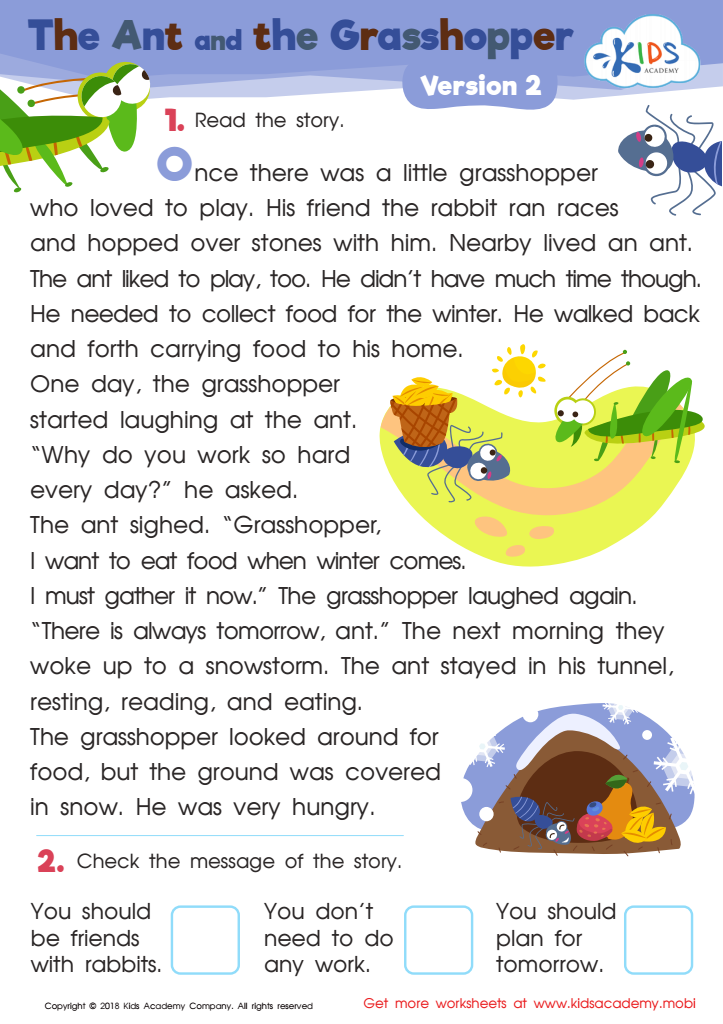
The Ant and The Grasshopper Version 2 Worksheet
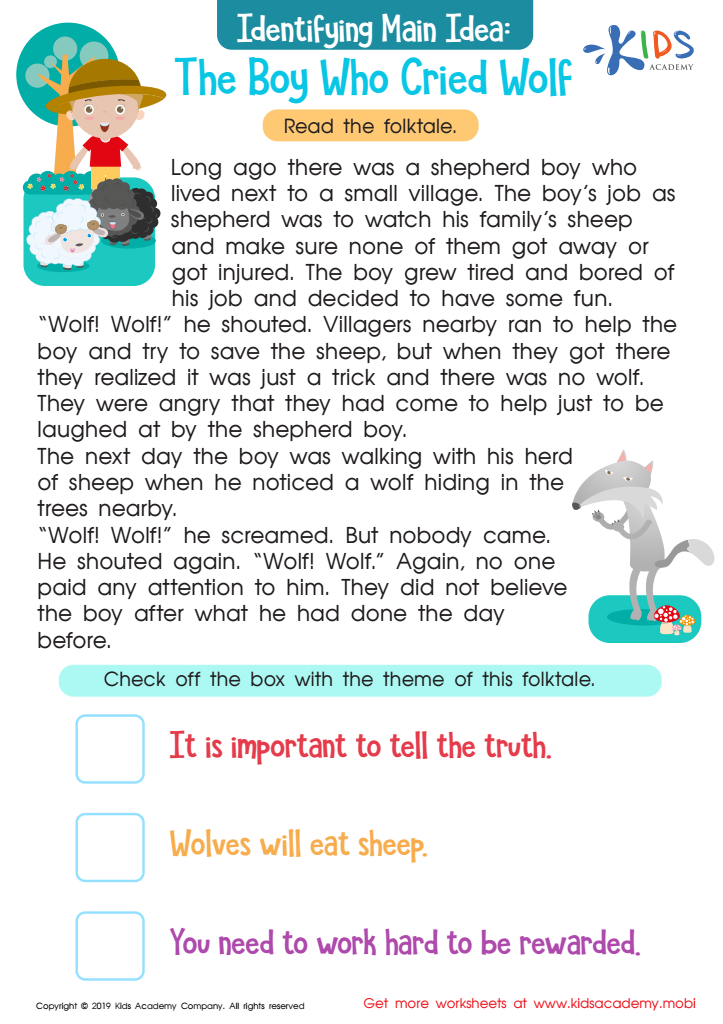
The Boy Who Cried Wolf Part 2 Worksheet



.jpg)




Parents and teachers should prioritize moral lesson understanding while building vocabulary for children aged 7-8 because these skills are interrelated and foundational to lifelong learning and character development. At this stage, children are not just absorbing new words; they are also beginning to make sense of the world around them and develop their sense of right and wrong.
Moral lessons help children understand concepts such as honesty, empathy, and respect. These principles can be integrated into vocabulary activities, making language learning more meaningful. For example, discussing stories that emphasize moral dilemmas can enhance comprehension while expanding their word bank with relevant terms.
Moreover, vocabulary skills are essential for effective communication. A robust vocabulary allows children to express their thoughts and feelings clearly, fostering confidence in social interactions. When children can articulate their understanding of moral lessons, they are better equipped to negotiate relationship dynamics and empathize with others.
By intertwining moral education with vocabulary building, parents and teachers can nurture not only well-rounded individuals who understand moral complexities but also articulate thinkers. This dual focus lays the groundwork for responsible citizenship and positive social interactions as they grow.








