
Phonics Skills Normal Building Vocabulary Worksheets for Ages 7-8
3 filtered results
Difficulty Level
Grade
Age
-
From - To
Subject
Activity
Standards
Enhance your child's vocabulary with our Phonics Skills Normal Building Vocabulary Worksheets for Ages 7-8 at Kids Academy. Designed specifically for 2nd graders, these engaging worksheets focus on nourishing phonics skills, helping young learners connect letters and sounds effectively. Featuring an array of exercises that include word puzzles and reading tasks, each worksheet aims to develop essential reading and pronunciation skills. Perfect for both classroom and home environments, these worksheets are a fun way to reinforce your child's learning and build a strong vocabulary foundation. Boost phonics understanding and watch your child become a confident reader!
Favorites
With answer key
Interactive
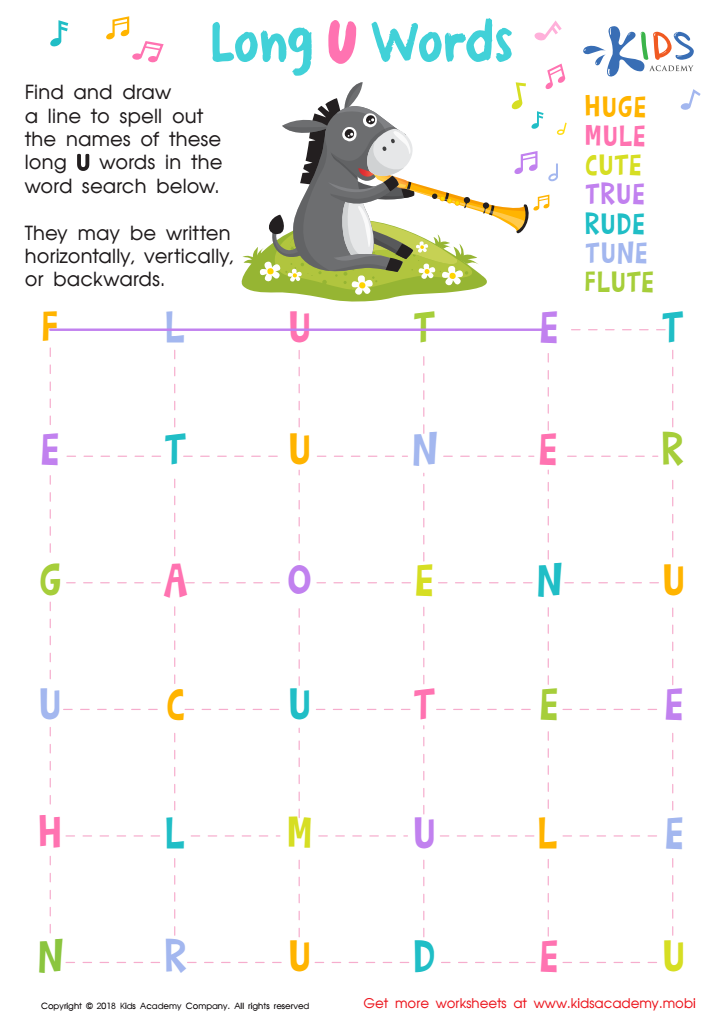
Long /u/ Words Worksheet
Your child needs to learn phonetics to enunciate and differentiate words. This fun worksheet encourages them to find and draw lines connecting the long 'U' words in the word search. Help them read the words on the right side of the picture, then look for them in the word search (horizontally, backwards or vertically).
 Assign to My Students
Long /u/ Words Worksheet
Worksheet











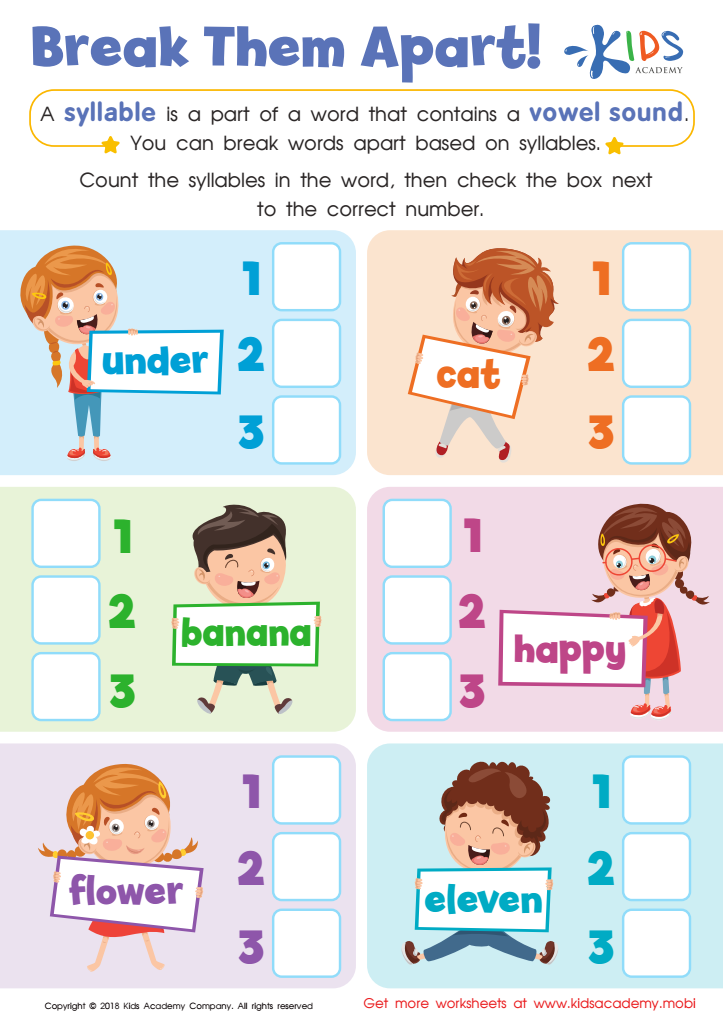
Reading: Break Them Apart Worksheet
See if students understand syllables with this fun worksheet. It teaches them that a syllable is a word part with a vowel sound. Kids read each word and choose how many parts it has. Doing this often helps them decode new words and gain confidence.
Reading: Break Them Apart Worksheet
Worksheet
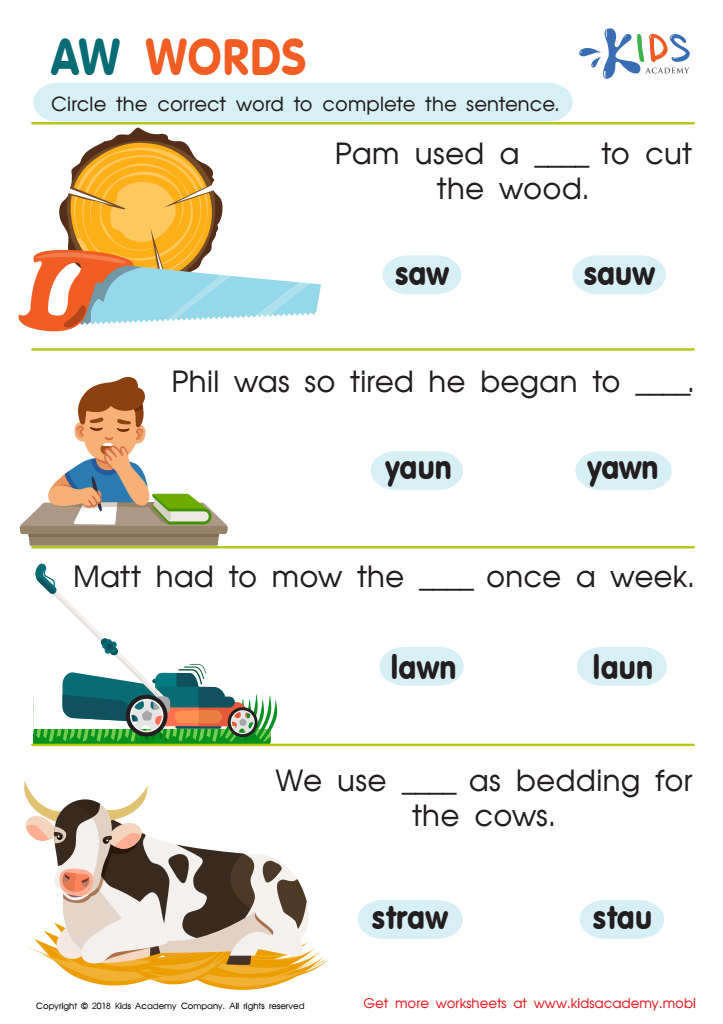
Reading: AW Words Worksheet
Practice decoding the /aw/ digraph with this printable. Students read sentences and select the word with the correct spelling to complete each one. Note, /aw/ is sometimes spelled /au/, so this worksheet helps prevent confusion. Have fun, and practice hard!
Reading: AW Words Worksheet
Worksheet
Join Kids Academy for Free
Who is primarily going to use this learning content?







Phonics skills are fundamental for children ages 7-8 as they transition from recognizing letters and sounds to reading fluently and with understanding. During these formative years, focusing on phonics helps children decode words, pronunciation, and spelling, establishing a robust foundation for lifelong literacy. Parents and teachers who emphasize phonics instruction enable children to break down new and unfamiliar words, which significantly eases the reading process and builds confidence.
A strong grasp of phonics also dramatically enhances vocabulary development. As children decode and understand more words, they naturally expand their vocabulary. This growing vocabulary supports better comprehension, enabling them to grasp more complex texts and concepts across all subjects, from science to social studies.
Investing in phonics instruction at this critical juncture generates several benefits. It supports cognitive development and promotes an early love for reading, a trait linked to academic success and emotional well-being. Children with a strong start in phonics find it easier to tackle advanced language arts skills later on, such as inferencing, critical thinking, and literacy analysis. By prioritizing phonics, parents and teachers ensure children build a solid linguistic and cognitive foundation, setting the stage for successful future learning experiences.








