Understanding suffixes Normal Building Vocabulary Worksheets for Ages 7-8
3 filtered results
-
From - To
Explore our "Understanding Suffixes Normal Building Vocabulary Worksheets" designed specifically for children aged 7-8! These engaging worksheets help young learners enhance their vocabulary skills by introducing them to common suffixes. Through fun exercises and activities, students will discover how adding suffixes can change the meanings of root words. Perfect for home or classroom use, these worksheets encourage independent learning and creativity. With a mix of word puzzles, matching games, and fill-in-the-blank sentences, kids will gain confidence in their word-building abilities. Start fostering a love for language and expand your child's vocabulary today with our interactive materials!
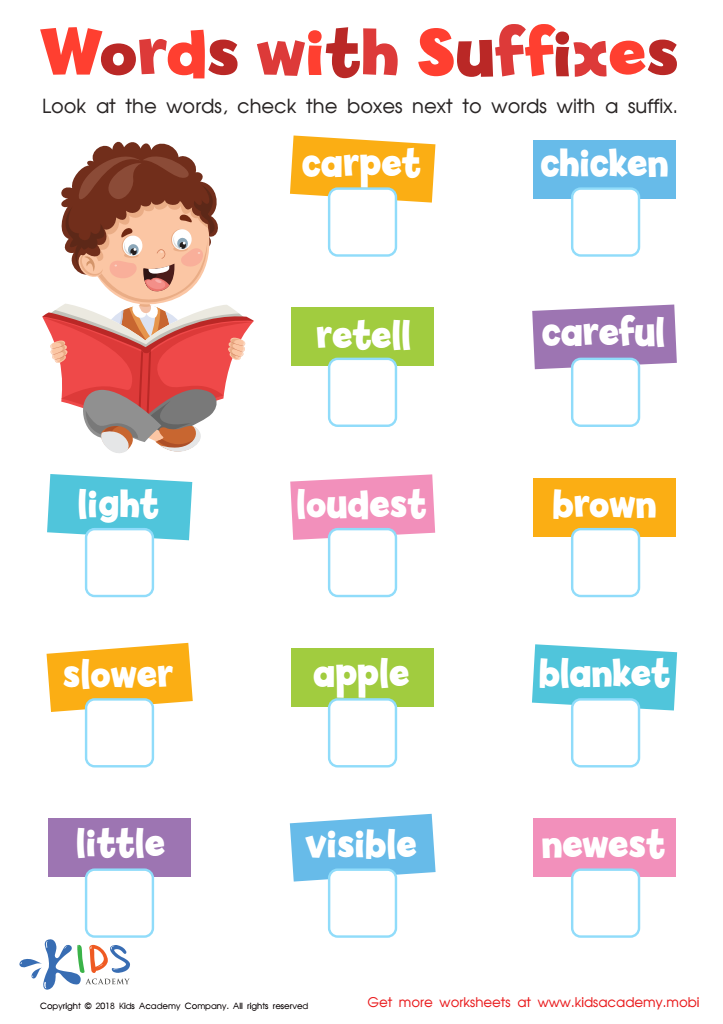
Reading: Words With Suffixes Worksheet
 Assign to My Students











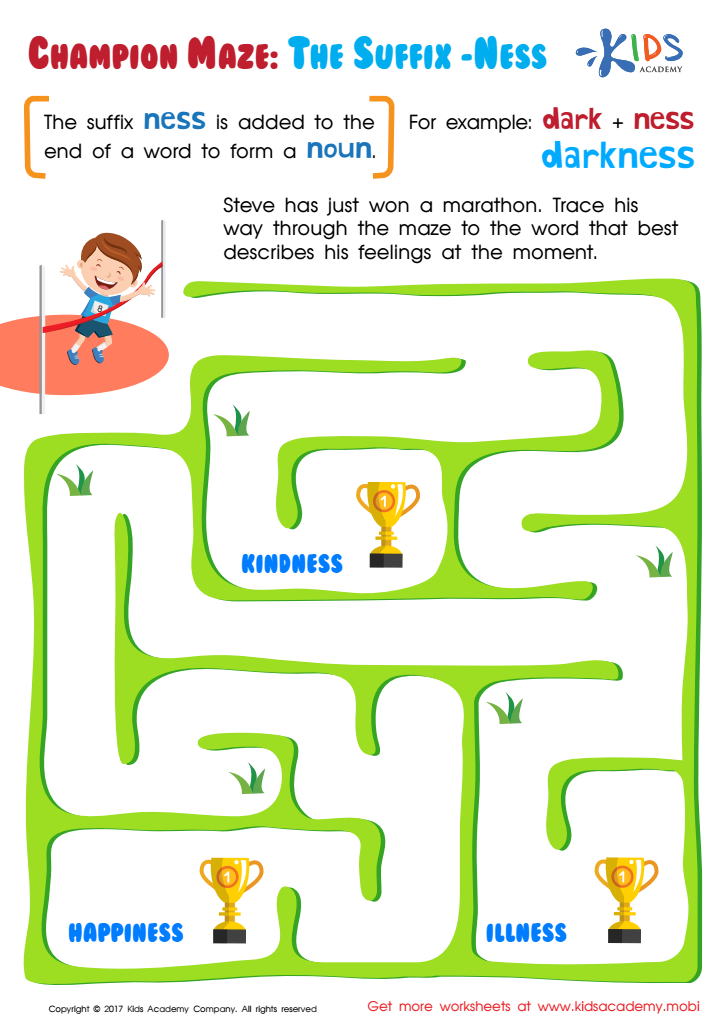
Suffix Ness Worksheet
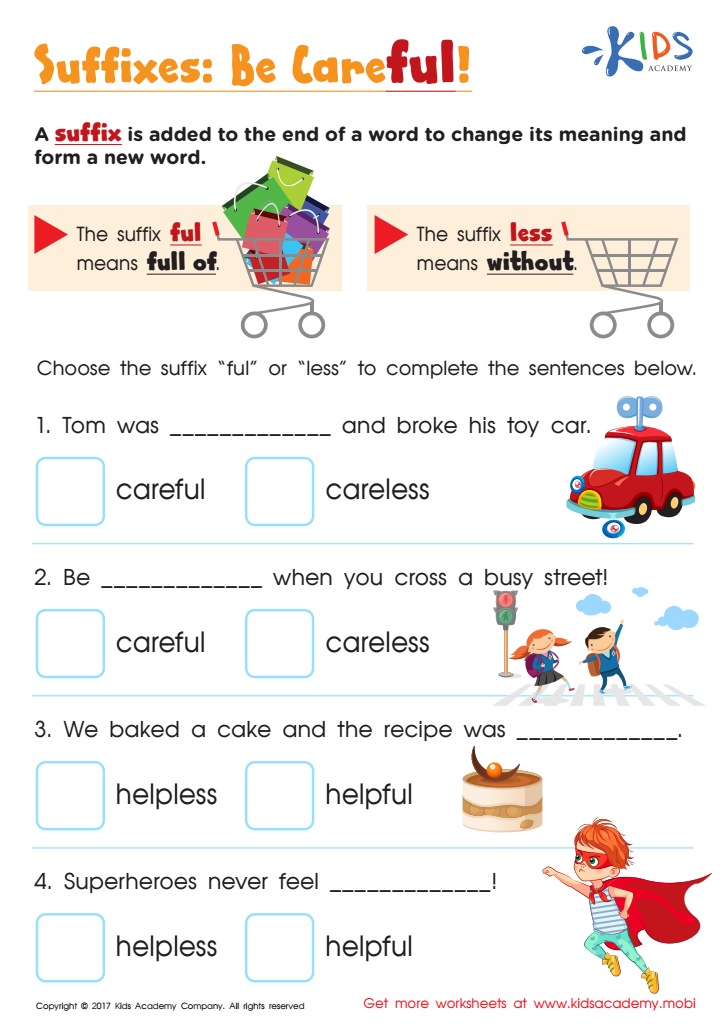
Suffixes Ful and Less Worksheet




.jpg)



Understanding suffixes is crucial for building vocabulary in children aged 7-8, as it helps them decode meanings and enhances their reading and writing skills. Suffixes are letter combinations added to the end of words that modify their meanings, and knowing them allows children to infer the meanings of unfamiliar words. For instance, understanding that adding “-ful” to the word “joy” turns it into “joyful” can help children understand emotional nuances and descriptions.
Moreover, with a solid grasp of suffixes, children can expand their word choices and express themselves more effectively. This linguistic foundation also supports their comprehension skills, aiding in their ability to tackle more advanced texts as they progress in their education. Additionally, in a world increasingly influenced by digital communication, a rich vocabulary equips children with the skills necessary for articulate expression in both writing and spoken language.
For teachers and parents, reinforcing the understanding of suffixes means fostering greater confidence in children's literacy abilities. Engaging malleable minds through playful suffix activities helps create enthusiastic learners who are better prepared for academic challenges. In essence, caring about suffixes empowers kids with tools for lifelong language skills.








