
Understanding vowel sounds Normal Reading Worksheets for Ages 7-8
3 filtered results
Difficulty Level
Grade
Age
-
From - To
Subject
Activity
Standards
Enhance your child's reading skills with our "Understanding Vowel Sounds" worksheets designed for ages 7-8. These engaging and educational printables focus on mastering the different vowel sounds essential for strong reading foundations. Perfect for both classroom and home use, each worksheet offers a variety of activities that simplify understanding vowel patterns and improve pronunciation. Developed by educational experts, these materials make learning fun and effective, ensuring your child gains confidence and proficiency in reading. Accessible and free online, our worksheets support young learners on their journey to reading success with enjoyable exercises tailored for their age and skill level.
Favorites
With answer key
Interactive
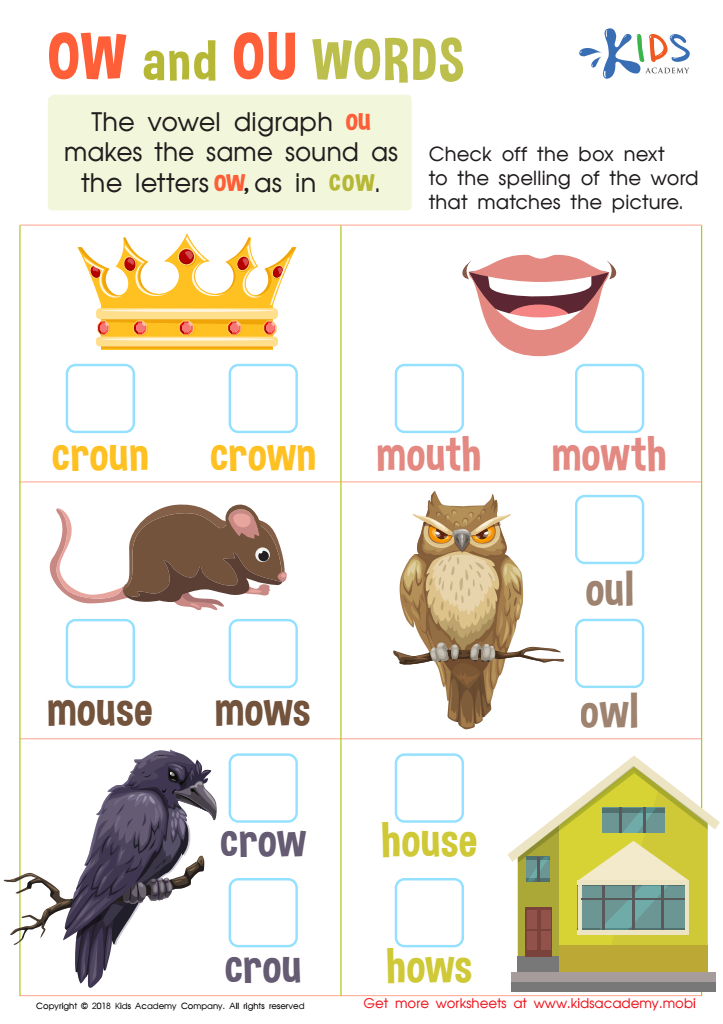
Reading: OW and OU Words Worksheet
Help your kids learn phonetics! Explain the different sounds and long/short variations. Emphasize that some vowel sounds are the same, e.g. ou = ow in cow. For practice, have them read aloud the words in the worksheet and check the box next to the spelling that matches the picture.
Reading: OW and OU Words Worksheet
Worksheet
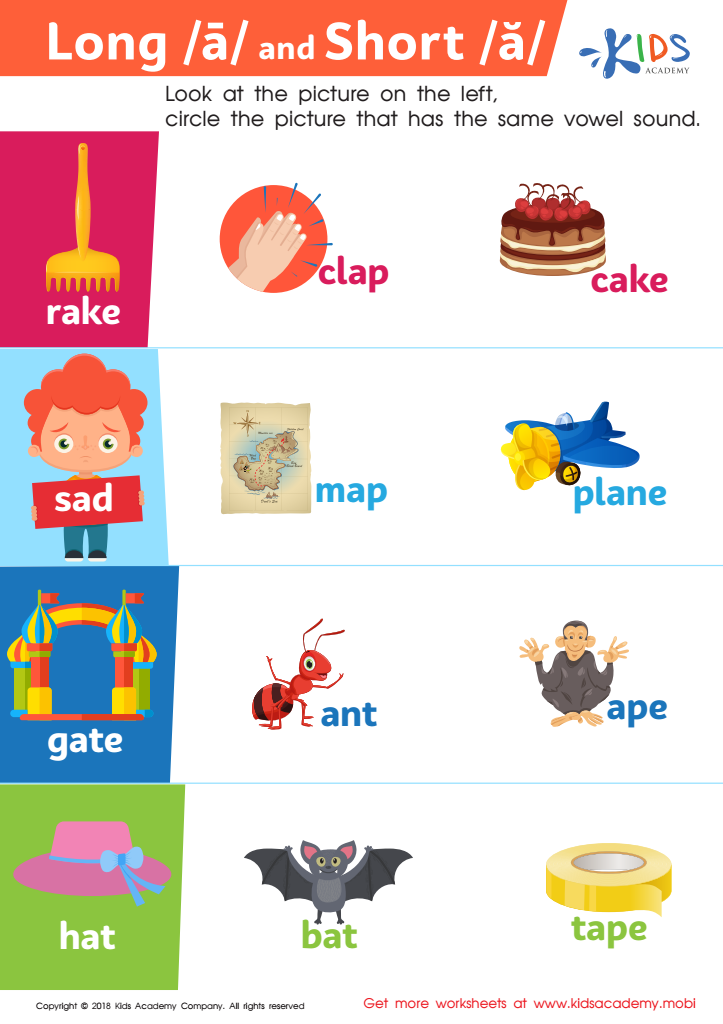
Reading: Long a and Short a Worksheet
This printable helps students practice distinguishing the long and short A sound. Pictures provide clues to read each word and students identify if it has a short or long sound. By completing this worksheet, children gain mastery of the phonics skill.
Reading: Long a and Short a Worksheet
Worksheet
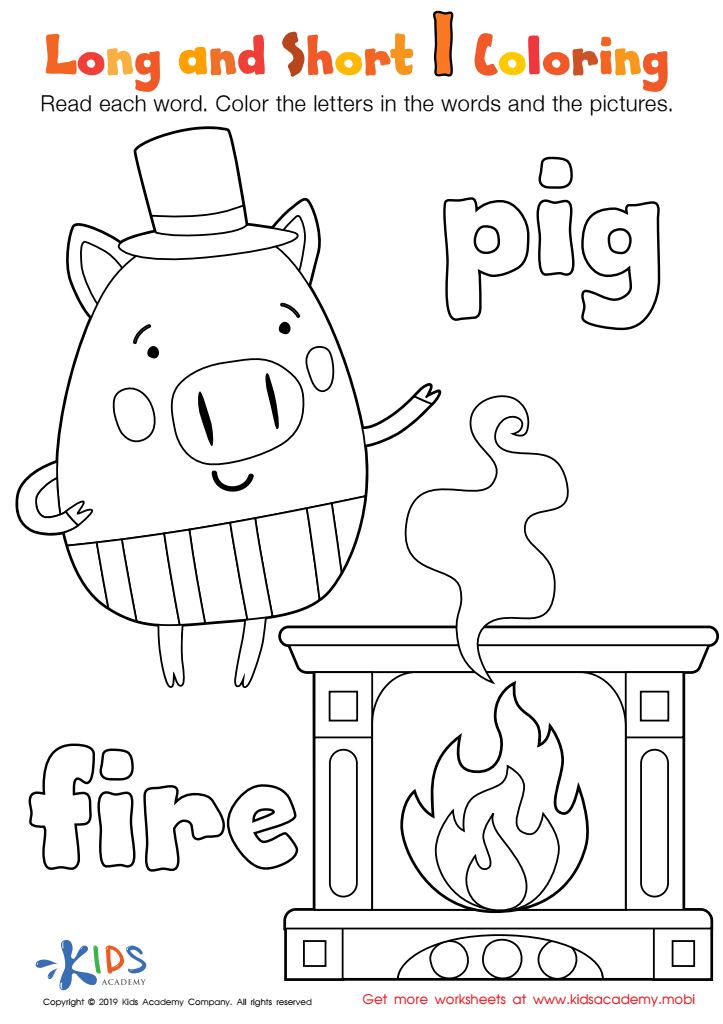
Long and Short I Worksheet
Print the worksheet and have the students read "pig" and "fire". Check for understanding the difference between long and short vowels. Color in words and pictures to make learning phonics fun! This exercise is perfect for introducing the topic to your students.
Download (PDF)
 Assign to My Students
Assign to My Students
Long and Short I Worksheet
Worksheet
Join Kids Academy for Free
Who is primarily going to use this learning content?








Understanding vowel sounds is critical for normal reading development in children ages 7-8 because these sounds form the foundation of phonics, which is essential for reading proficiency. During this age, children transition from recognizing letters to blending sounds to form words. Vowel sounds, particularly, are key to understanding because they appear in almost every word and can change the word's meaning when mispronounced. Familiarity with vowel sounds helps children decode new words, enhances comprehension, and boosts their confidence in reading.
When teachers and parents focus on vowel sounds, they equip children with the skills needed to tackle complex reading tasks, facilitating smoother transitions from simple reading to more advanced texts. Moreover, good reading habits and competence at this stage are crucial as they lay the groundwork for future academic success. Struggles with vowel sounds can lead to reading difficulties, resulting in a lack of interest in reading and potential issues in other academic areas.
Therefore, prioritizing vowel sound education helps ensure children develop fluent reading skills, fostering a lifelong love for learning and literacy. By paying attention to this essential aspect of phonics, parents and teachers can provide the support and resources needed for children to thrive academically.








