Vocabulary Enrichment Normal Reading Worksheets for Ages 7-8
3 filtered results
-
From - To
Enhance your child's vocabulary with our engaging Normal Reading Worksheets designed specifically for ages 7-8. These educational resources focus on vocabulary enrichment while fostering reading comprehension and critical thinking skills. Each worksheet includes a variety of exciting activities that encourage children to explore new words, enhance their language skills, and boost their literacy. Our vibrant, age-appropriate content keeps young learners motivated and aligned with their educational goals. Perfect for classroom use or homeschooling, these worksheets offer a fun and interactive way to expand vocabulary. Empower your child’s love for reading and language today with our carefully crafted materials!
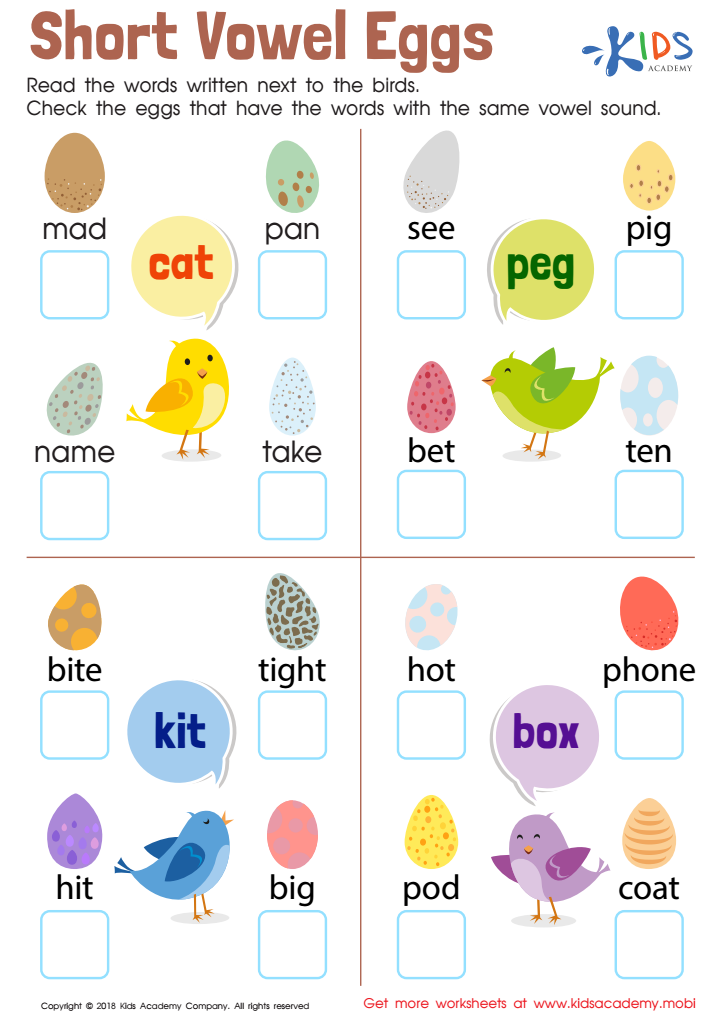
Short Vowel Eggs Worksheet
 Assign to My Students
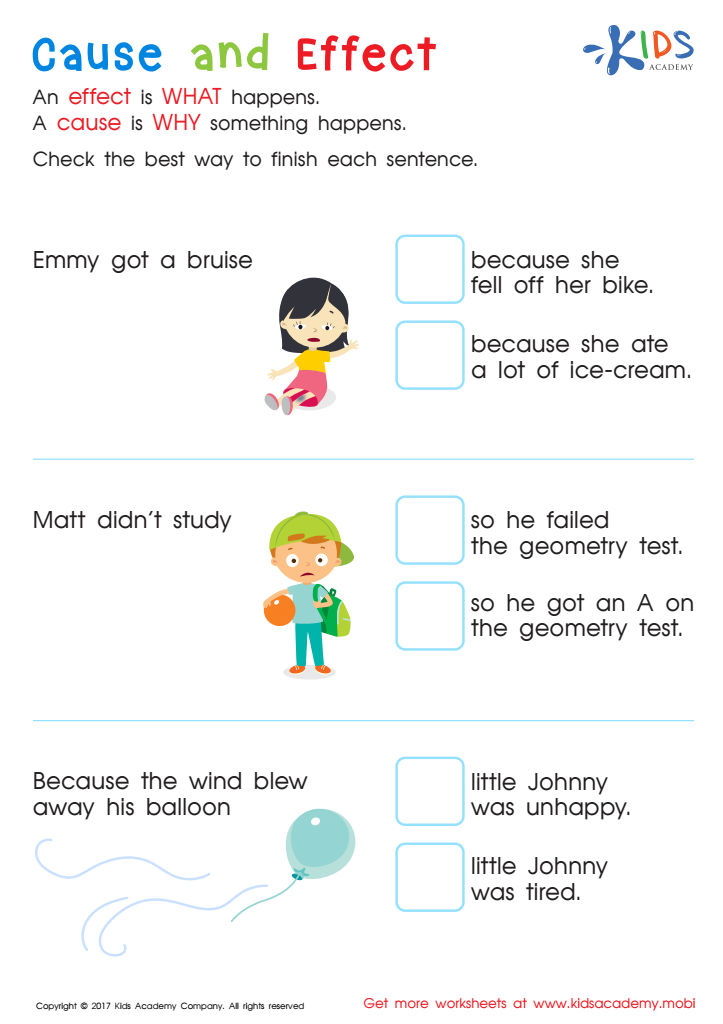
Cause and Effect Worksheet
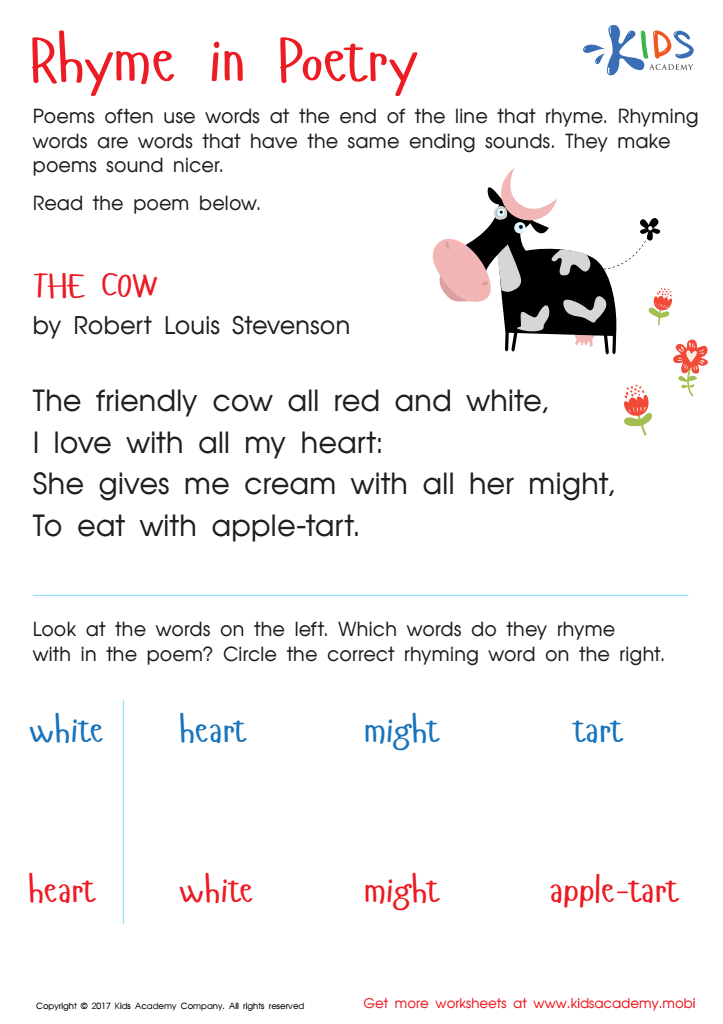
Rhyme In Poetry Worksheet



.jpg)




Vocabulary enrichment during the crucial ages of 7-8 is essential for the cognitive and linguistic development of children. At this stage, children are transitioning from learning to read to reading to learn. A robust vocabulary lays the foundation for comprehension, critical thinking, and effective communication. Parents and teachers should be deeply invested in this aspect as an enriched vocabulary helps children express their thoughts and emotions more clearly, fostering confidence in social interactions and academic settings.
Moreover, vocabulary breadth is closely linked to overall literacy skills. Enhanced vocabulary exposure, whether through reading various texts, engaging discussions, or targeted activities, helps learners grasp complex concepts, making school subjects more accessible and interesting. A diverse vocabulary also plays a pivotal role in standardized assessments and future academic success.
By prioritizing vocabulary enrichment, adults can nurture a love for language and learning, encouraging children to become curious, enthusiastic readers. Furthermore, developing strong linguistic skills at a young age is a lifelong asset, aiding in personal growth and future career opportunities. Therefore, investing time and resources into vocabulary development is crucial for supporting children’s overall educational journey and personal development.








