Detail identification Normal Reading Comprehension Worksheets for Ages 7-8
3 filtered results
-
From - To
Unlock the power of reading comprehension with our Detail Identification Worksheets, specially designed for children aged 7-8. These engaging, interactive worksheets help young learners hone their skills in identifying critical details within texts. Kids will strengthen their ability to comprehend stories and informational passages, enhancing their literacy development. Each worksheet features age-appropriate questions and vibrant illustrations that make learning fun and effective. Ideal for classroom use or at-home practice, our resources foster a love for reading while ensuring steady progress in comprehension skills. Explore our collection and watch your child's confidence soar as they master detail identification!
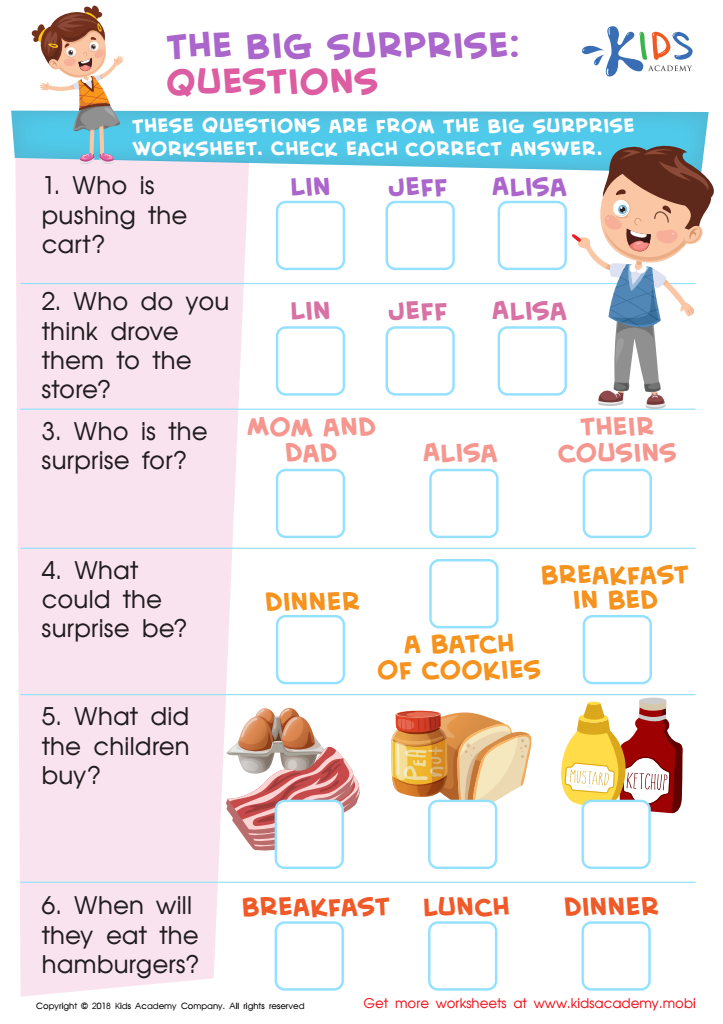
The Big Surprise: Questions Worksheet
 Assign to My Students
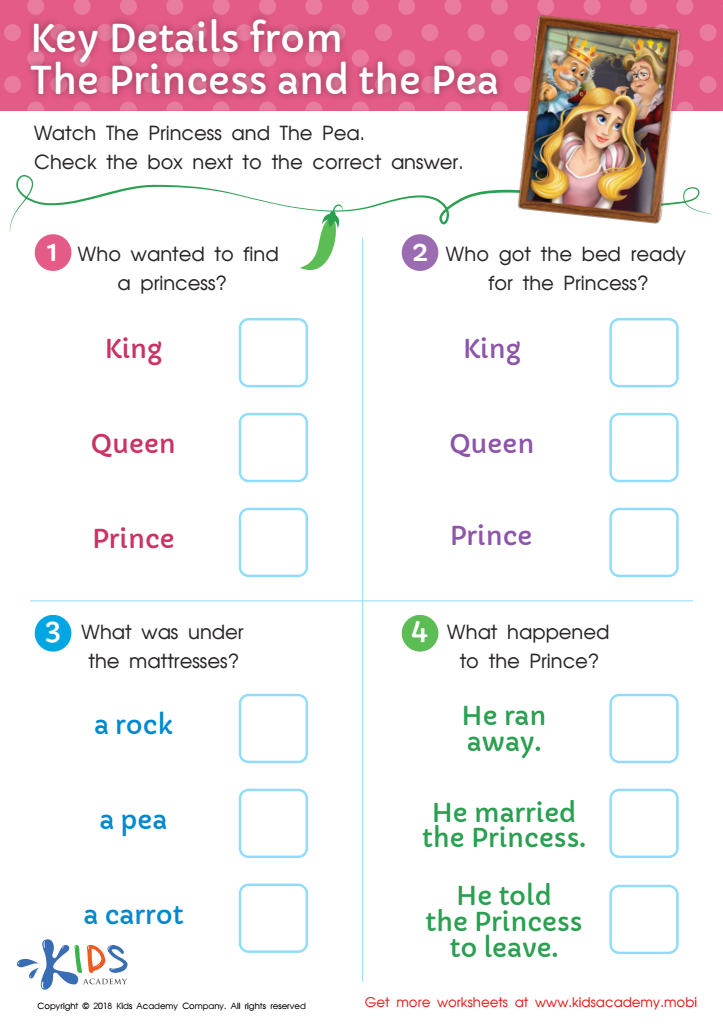
Key Details from the Princess and the Pea Worksheet
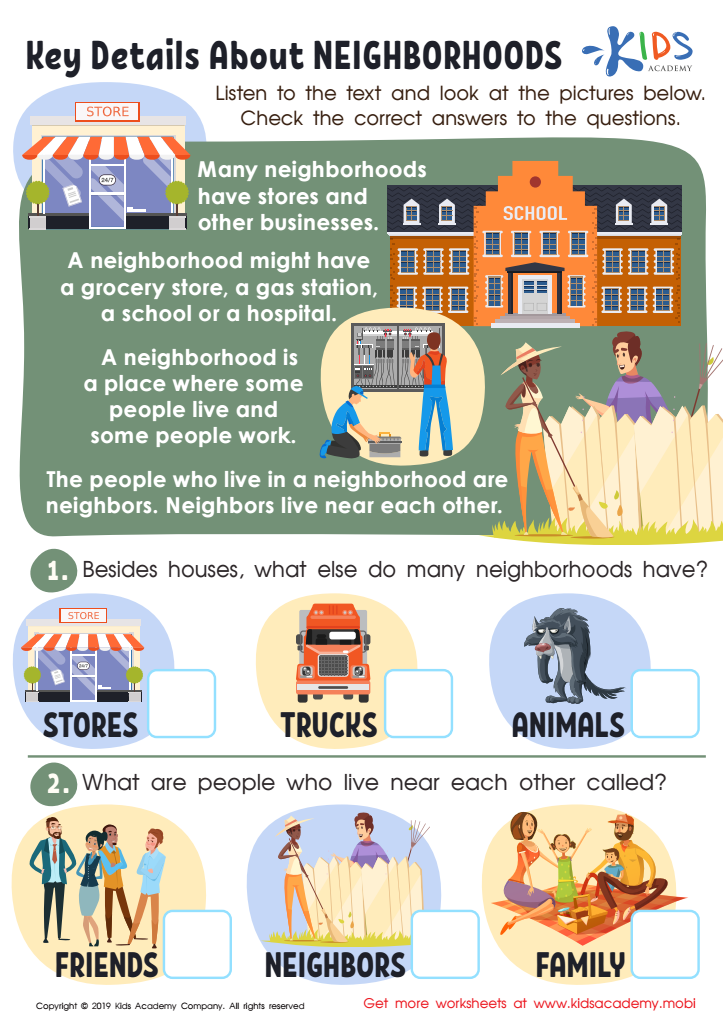
Key Details Neighborhoods Worksheet








Detail identification in normal reading comprehension is crucial for children ages 7-8 as it lays the foundation for their overall literacy development. At this age, students are transitioning from learning to read to reading to learn. Mastery of detail identification helps them extract important facts and information from texts, which enhances their comprehension skills.
When children can identify details, they become adept at summarizing important points, answering questions, and making inferences, all of which are essential skills for academic success. Furthermore, teachers and parents can use detail identification to assess a child's reading proficiency. understanding what a child observes and remembers can help guide further instruction and personalize learning experiences.
Encouraging this skill fosters critical thinking and active reading strategies, allowing children to engage more meaningfully with diverse texts, from fiction to non-fiction. Developing strong detail identification skills also instills a sense of confidence in young learners, motivating them to read more and explore a wider range of literature. In today's information-rich society, these skills are not just academic tools; they are essential for navigating life's complexities, making it vital for educators and parents to prioritize them in their teaching methodologies.








