Understanding Sequences Normal Reading Comprehension Worksheets for Ages 7-8
3 filtered results
-
From - To
Enhance your child's reading skills with our "Understanding Sequences" reading comprehension worksheets designed for ages 7-8. These engaging activities focus on helping young readers grasp the concept of sequences in stories and texts. By following and predicting the order of events, students improve their understanding and retention of information. Each worksheet provides an array of stimulating exercises that develop critical thinking and reading comprehension abilities. Ideal for practice at home or in the classroom, these resources support your child's journey towards becoming a confident and proficient reader. Visit Kids Academy to explore these valuable tools.
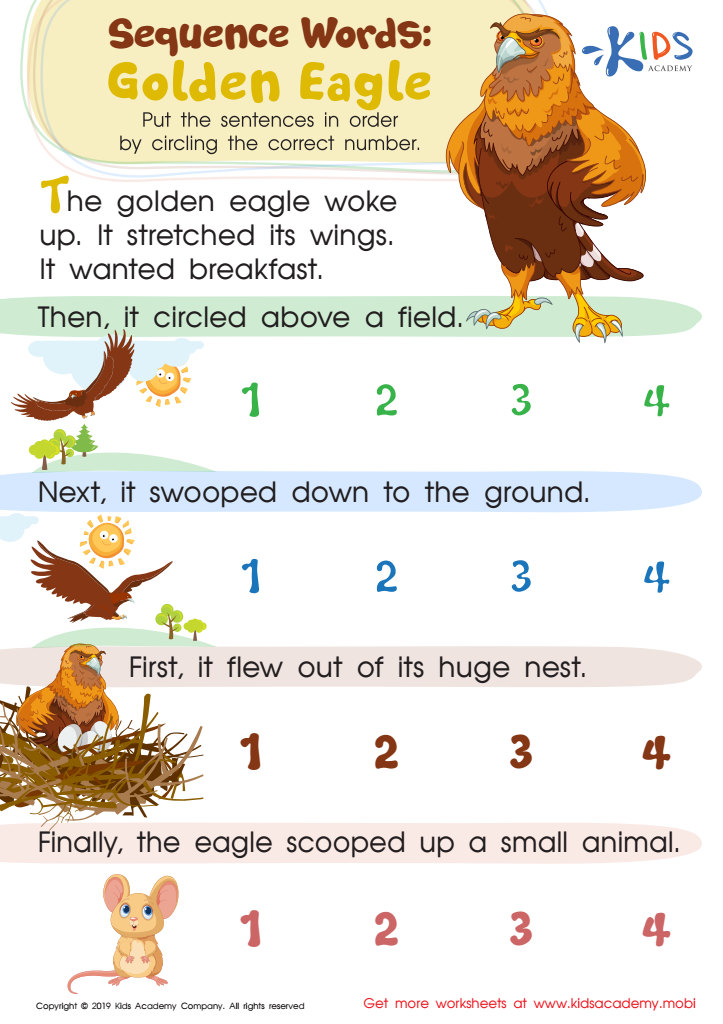
Sequence Word Eagle Worksheet
 Assign to My Students
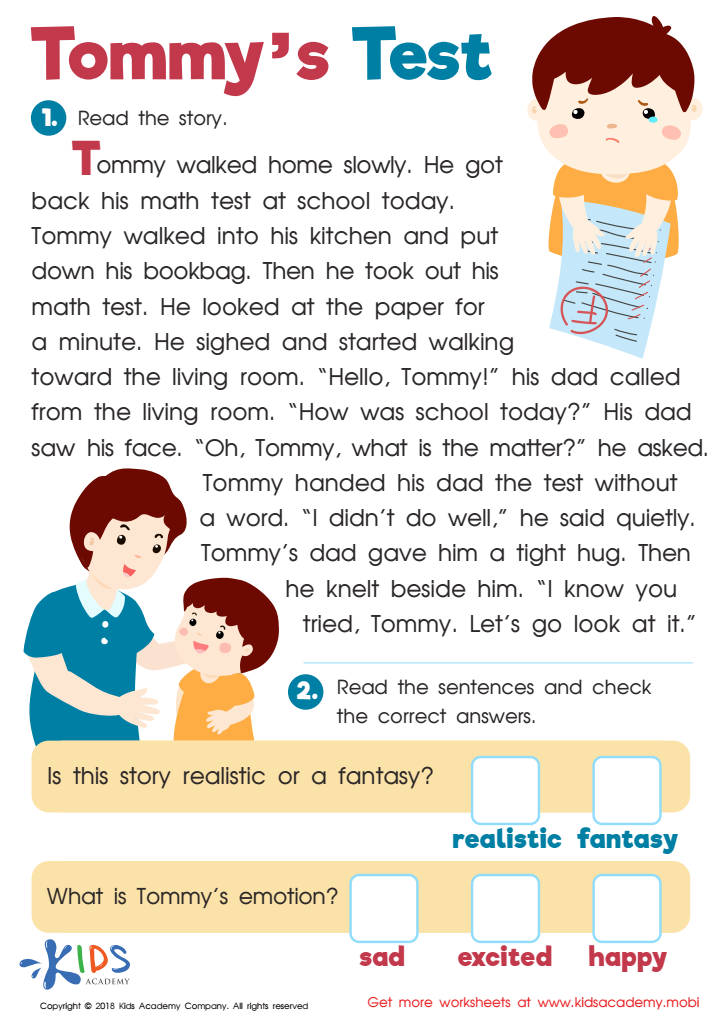
Tommys Test Worksheet
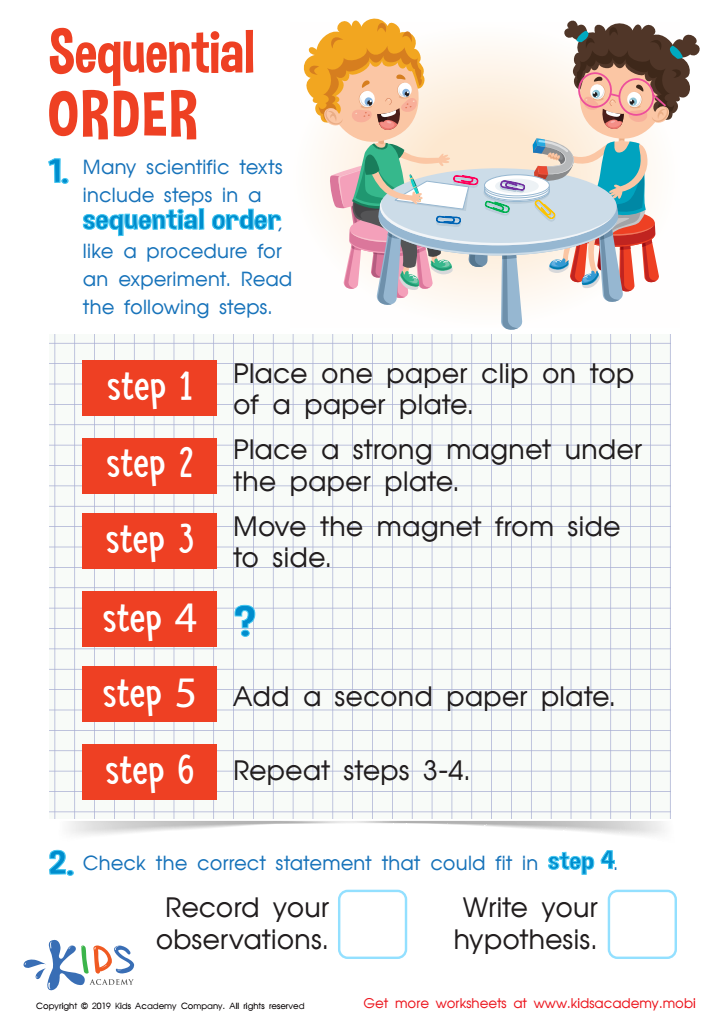
Sequencential Order Worksheet







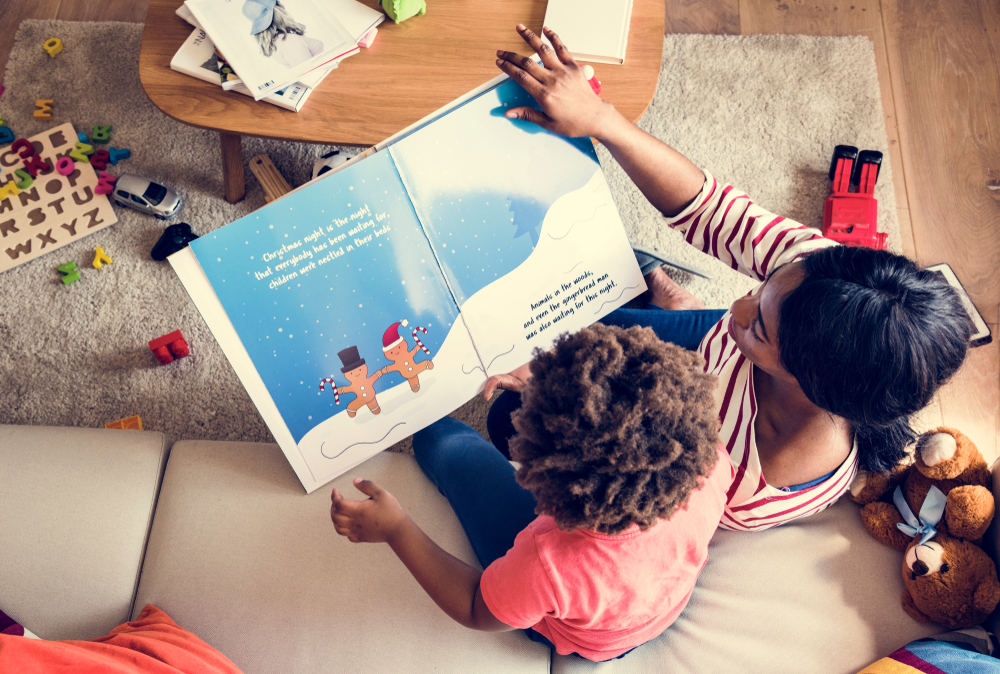
Understanding sequences in normal reading comprehension is crucial for children aged 7-8 because it forms the foundation for reading fluency and overall comprehension. At this age, children transition from learning to read to reading to learn, so grasping the sequence of events helps them make sense of narratives and informational texts. When children understand "first," "next," "then," and "last," they can follow the progression in stories, which enhances their ability to remember details, predict outcomes, and make inferences.
For parents and teachers, fostering this skill can greatly impact a child's academic success across various subjects. Skilled comprehension improves a student's ability to follow complex instructions in math problems, understand historical events in social studies, and grasp scientific processes. Encouraging children to talk about the sequence of events in their reading also advances their verbal expression and critical thinking skills.
Additionally, recognizing and constructing sequences supports the development of logical thinking and problem-solving abilities. Through practice and encouragement, children become more confident readers, thereby nurturing a lifelong love for reading. Understanding sequences is more than just a reading skill; it is a building block for academic and everyday activities, making it a vital focus for educators and parents alike.








