Reading thermometers Normal Science Worksheets for Ages 7-8
3 filtered results
-
From - To
Explore our engaging "Reading Thermometers" science worksheets, designed specifically for ages 7-8. These educational printables make learning to read thermometers fun and interactive, fostering critical thinking and observational skills in young scientists. Each worksheet combines colorful graphics and clear instructions, helping children understand temperature scales and interpret readings accurately. Perfect for both classroom and home use, our resources align with educational standards, ensuring effective learning. Elevate your child's science skills with our expertly crafted worksheets, and watch them enjoy discovering the fascinating world of temperature measurement. Dive into learning today at Kids Academy!
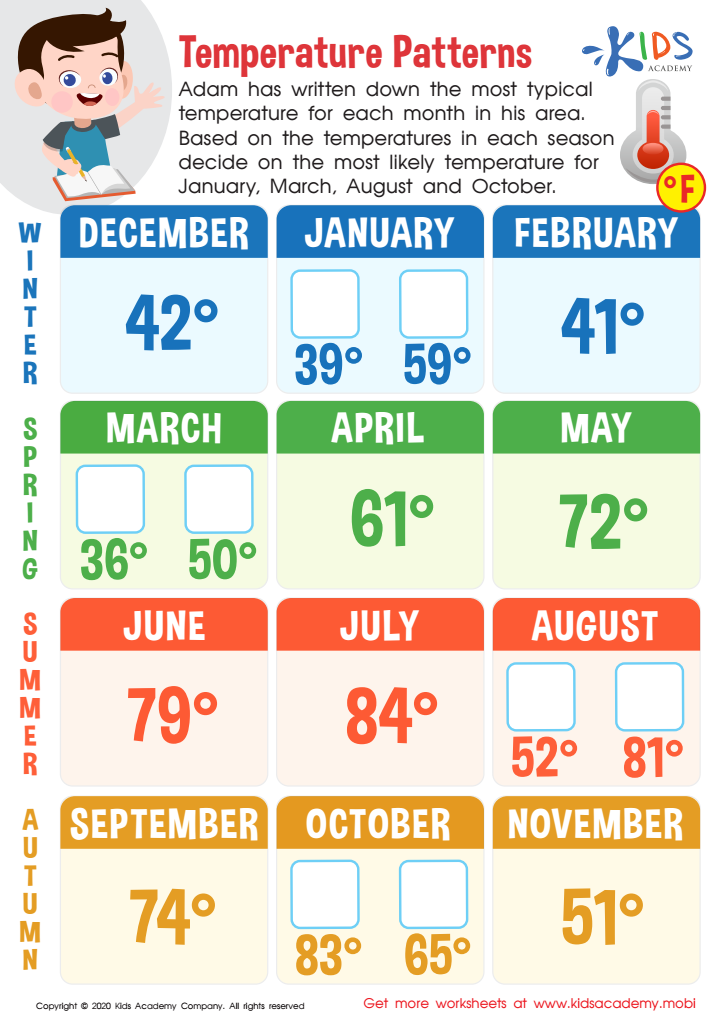
Temperature Patterns Worksheet
 Assign to My Students
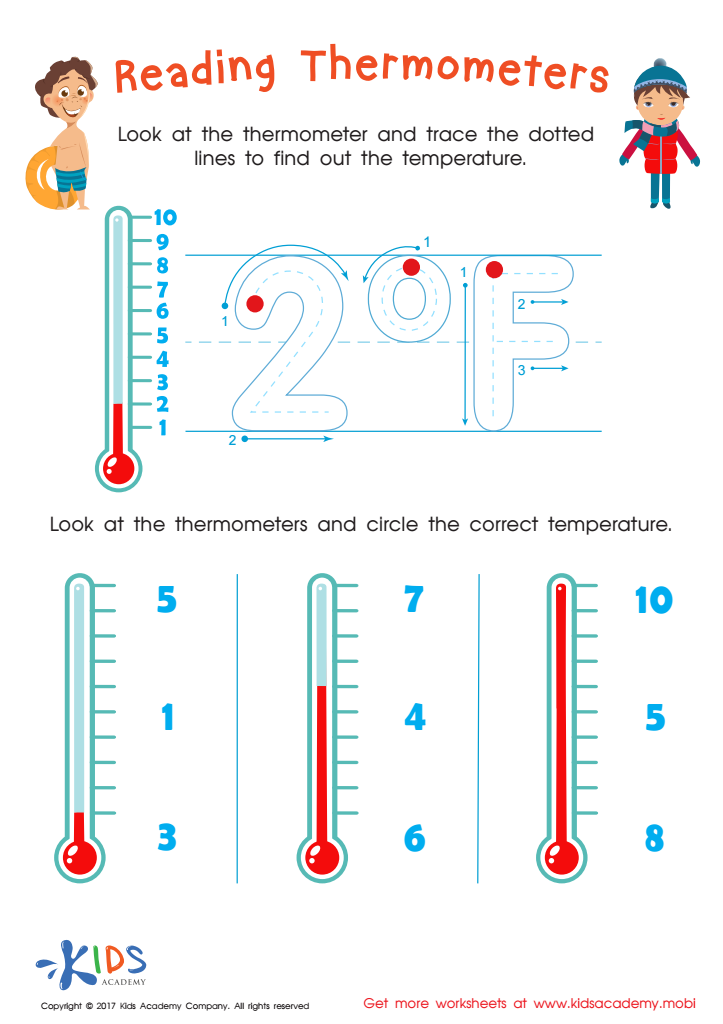
Reading Thermometers Printable
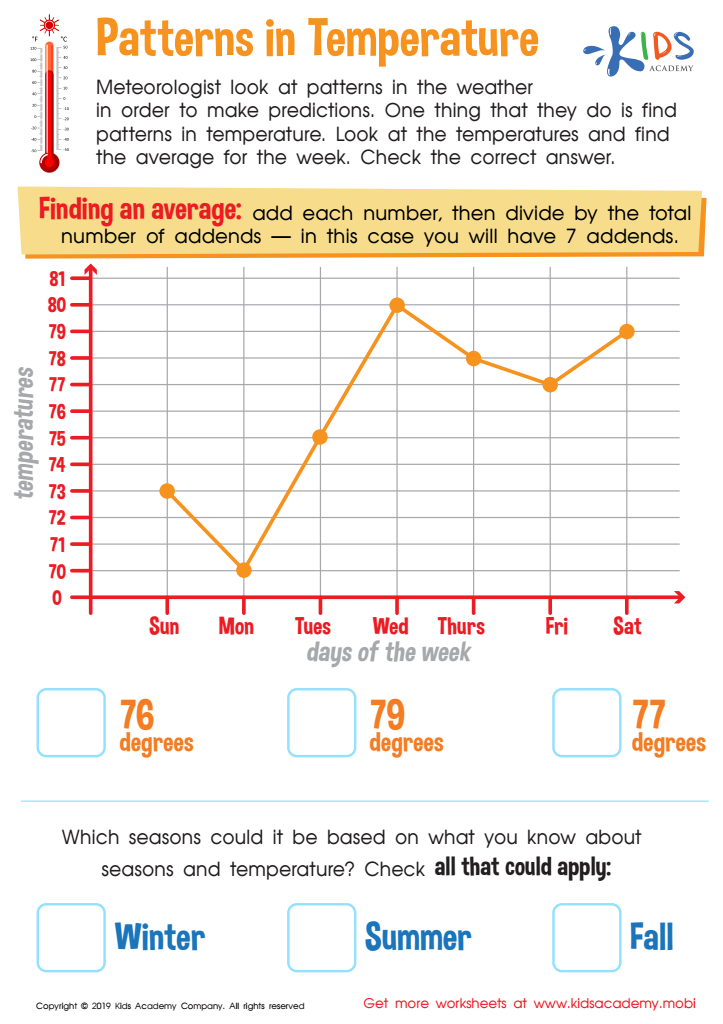
Patterns in Temperature Worksheet








Parents and teachers should prioritize instructing children ages 7-8 about reading thermometers because it lays a foundational understanding of temperature, which is essential to daily life and future scientific learning. At this age, children are naturally curious and start to grasp more abstract concepts, making it an optimal time to introduce basic scientific tools like thermometers.
Understanding how to read a thermometer enables children to make practical observations about the world around them — like knowing when to wear a coat outside, or detecting a fever. These activities make the concept of temperature relevant and immediately useful. Furthermore, it encourages critical thinking and enhances numeracy skills, as children learn to interpret the varying degrees and scales, improving their ability to handle measurements and data in more complex subjects later on.
Increased exposure to scientific concepts ultimately fosters a keen interest in STEM (Science, Technology, Engineering, and Math) fields. Early familiarity with handling scientific instruments empowers children, cultivating a sense of confidence and capability in their ability to engage with science. Therefore, teaching children the skill of reading thermometers not only sets the stage for practical life skills but also nurtures inquisitiveness and academic curiosity that blooms into lifelong learning and discovery.







