Understanding landforms Normal Science Worksheets for Ages 7-8
3 filtered results
-
From - To
Explore the fascinating world of landforms with our "Understanding Landforms Normal Science Worksheets" designed specifically for ages 7-8. These engaging worksheets help young learners identify and understand various landforms such as mountains, valleys, plateaus, and plains. Packed with colorful illustrations, fun activities, and easy-to-follow instructions, these resources make learning about our planet's physical features enjoyable and educational. Ideal for both classroom and at-home learning, our worksheets reinforce critical thinking and observation skills, empowering children to comprehend the diverse landscapes that shape our world. Dive in to inspire the budding geographer in your child today!
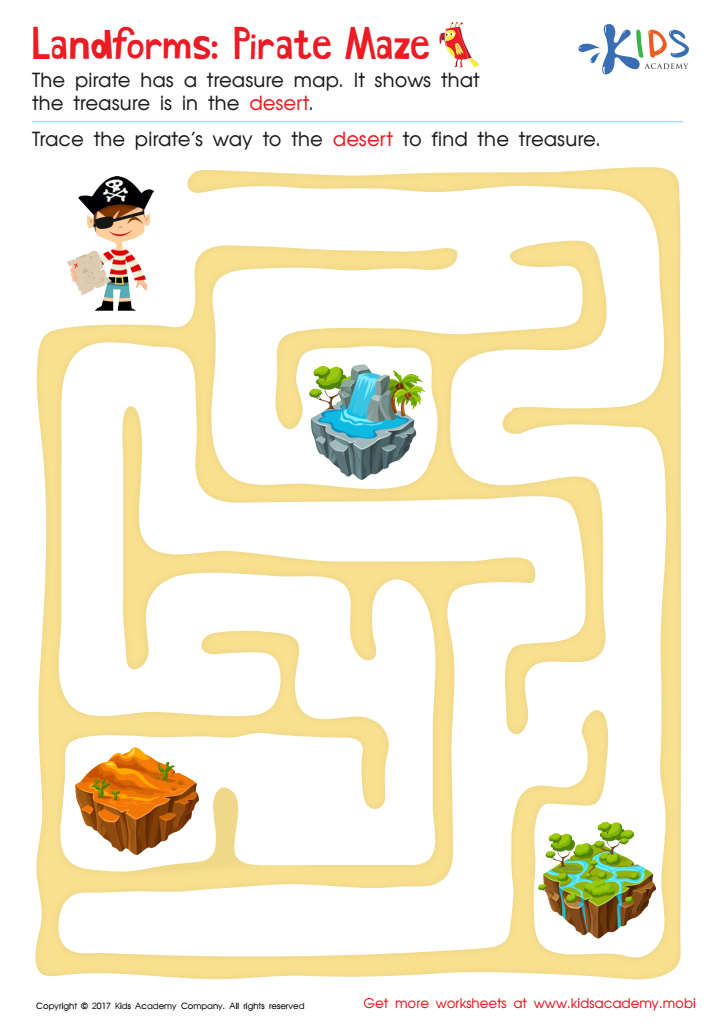
Landforms: Pirate Maze Printable
 Assign to My Students
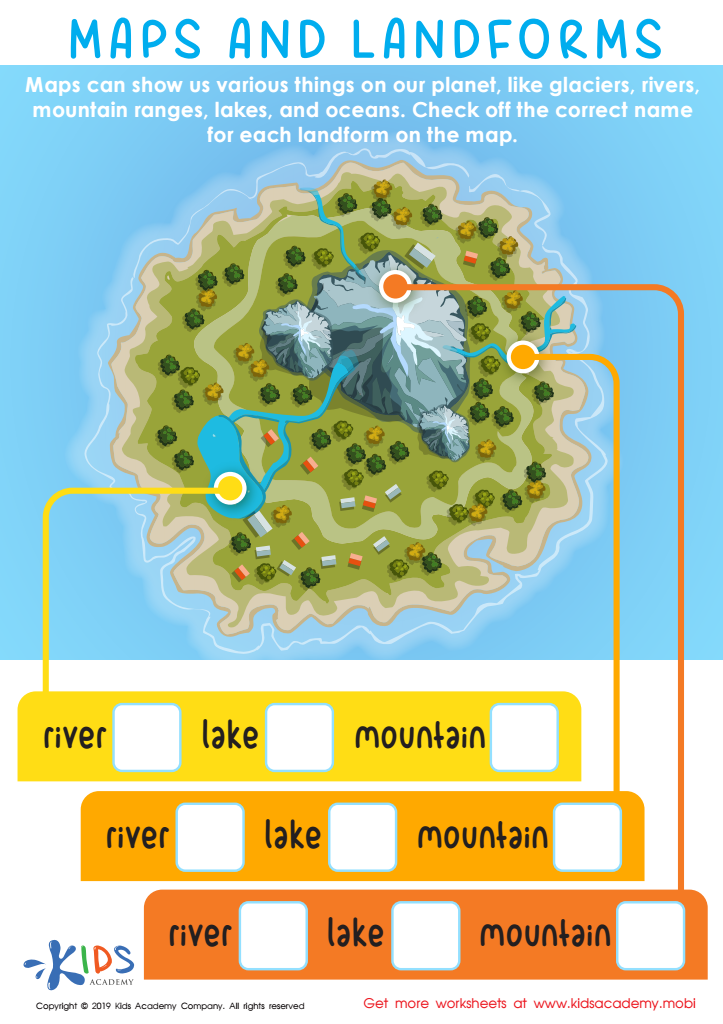
Maps and Landforms Worksheet
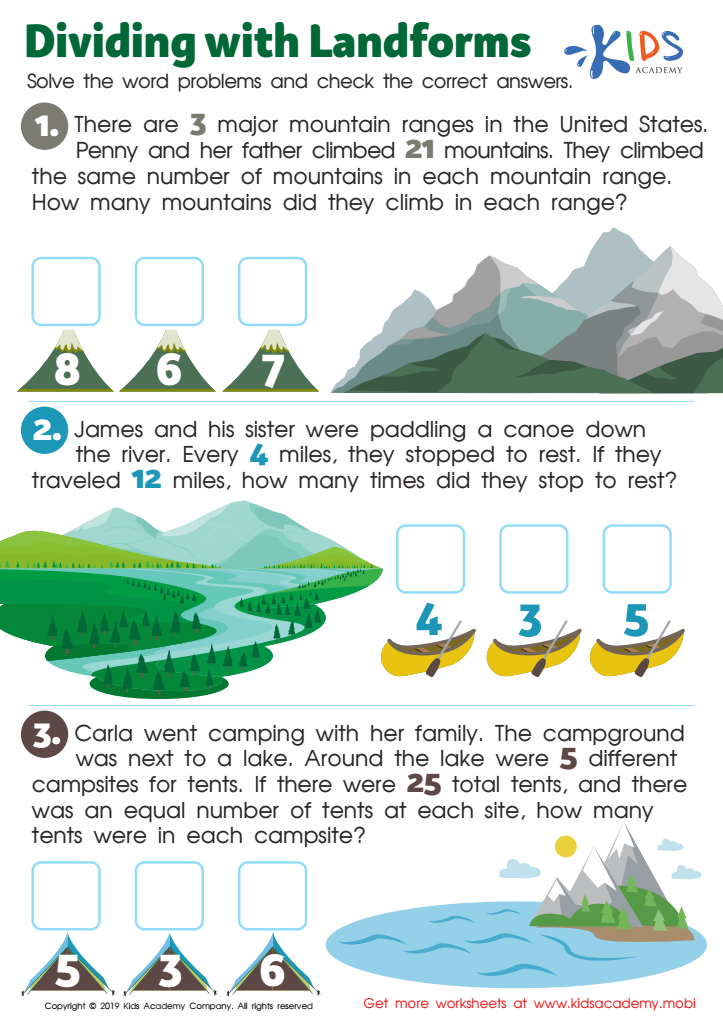
Dividing with Landforms








Understanding landforms in early science education for ages 7-8 is crucial for several reasons. First, it helps children develop a sense of the world around them. By learning about mountains, valleys, rivers, and plains, they begin to appreciate the variety in Earth's landscapes. This foundational knowledge cultivates curiosity and a desire to explore further, both critical aspects of scientific learning.
For educators and parents, teaching about landforms supports interdisciplinary learning. It naturally integrates subjects such as geography, geology, and environmental science, which broadens children's perspectives and emphasizes the interconnectedness of different academic disciplines. This holistic approach is beneficial in developing a well-rounded understanding.
Furthermore, understanding landforms can enhance critical thinking and observational skills. When children learn to identify and describe different landforms, they practice using descriptive language, which strengthens their communication skills. Activities like creating models or drawing pictures of landforms encourage hands-on learning and creativity.
Finally, it promotes environmental stewardship from a young age. Knowledge about landforms and their formation can lead to discussions on natural processes, such as erosion and the water cycle, helping children understand human impact on the environment. This awareness is vital in fostering a sense of responsibility towards nature, encouraging behaviors that contribute to sustainable living.







