
Phonics practice Normal Letter Recognition Worksheets for 7-Year-Olds
3 filtered results
Difficulty Level
Grade
Age
-
From - To
Subject
Activity
Standards
Enhance your 7-year-old's reading skills with our Phonics Practice Normal Letter Recognition Worksheets! Designed to solidify foundational literacy, these engaging worksheets help children master letter identification and phonics in a fun and interactive manner. Perfect for both classroom and home use, each worksheet is crafted to keep young learners motivated and confident in their reading journey. With a variety of exercises aimed at improving phonemic awareness and letter-sound correspondence, our worksheets offer an exceptional resource to reinforce early reading skills essential for academic success. Explore our collection today and watch your child's reading abilities soar!
Favorites
With answer key
Interactive
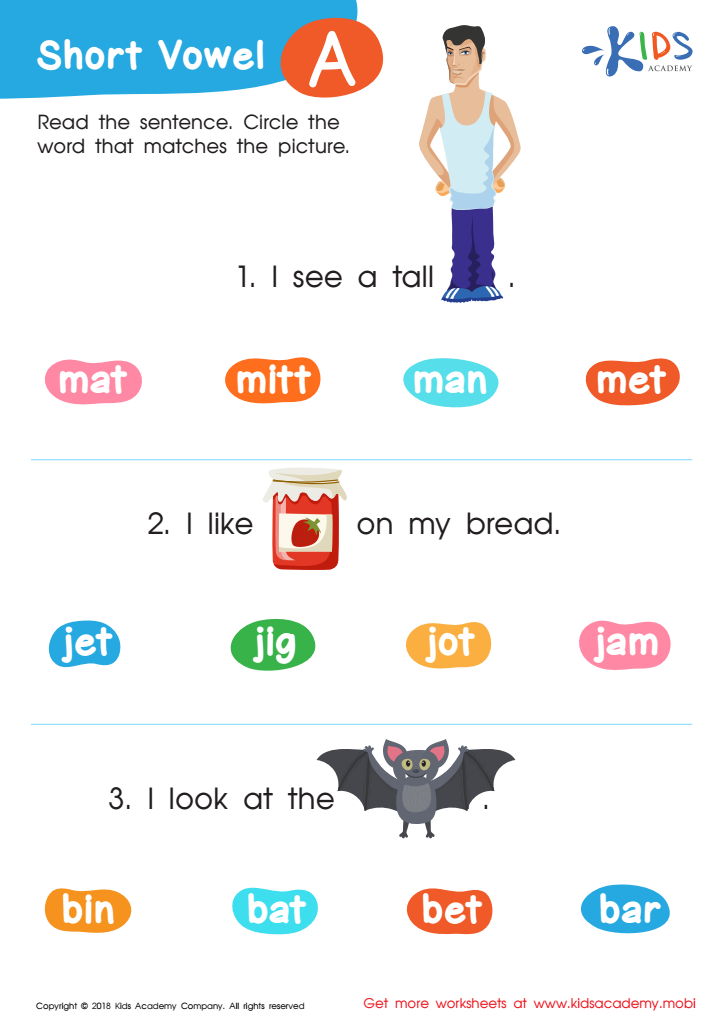
Short Vowel /a/ Worksheet
This free PDF helps new readers use sight words and pictures to read basic sentences. Then, they use accompanying word choices to find the correct word with the short a vowel sound. A key early reading skill, discriminating between short vowel sounds can be tricky in monosyllabic words, so use this PDF to help your reader reinforce it.
Short Vowel /a/ Worksheet
Worksheet
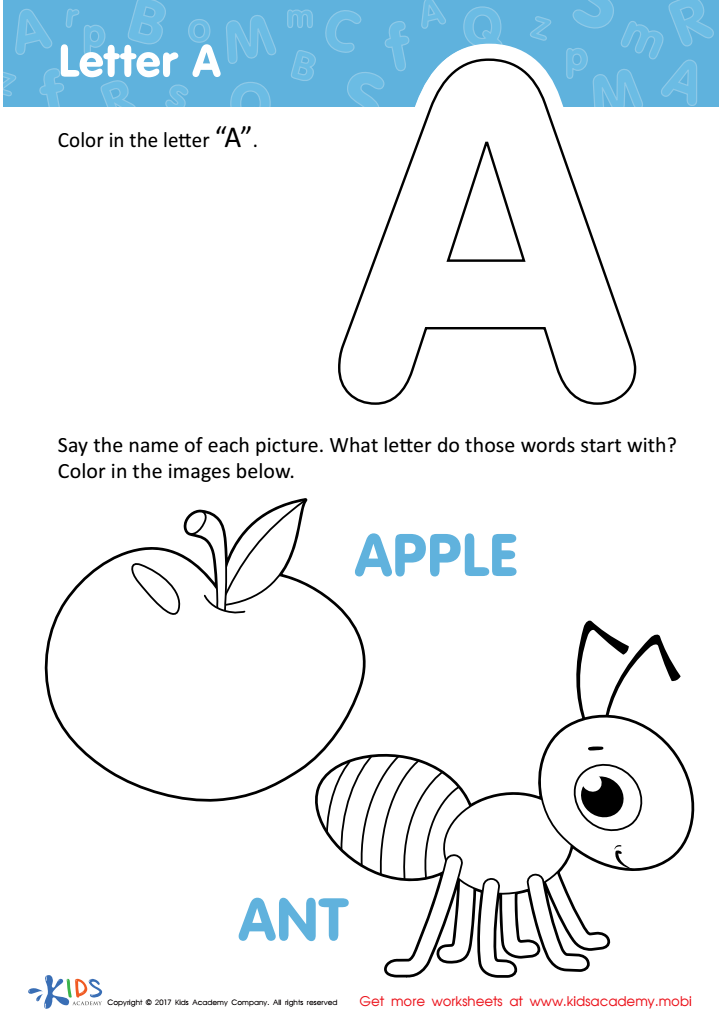
Letter A Coloring Sheet
This letter "A" coloring page is great for introducing kids to the alphabet! Let them exercise their creativity while they learn to recognize letters and sounds - it's a fun and easy way to help them get started.
Download (PDF)
 Assign to My Students
Assign to My Students
Letter A Coloring Sheet
Worksheet
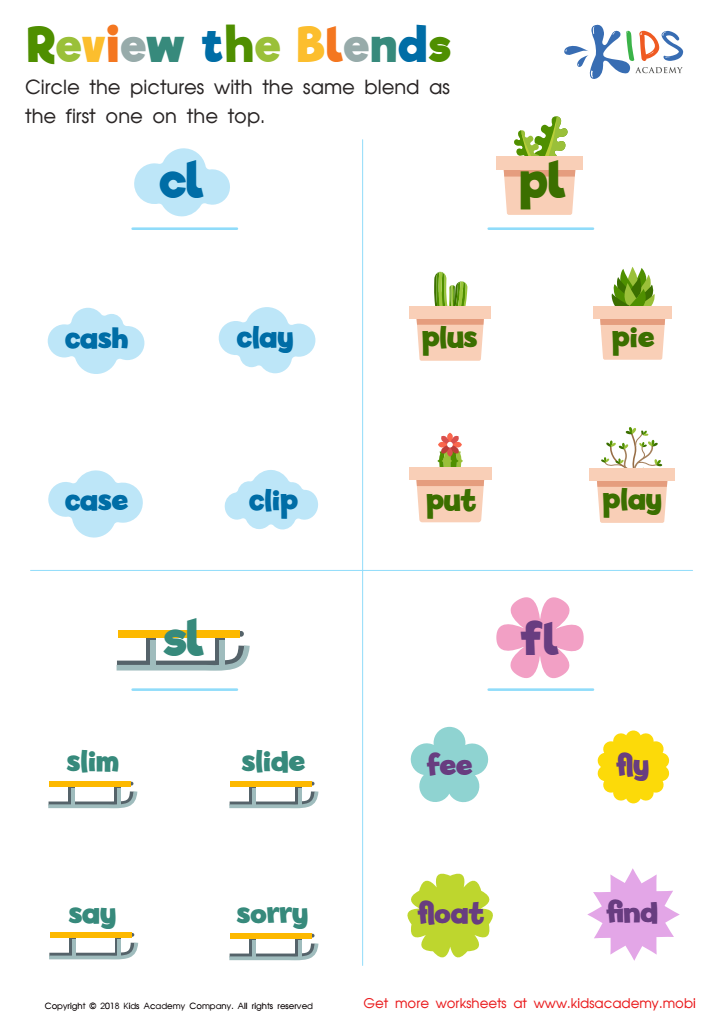
Review the Blends Worksheet
Consonant blends are two or three consonants that make a sound when pronounced together. L-blends like cl, bl, sl, fl and 3-letter blends like str, slp are common. This phonics worksheet helps early readers identify words containing two letter L-blends. Students must circle the words then read them aloud.
Review the Blends Worksheet
Worksheet
Join Kids Academy for Free
Who is primarily going to use this learning content?








Phonics practice and normal letter recognition are crucial steps in ensuring the literacy development of 7-year-olds. At this age, children are in a critical period where foundational reading skills are being solidified. Phonics practice, which involves connecting sounds to letter patterns, underpins this process by enabling children to decode words accurately and fluently. Without adequate phonics skills, children might struggle with reading, leading to hindered comprehension and reduced academic confidence.
Early and consistent phonics practice helps children to recognize and memorize the sounds each letter makes, which is directly tied to their ability to read new or complex words without assistance. This skill not only supports their reading capacity but also enhances their spelling capabilities. Moreover, confident readers are more likely to develop a love for reading, which opens doors to lifelong learning and curiosity.
Parents and teachers play a vital role in providing time, resources, and encouragement for phonics practice. From reading storybooks that emphasize phonetic clarity to engaging students in fun letter-recognition games, adult support can make a pivotal difference. As foundational literacy skills grow stronger, children equip themselves with the tools needed to access other areas of the curriculum, thereby laying down the building blocks for future educational success and personal development.








