Vowel Recognition Normal Letter Recognition Worksheets for 7-Year-Olds
4 filtered results
-
From - To
Boost your child’s reading skills with our "Vowel Recognition Normal Letter Recognition Worksheets for 7-Year-Olds." Carefully designed for first graders, these engaging worksheets help young learners identify and differentiate vowels within everyday words. Each worksheet combines fun and educational activities, reinforcing both basic and advanced vowel sounds. Our colorful, kid-friendly themes ensure that children stay motivated while mastering essential phonetic skills. Improve your child's reading fluency, spelling, and pronunciation effortlessly. Visit Kids Academy to download and explore our comprehensive collection that makes learning vowels exciting and effective! Perfect for home or classroom use.
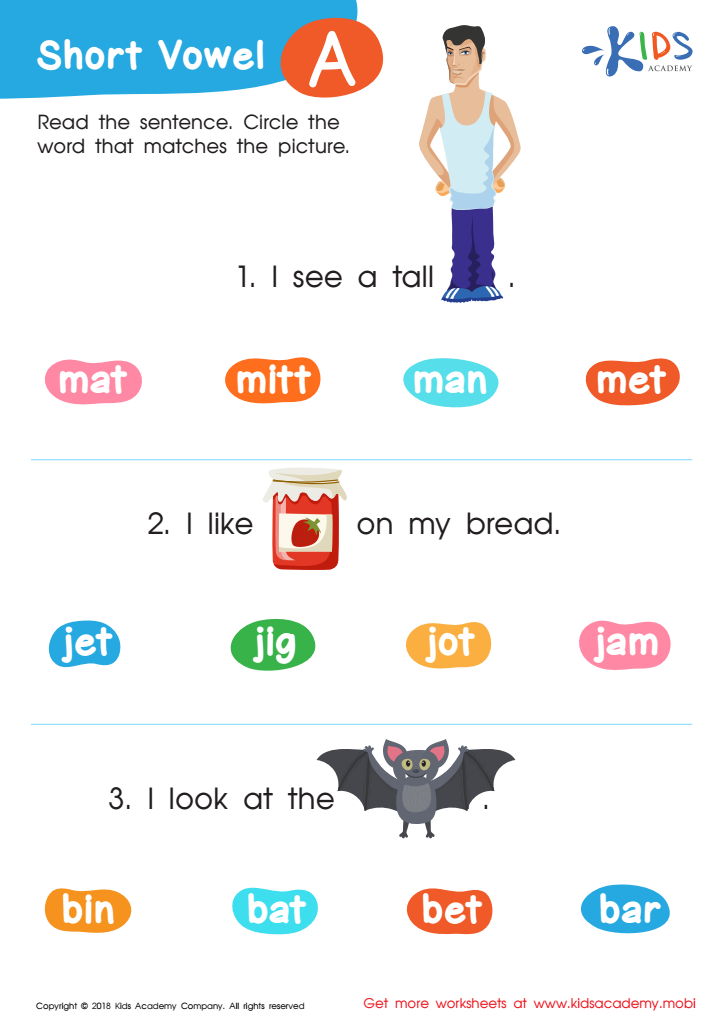
Short Vowel /a/ Worksheet
 Assign to My Students
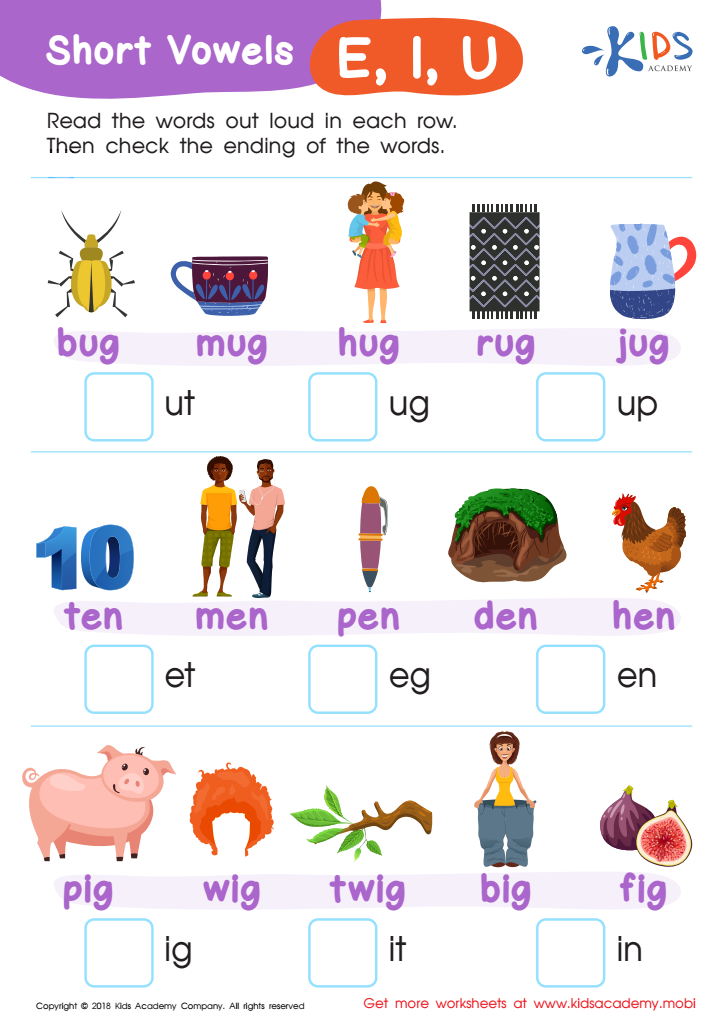
Short Vowels /e/, /i/, and /u/ Worksheet
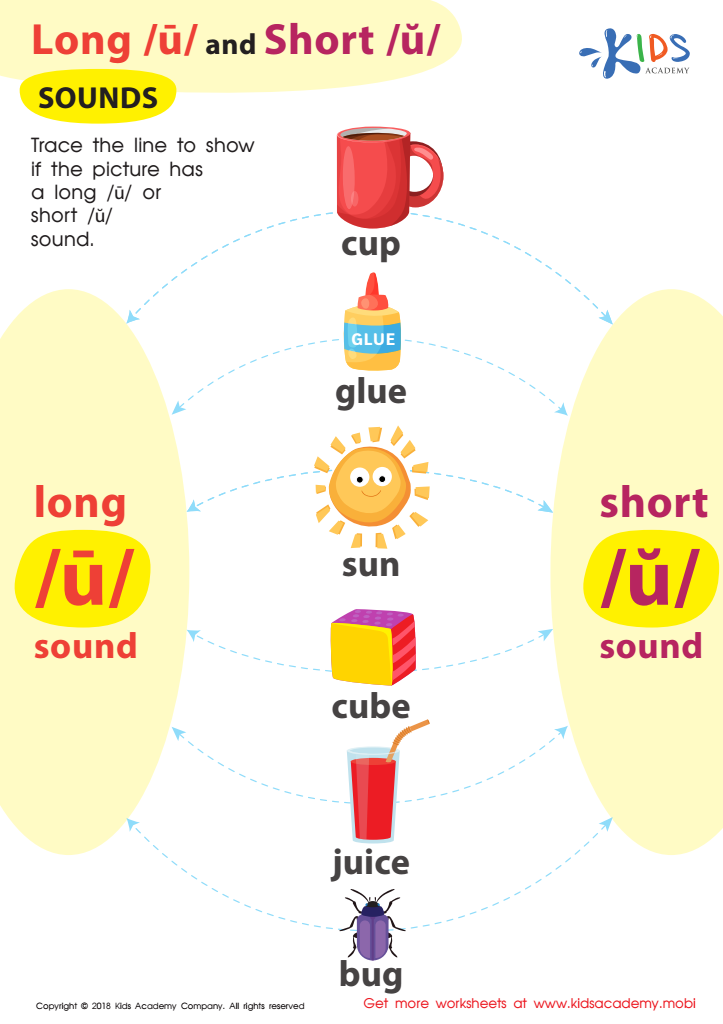
Reading: Long U and Short U Sounds Worksheet
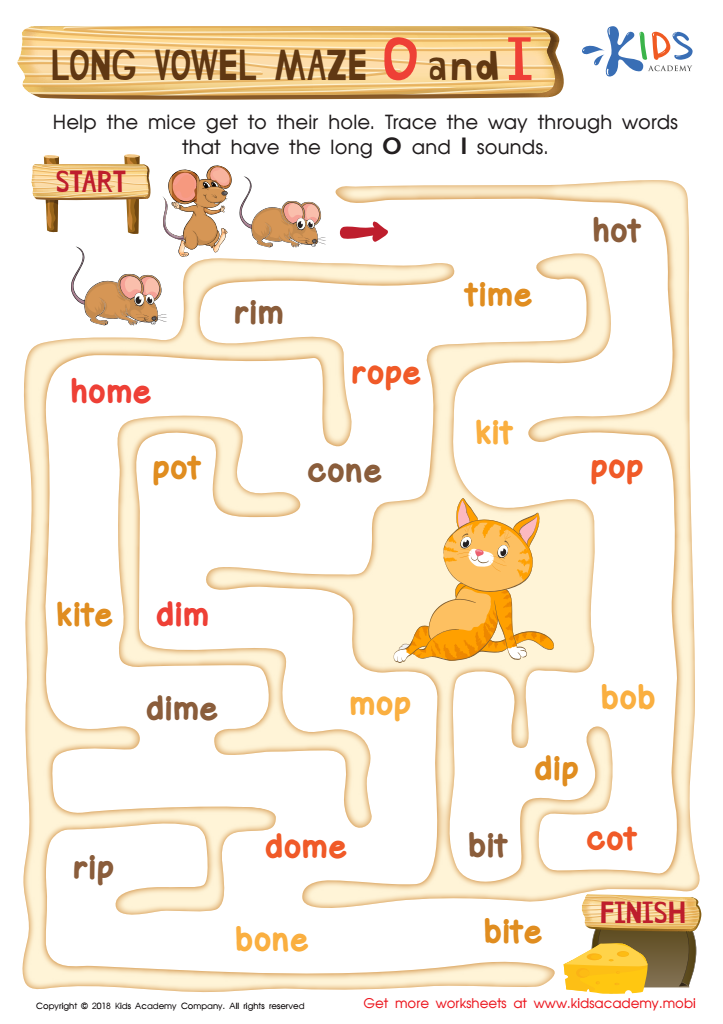
Long Vowel Maze /o/ and /i/ Worksheet








Vowel recognition and normal letter recognition are fundamental skills for 7-year-olds as they form the building blocks for effective reading and writing. For parents and teachers, fostering these skills early is crucial for several reasons. First, vowels are the core of syllables, and recognizing them helps children decode words, understand pronunciation, and improve spelling. This ability leads to smoother, more fluent reading, which in turn boosts comprehension and fosters a love for reading.
Moreover, recognizing letters, both vowels and consonants, unlocks the door to literacy. When children accurately identify letters, they develop stronger phonemic awareness—the understanding that words are constructed from individual sounds. This awareness is critical for mastering phonics and enhancing early spelling skills. It also aids them in distinguishing between similarly shaped letters, which sharpens their visual discrimination abilities.
A strong foundation in vowel and letter recognition sets children on a path to academic success. As literacy skills are closely linked to overall educational achievement, children who are proficient readers often perform better in other subjects. Thus, by prioritizing and supporting vowel recognition and letter recognition, parents and educators do not just teach children to read and write; they equip them with skills essential for lifelong learning and communication.








