
Understanding ecosystems Normal Science Worksheets for 7-Year-Olds
3 filtered results
Difficulty Level
Grade
Age
-
From - To
Subject
Activity
Standards
"Understanding Ecosystems Normal Science Worksheets for 7-Year-Olds" from Kids Academy are expertly designed to engage young minds in exploring the wonders of ecosystems. These worksheets cover essential concepts such as food chains, habitats, and the roles of various organisms. Through fun, interactive activities, children will learn how plants, animals, and their environments interact. Featuring colorful illustrations and age-appropriate content, these worksheets are perfect for both classroom and home learning. Ensure your young learner builds a strong foundation in science with engaging resources that make learning about ecosystems exciting and understandable. Discover more at Kids Academy!
Favorites
With answer key
Interactive
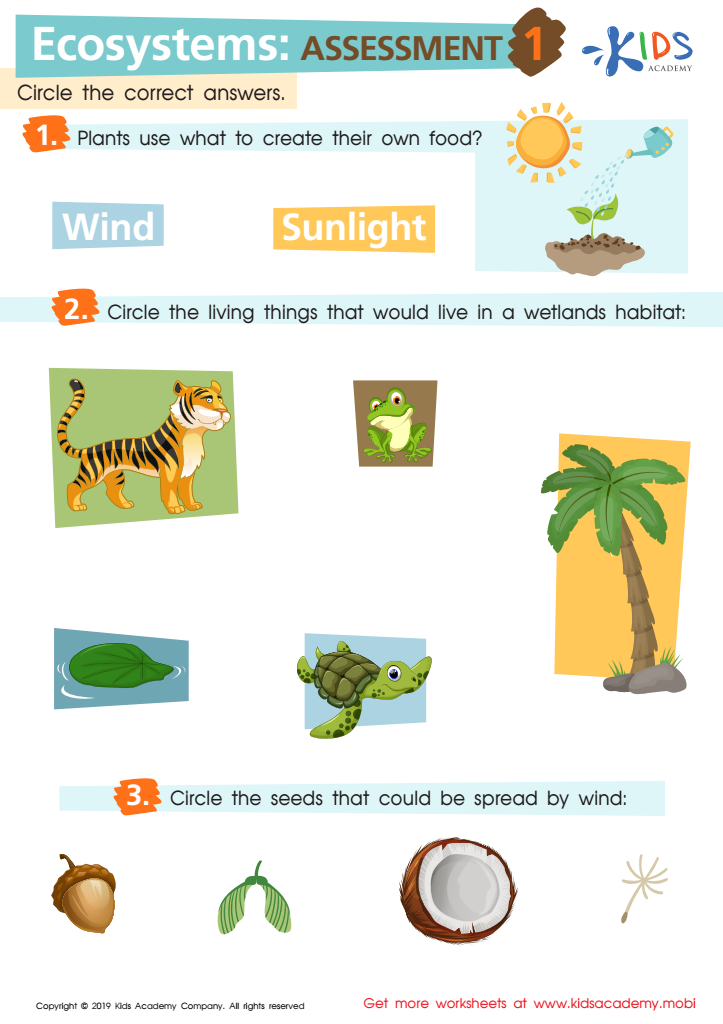
Ecosystems: Assessment 1 Worksheet
Before starting the worksheet, remind your child of the basics of the ecosystem, e.g. plants need light and winds carry small seeds. Encourage them to identify the images in the colorful printout. Ask them the questions and help them circle the correct answers.
 Assign to My Students
Ecosystems: Assessment 1 Worksheet
Worksheet
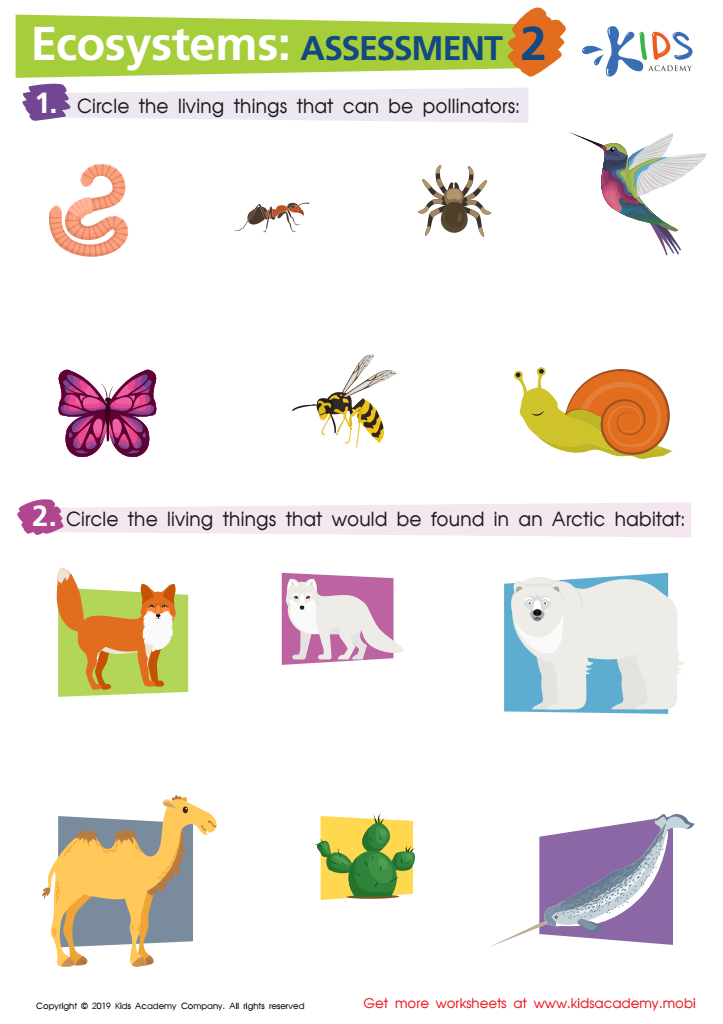
Ecosystems: Assessment 2 Worksheet
Pollinators are living or non-living things that help pollen spread. Test your child's knowledge of the ecosystem with this worksheet. Point out animals in the picture, then ask the simple questions. Help your child circle the right answers.
Ecosystems: Assessment 2 Worksheet
Worksheet
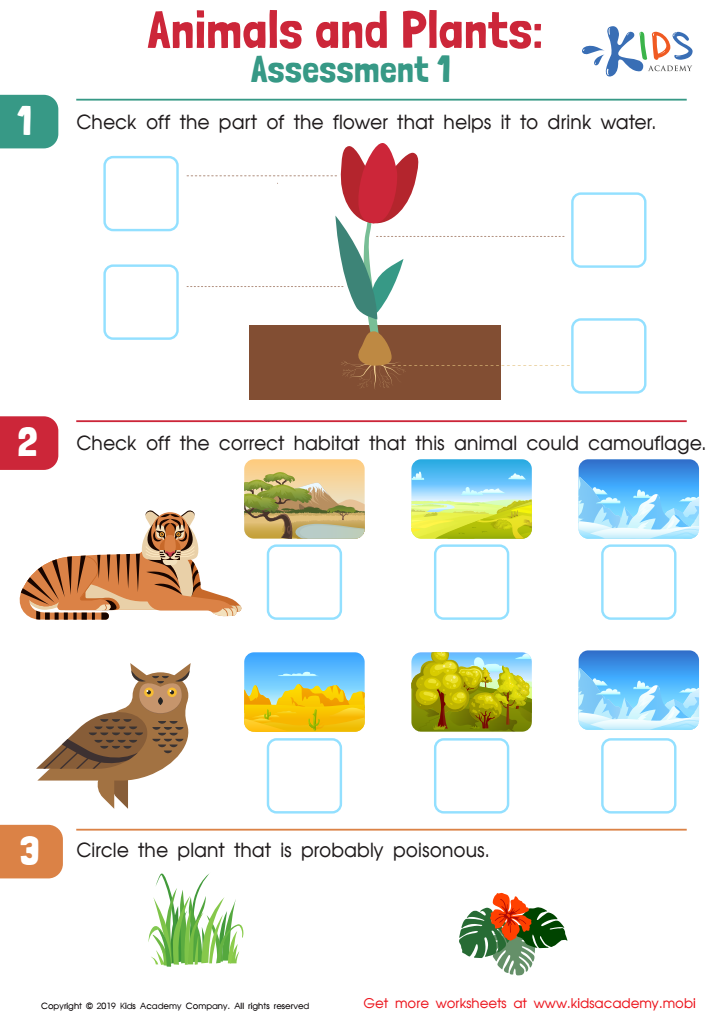
Animals and Plants: Assessment 1 Worksheet
Do you want to easily assess your child's understanding of basic science concepts? This colorful PDF offers a free opportunity for them to test their knowledge about parts of a flower, poisonous plants, animal habitats and more! Bright pictures make it fun and easy for you to see what they know.
Animals and Plants: Assessment 1 Worksheet
Worksheet
Join Kids Academy for Free
Who is primarily going to use this learning content?







Understanding ecosystems is incredibly important for young children, and parents and teachers should invest in this education for several reasons. First, learning about ecosystems introduces kids to the basics of biology and environmental science, sparking curiosity and providing foundational knowledge that will be built upon in later years.
Second, understanding how ecosystems work helps children grasp the concept of interdependence. They learn how various organisms, including plants, animals, and humans, rely on each other for survival. This can foster a sense of responsibility and empathy for the environment, encouraging children to engage in eco-friendly behaviors, like recycling and conservation.
Moreover, appreciating the intricacies of ecosystems helps children develop critical thinking skills. They learn to observe carefully, make connections, and solve problems by understanding how living and nonliving components interact within a habitat. These analytical skills are valuable across all areas of education.
Finally, with current global challenges like climate change and species extinction, teaching children about ecosystems prepares them to be informed and responsible global citizens. They are the future stewards of our planet, and a solid understanding of ecological principles will equip them to make better decisions for sustainable living.
In brief, educating young children about ecosystems enriches their academic, social, and moral development, and helps cultivate responsible and informed future leaders.







