Vocabulary development Normal Alphabet Worksheets for Ages 8-9
3 filtered results
-
From - To
Boost your child's language skills with our engaging "Vocabulary Development Normal Alphabet Worksheets" designed for ages 8-9. These printables from Kids Academy make learning fun and effective, encouraging young learners to expand their vocabulary through interactive exercises and activities. Tailored to support fundamental language development, our worksheets cover essential alphabet knowledge while enhancing comprehension, spelling, and word usage. Perfect for home or classroom settings, these tools adapt to various learning styles, ensuring every child progresses confidently. Empower your 8-9-year-old with the linguistic foundation they need for future academic success! Explore more on Kids Academy to find additional resources.
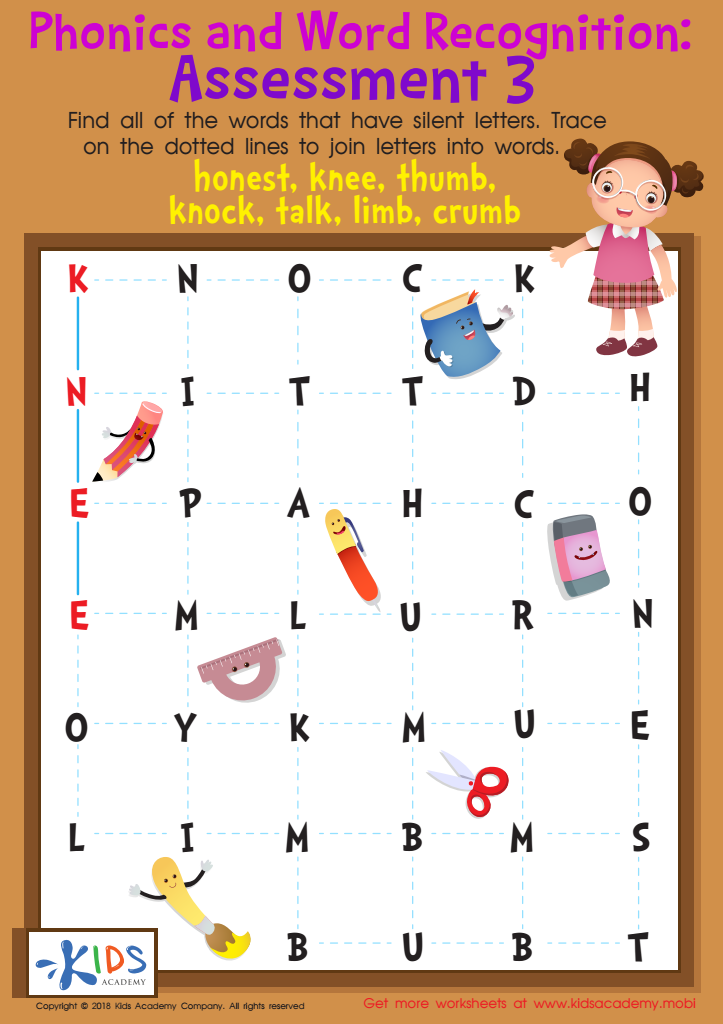
Phonics and Word Recognition: Assessment 3 Worksheet
 Assign to My Students
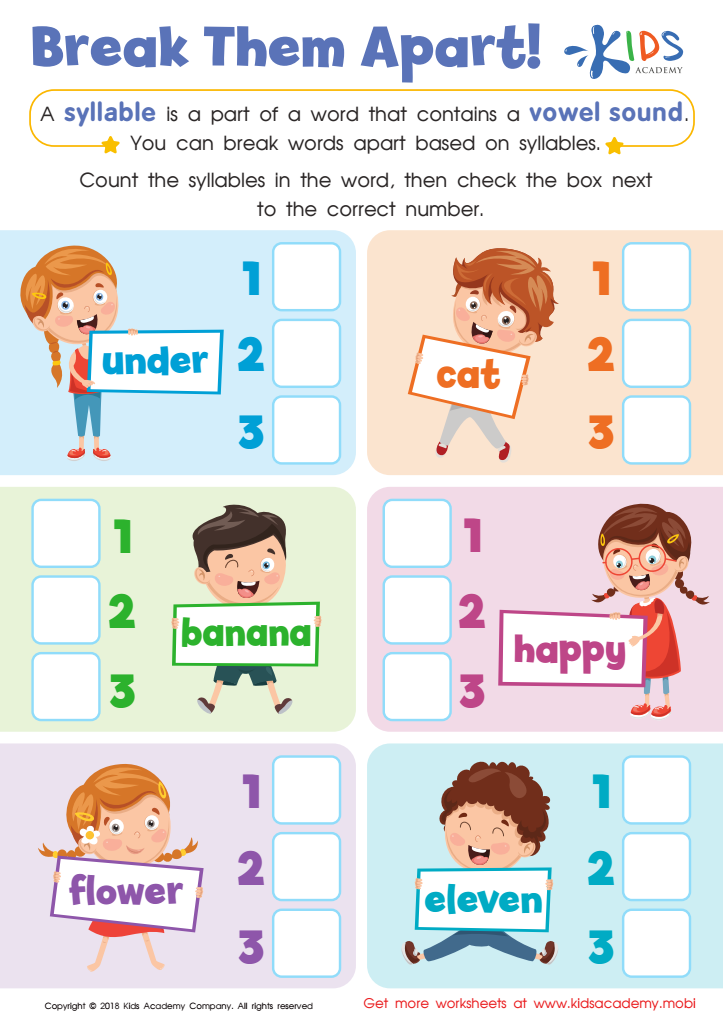
Reading: Break Them Apart Worksheet
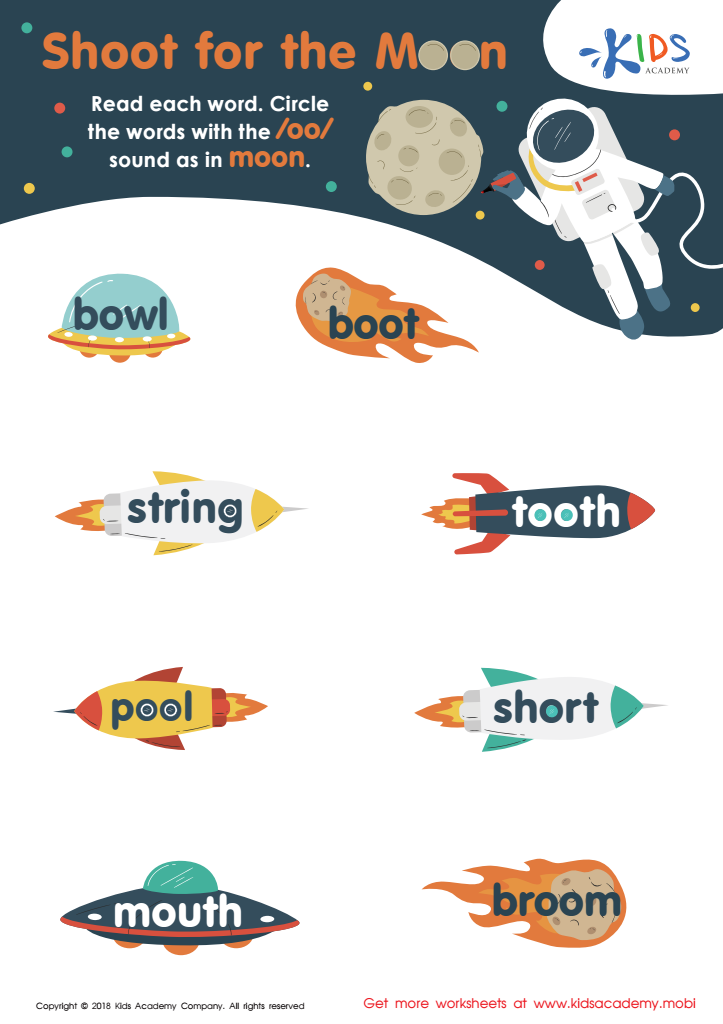
Reading: Shoot for the Moon Worksheet








Vocabulary development is a crucial aspect of a child’s early education, particularly for ages 8-9. At this stage, children are not only expanding their repertoire of words but are also beginning to use them more independently and creatively in both speech and writing. Parents and teachers should prioritize vocabulary development for several reasons.
Firstly, a robust vocabulary enhances reading comprehension. When children understand the words they encounter in texts, they can more easily grasp the overall message and engage with the content. This, in turn, fosters a love for reading, which has lifelong benefits.
Secondly, a rich vocabulary improves communication skills. It allows children to express themselves more clearly and accurately, whether participating in discussions, giving presentations, or writing stories. This skill is vital for academic success and personal confidence.
Thirdly, early vocabulary development is linked to academic achievement across subjects, not just in language arts. A strong vocabulary helps children understand and engage with content in subjects like science, social studies, and math, where specific terms and concepts are essential.
Lastly, vocabulary development supports cognitive development by enhancing critical thinking and problem-solving skills. Knowing a broad range of words helps children better process information, make connections, and articulate their thoughts.
In sum, investing in vocabulary growth is essential for academic success, effective communication, and overall cognitive development, making it a critical focus for parents and teachers.







