
Phonics practice Normal Building Vocabulary Worksheets for Ages 8-9
3 filtered results
Difficulty Level
Grade
Age
-
From - To
Subject
Activity
Standards
Discover our engaging Phonics Practice Normal Building Vocabulary Worksheets designed specifically for children ages 8-9. These worksheets provide an interactive way to enhance reading skills and vocabulary development. Each activity focuses on phonics, helping young learners understand sound-letter relationships while expanding their word bank. With fun exercises that incorporate games and challenges, children will enjoy their learning experience and build essential literacy skills. Ideal for both classroom and home use, these worksheets support comprehensive learning and foster a love for reading. Start your child's journey to becoming a confident reader today with our thoughtfully crafted phonics practice resources!
Favorites
With answer key
Interactive
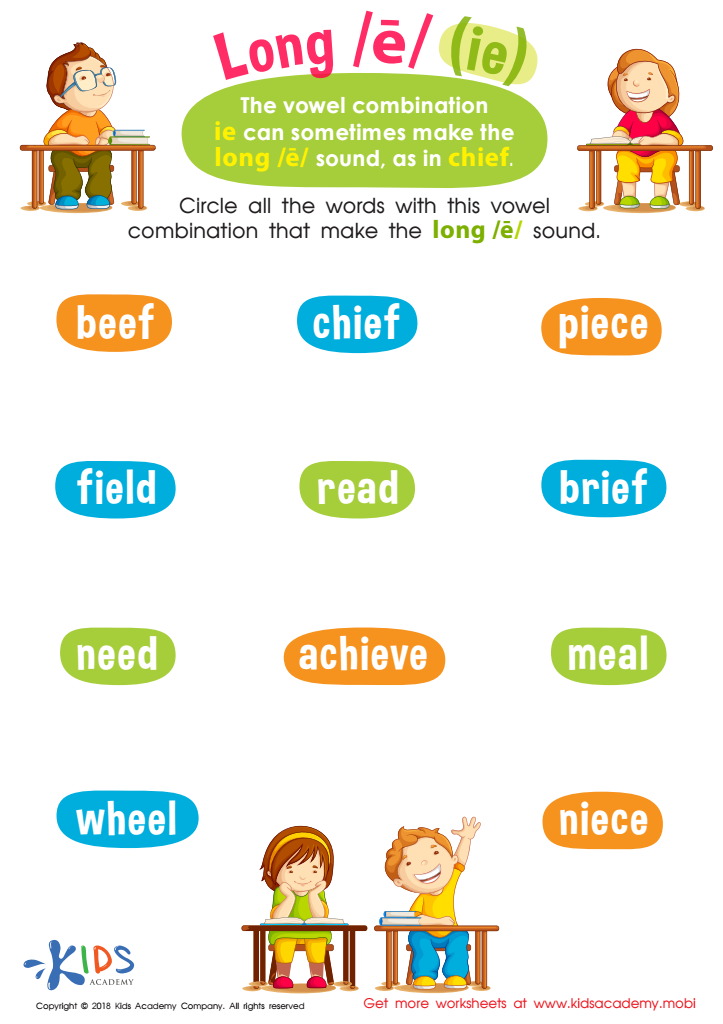
Reading: Long E and IE Worksheet
Ask your child to name some words with the long /e/ sound they hear every day. Then, read aloud all the words in the worksheet with them. Ask them to circle the words containing ie that make this sound.
 Assign to My Students
Reading: Long E and IE Worksheet
Worksheet











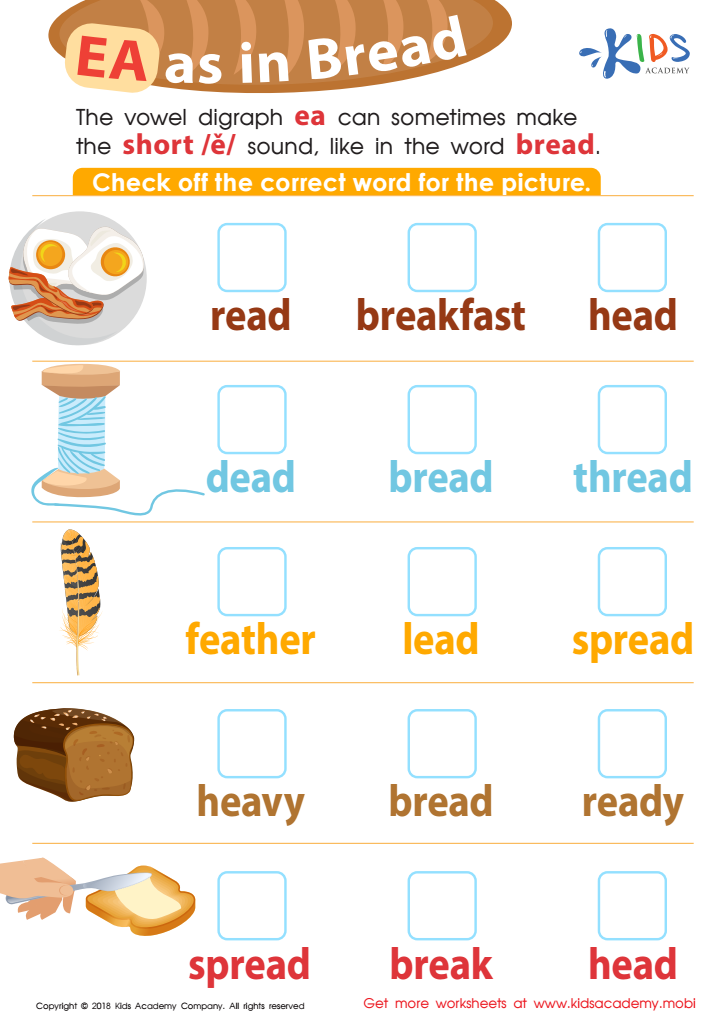
Reading: EA as in Bread Worksheet
The vowel digraph ea can be read in two ways. Examples of the long sound are "read" and "lead"; examples of the short sound are "bread" and "head". Ask your kids to give you more examples and then have them check off the correct word for the pictures on this worksheet. This will help them understand the ea sound.
Reading: EA as in Bread Worksheet
Worksheet
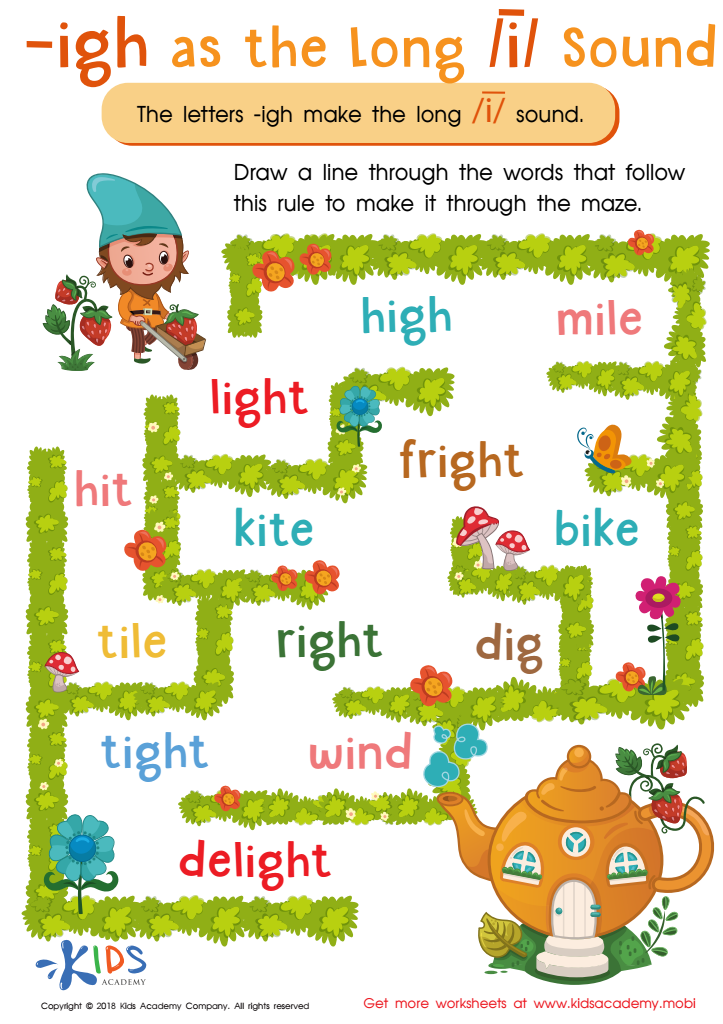
Reading: IGH as Long I Worksheet
Kids can have fun and learn with this maze! They'll look for and read words with the 'long I' sound spelled 'igh'. Most words ending with 'T' have this spelling. Decode words while learning about long vowel sounds and their spellings.
Reading: IGH as Long I Worksheet
Worksheet
Join Kids Academy for Free
Who is primarily going to use this learning content?








Phonics practice is crucial for children aged 8-9 as it lays a strong foundation for reading and writing skills. At this developmental stage, children are shifting from learning to read to reading to learn. A solid grasp of phonics enables them to decode unfamiliar words, boosting their confidence and comprehension. When children understand the relationship between letters and sounds, they can apply this knowledge to build and expand their vocabulary.
Moreover, robust vocabulary development is essential for academic success. It enhances reading comprehension and allows children to express themselves clearly in writing and conversation. Teachers and parents should actively engage in phonics practice, as it equips children with the tools they need to navigate increasingly complex texts in subjects like science and social studies.
Additionally, consistent phonics and vocabulary exercises foster a love for reading. Children who find reading enjoyable are more likely to explore literature independently, further enhancing their linguistic skills. In essence, prioritizing phonics and vocabulary development not only supports children’s immediate learning needs but also instills a lifelong appreciation for language and literature, preparing them for future academic challenges.








