Historical Knowledge Normal Reading Comprehension Worksheets for Ages 8-9
3 filtered results
-
From - To
Discover our Historical Knowledge Normal Reading Comprehension Worksheets designed for ages 8-9. These thoughtfully crafted resources help children learn about important historical events and figures while boosting reading comprehension skills. Each worksheet includes interesting passages and a variety of question types, such as multiple-choice, short-answer, and true or false, aimed at evaluating your child's understanding and critical thinking. Engage young learners with fascinating history lessons that not only teach past events but also promote literacy and cognitive development. Perfect for classroom use or homeschooling, our worksheets provide a fun, educational experience tailored to young historians.
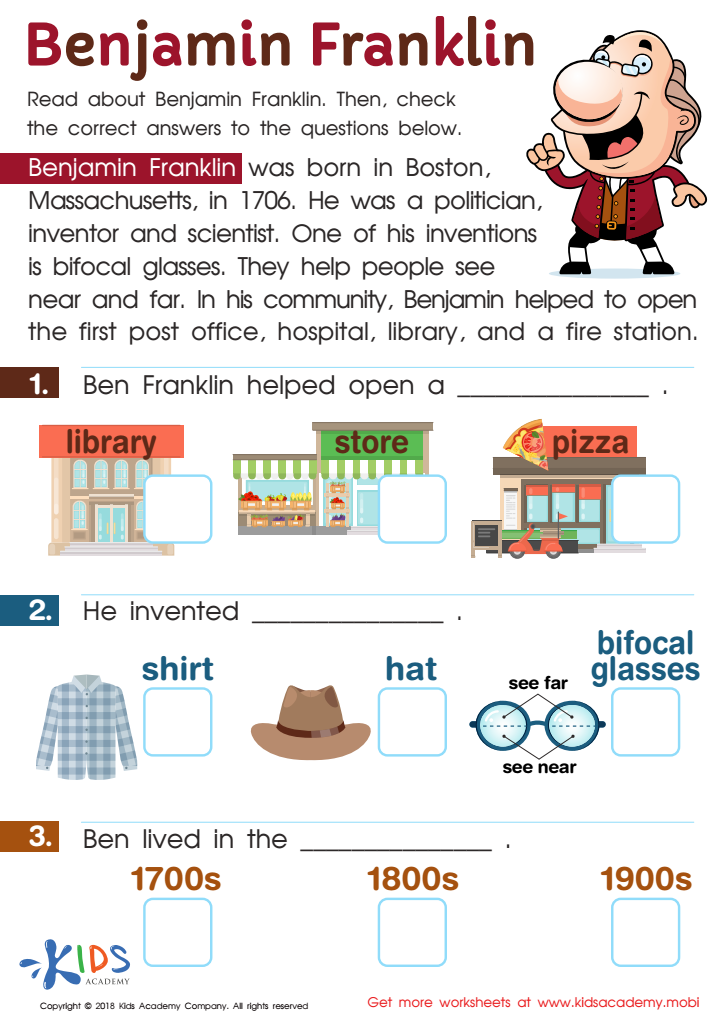
Benjamin Franklin Worksheet
 Assign to My Students
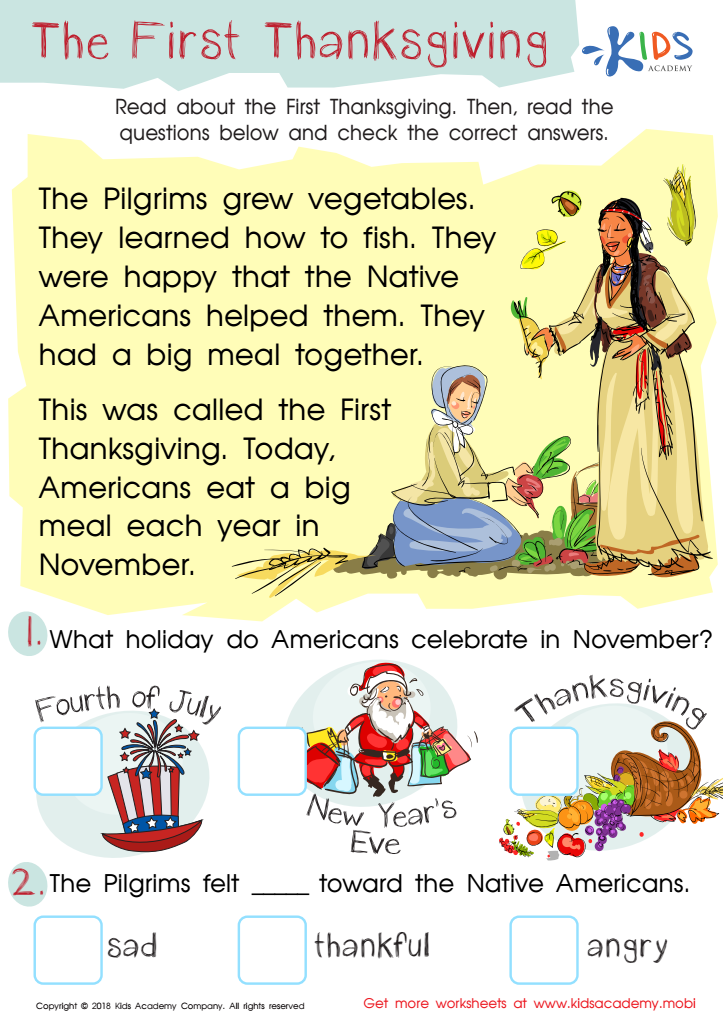
Assessment: First Thanksgiving Worksheet
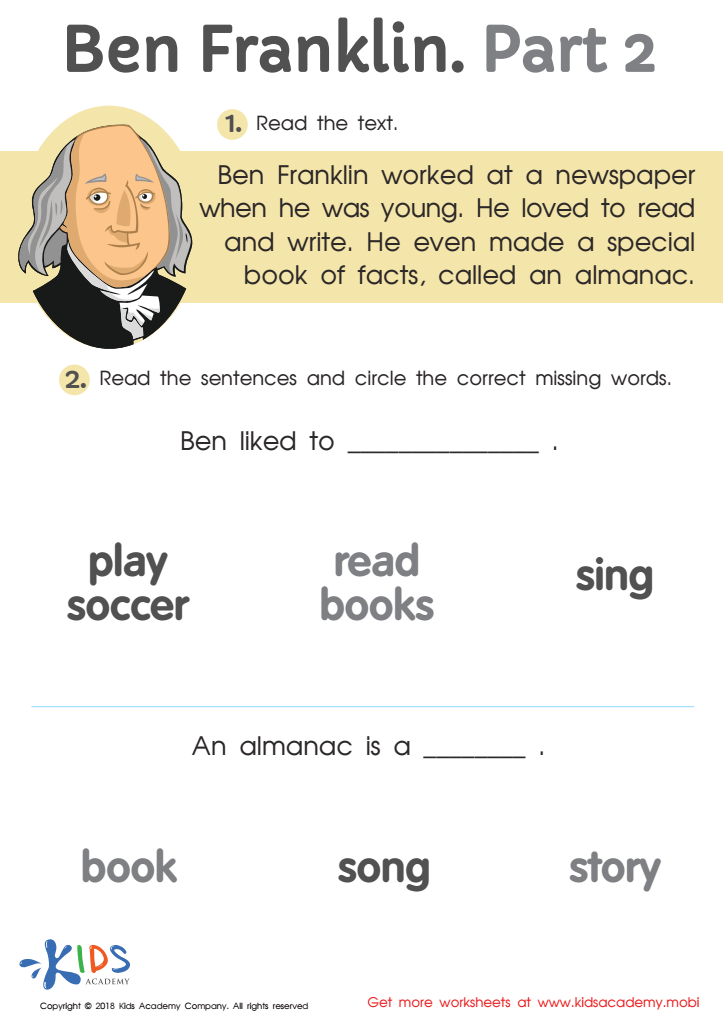
Ben Franklin Part 2 Worksheet








Understanding historical knowledge within reading comprehension is vital for children ages 8-9 because it supports their overall educational development and cultivates critical thinking. At this age, young learners are transitioning from learning to read to reading to learn, meaning they are now using their reading skills to gather and understand information across various subjects.
Firstly, integrating history into reading comprehension enhances vocabulary and language skills. Familiarity with historical events and figures enriches children's knowledge base, making them more competent readers who can draw connections between texts and their broader world.
Moreover, historical context in reading materials helps children develop empathy and perspective-taking skills. Encountering diverse narratives and different time periods allows them to understand and appreciate experiences outside their own lives, fostering a more inclusive worldview.
In addition, learning about history through reading builds critical thinking and analytical skills. When children analyze and discuss historical events, they learn to evaluate sources, identify cause and effect, and develop reasoning abilities. These skills are transferrable to other academic areas and are essential for problem-solving and informed decision-making.
Parents and teachers play a critical role in nurturing these skills. By providing engaging historical texts and guiding discussions, they help children see the relevance of history in today's world and encourage lifelong learning and curiosity.








