Moral lesson understanding Normal Reading Comprehension Worksheets for Ages 8-9
4 filtered results
-
From - To
Enhance your child's reading and moral comprehension with our specially designed worksheets for ages 8-9. Our worksheets focus on normal reading comprehension while seamlessly integrating moral lessons to ensure holistic education. These engaging activities help kids understand core values like kindness, honesty, and responsibility through intriguing stories and thoughtful questions. By working through these tasks, children not only improve their reading skills but also learn to discern and appreciate moral values in everyday situations. Fun and educational, our worksheets are an excellent resource for parents and educators aiming to cultivate both intellectual and moral growth in young learners.
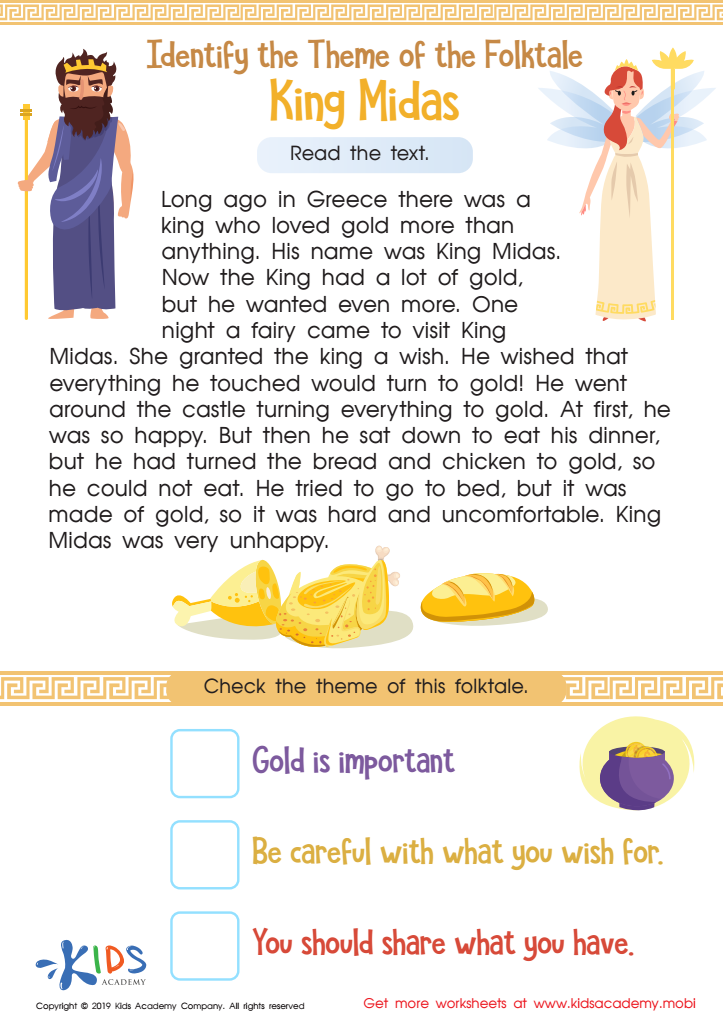
King Midas Worksheet
 Assign to My Students
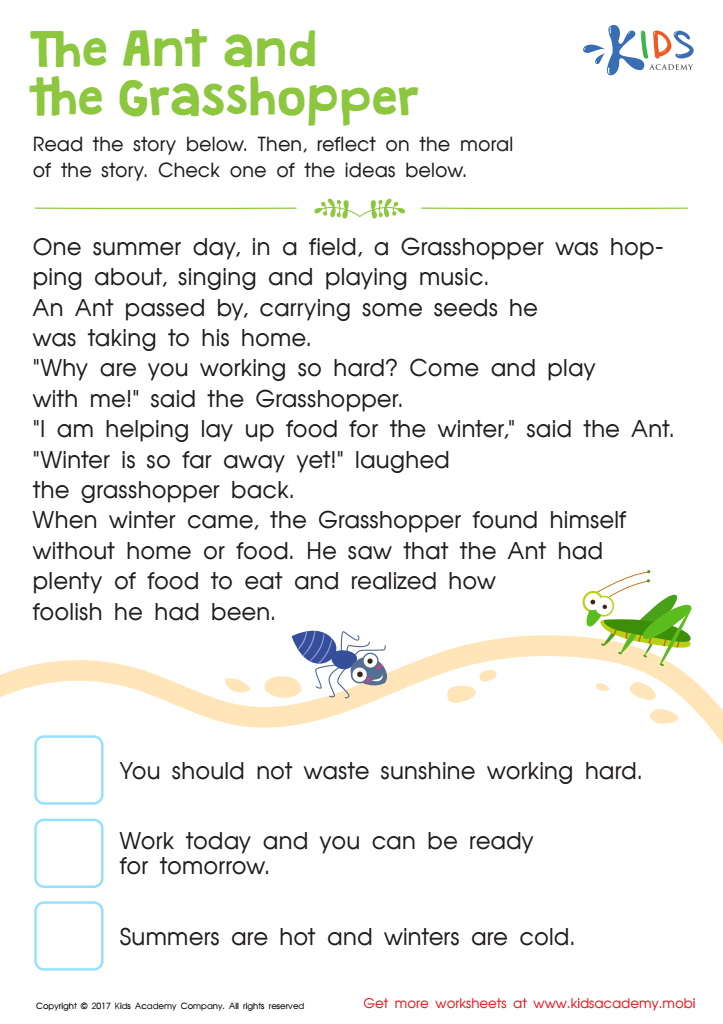
The Ant and The Grasshopper Printable
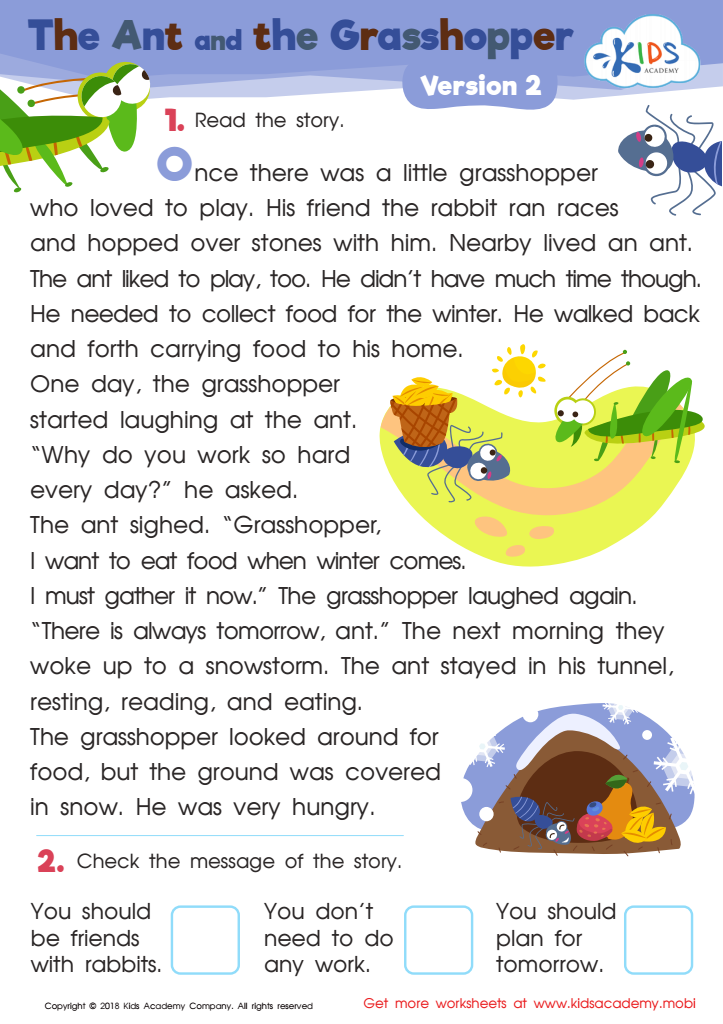
The Ant and The Grasshopper Version 2 Worksheet
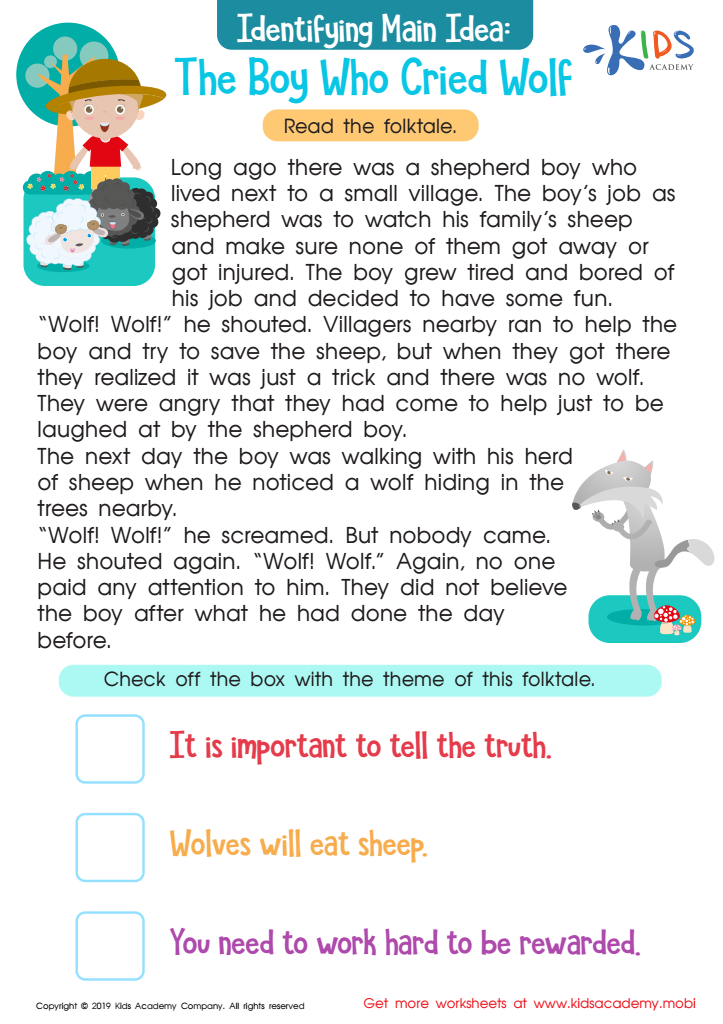
The Boy Who Cried Wolf Part 2 Worksheet




.jpg)

Understanding moral lessons and developing normal reading comprehension skills in children aged 8-9 is crucial for their overall development. At this formative age, children start to grasp the difference between right and wrong and the consequences of their actions. Learning moral lessons through stories helps instill core values such as empathy, honesty, respect, and responsibility, which are essential for their social interactions and ethical development.
Normal reading comprehension—the ability to understand and process text—is equally important. When children can comprehend what they read, they become better learners, both academically and socially. They develop critical thinking skills and enhance their vocabulary, which supports their communication abilities. Moreover, proficient reading comprehension lays the foundation for lifelong learning, encouraging curiosity and a love for reading.
Combining moral lessons with reading comprehension not only improves their cognitive skills but also aids in emotional and social growth. Stories with clear moral lessons can spark discussions, helping children articulate their thoughts and feelings. This dual focus prepares them for more complex moral dilemmas and enhances their reading skills, setting a solid groundwork for future academic success and personal development.
Thus, parents and teachers should prioritize these elements to ensure a well-rounded and holistic development for children.








