Vocabulary development Normal Reading Comprehension Worksheets for Ages 8-9
6 filtered results
-
From - To
Boost your child's language skills with our Vocabulary Development Normal Reading Comprehension Worksheets designed for ages 8-9. These engaging and educational worksheets from Kids Academy are tailored to help young learners enhance their vocabulary and improve their reading comprehension. Each worksheet focuses on contextual vocabulary building and provides exciting exercises to help kids understand and use new words effectively. Our resources are perfect for supporting school learning or home practice, ensuring that children develop confidence in their reading and comprehension abilities. Cultivate a love for reading and a strong vocabulary foundation with our expertly crafted worksheets.
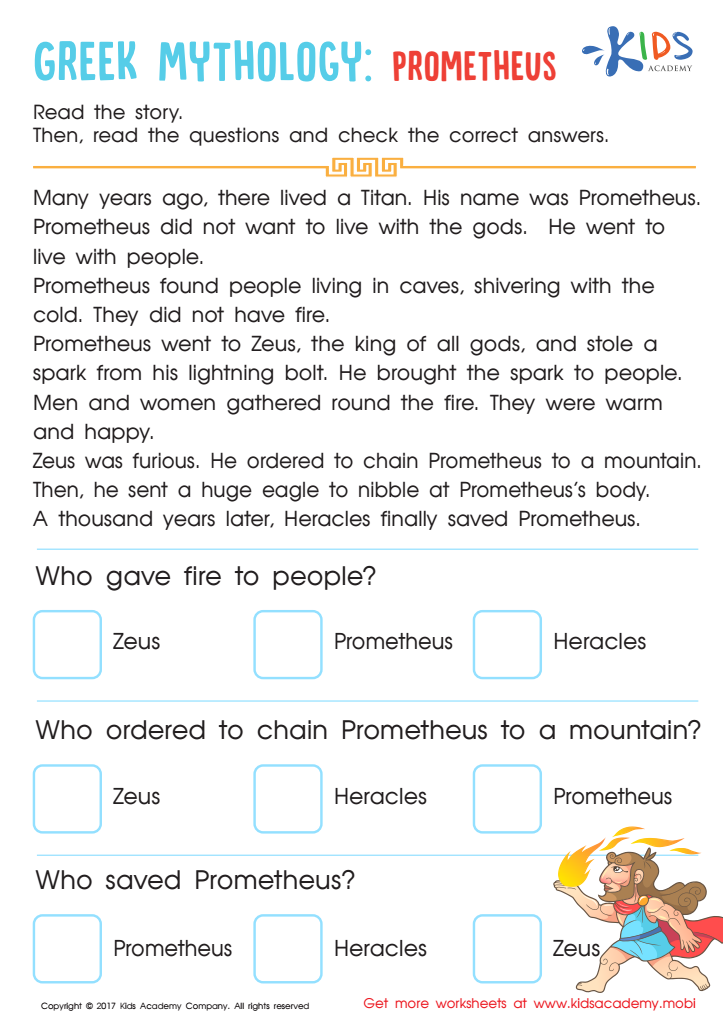
Prometheus Story Worksheet
 Assign to My Students
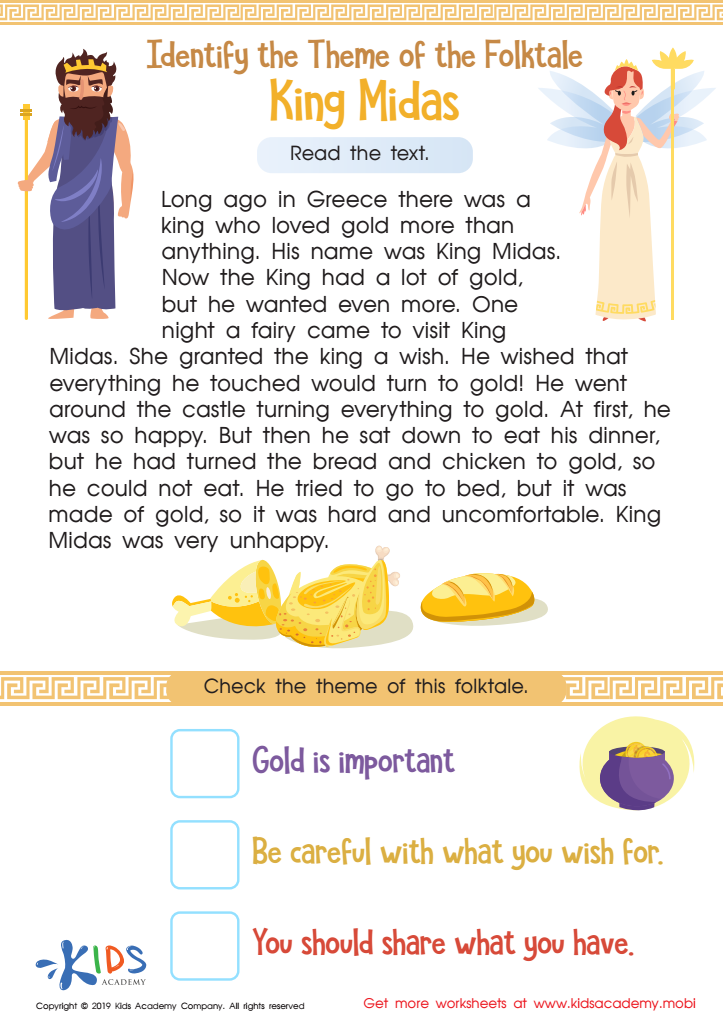
King Midas Worksheet
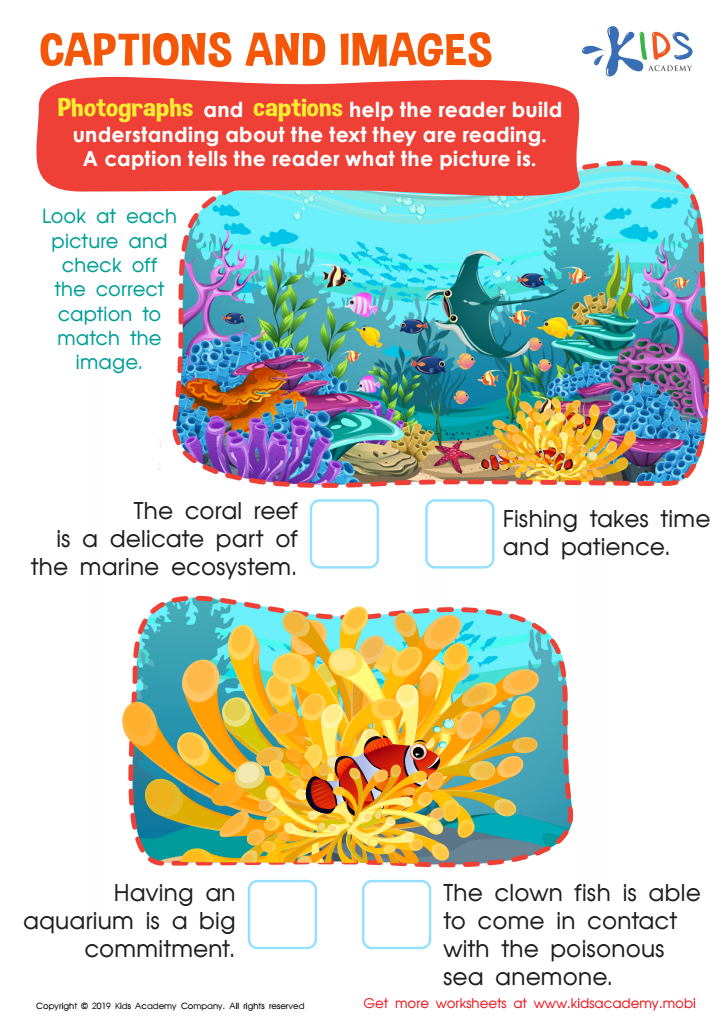
Captions and Images Worksheet
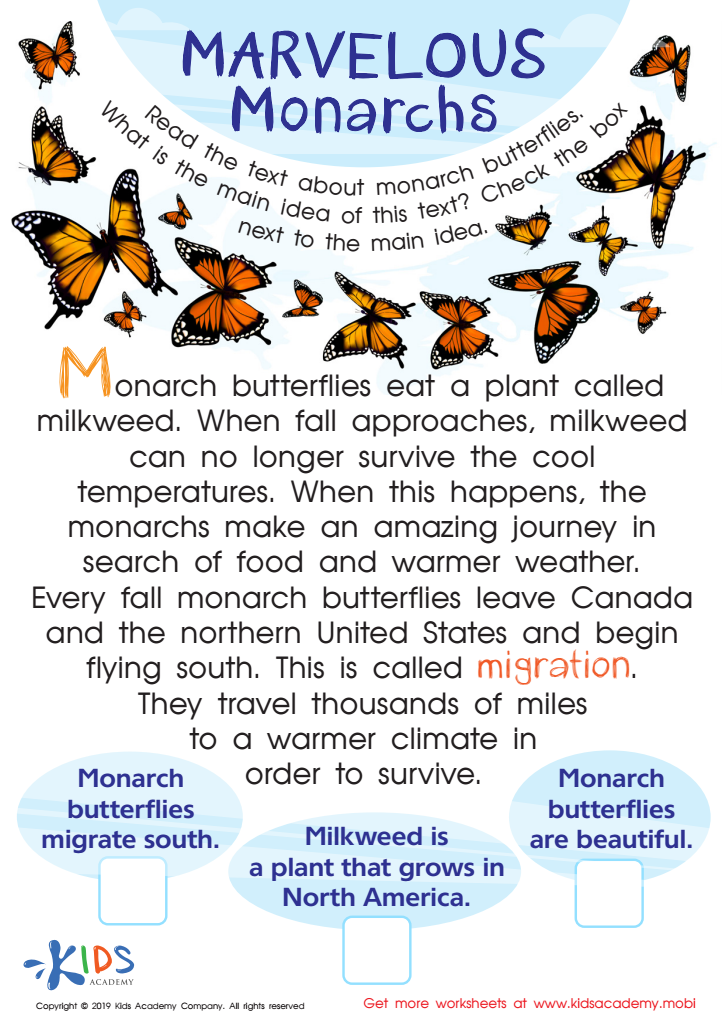
Marvelous Monarchs Worksheet
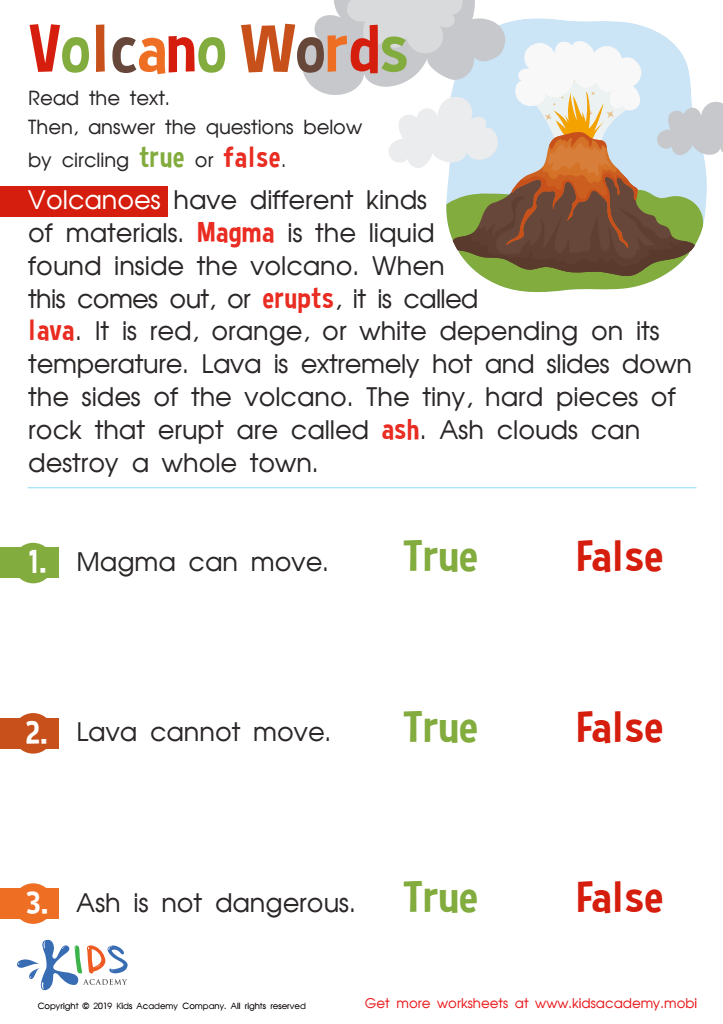
Volcano Words Worksheet
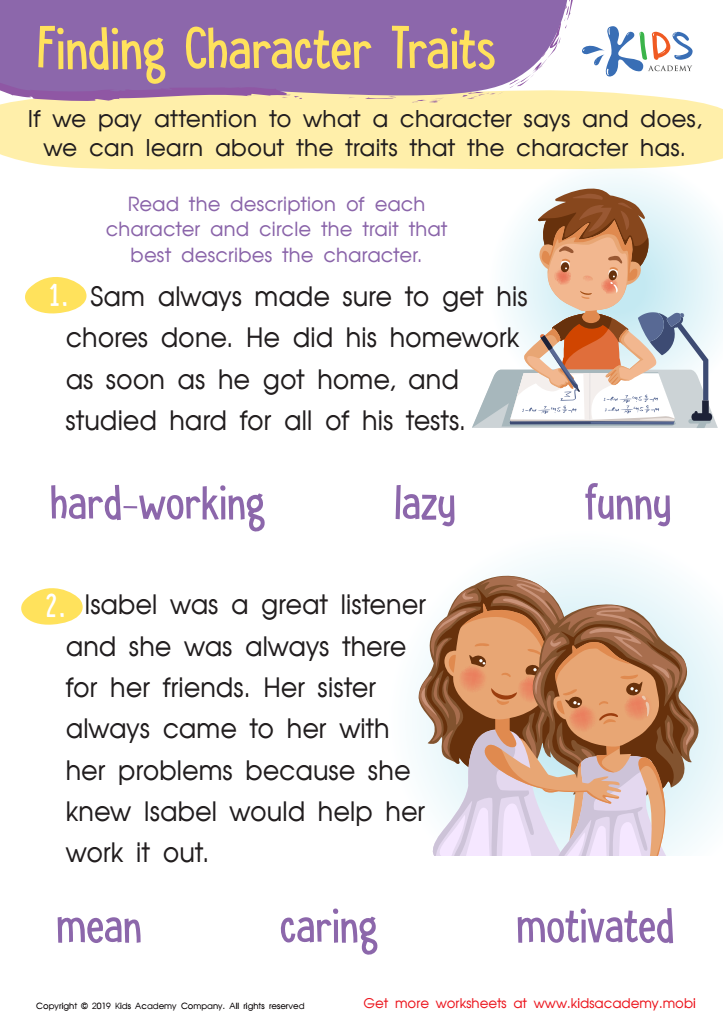
Finding Character Traits Worksheet








Vocabulary development and reading comprehension skills are crucial for children aged 8-9 because they lay the foundation for all future learning and academic success. At this age, children transition from learning to read to reading to learn. A rich vocabulary allows them to understand new subjects, follow complex instructions, and engage with diverse texts across different subjects.
Investing in vocabulary development helps children express themselves more clearly and accurately, both in speaking and writing. This enhances their ability to connect with peers, build relationships, and participate fully in classroom activities and discussions. Furthermore, understanding a wide array of words enables them to deduce the meaning of unfamiliar terms from context, boosting their overall comprehension.
Reading comprehension is equally essential because it affects a child's ability to process and retain information. Strong comprehension skills mean that a child can grasp underlying themes, infer meanings, and critically evaluate what they read, which are all higher-order thinking skills. This sets the stage for independent learning and problem-solving, crucial abilities for future academic and personal success.
When parents and teachers prioritize vocabulary and reading comprehension, they empower children with the language tools they need to succeed academically, socially, and later in life. Early intervention and support in these areas can make a significant difference in long-term educational outcomes.








