Fine Motor Skills Normal Letter E Worksheets for 9-Year-Olds
3 filtered results
Difficulty Level
Grade
Age
-
From - To
Subject
Activity
Standards
Enhance your 9-year-old's fine motor skills with our engaging "Normal Letter E Worksheets." Specifically designed for young learners, these worksheets offer a fun and interactive way to practice writing the letter "E". As children trace, color, and complete activities, they'll improve hand-eye coordination and dexterity while reinforcing their understanding of the alphabet. Our worksheets are perfect for home or classroom use, fostering both skill development and creativity. With vibrant illustrations and age-appropriate exercises, your child will enjoy learning and confidence-building as they master the letter "E." Explore our collection and watch your child's fine motor skills flourish!
Favorites
With answer key
Interactive
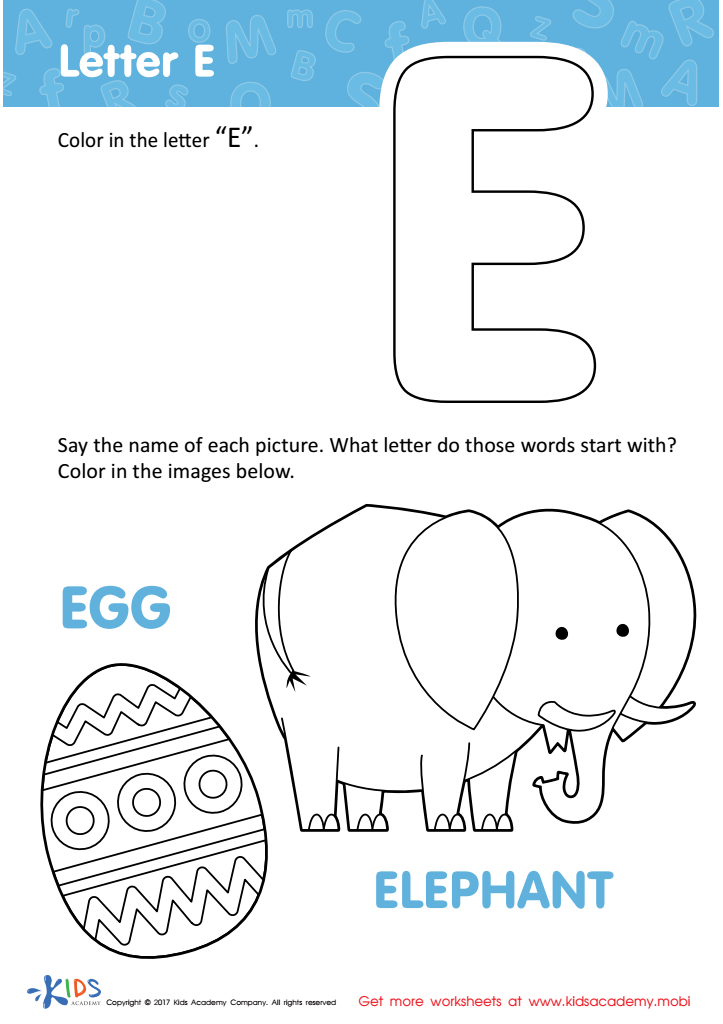
Letter E Coloring Sheet
Coloring pages are great for teaching kids the alphabet and words! This "E" page features a cute elephant and Easter egg. Kids will love it and learn the letter "E" at the same time. 80 words
Download (PDF)
 Assign to My Students
Assign to My Students
Letter E Coloring Sheet
Worksheet

Letter E Tracing Worksheet
Students trace and write uppercase and lowercase letter E. They sound out "E" words, choosing those with short "E" sounds. Preschoolers identify the difference between the 'E' sounds in words like "egg" and "turkey." A tracing sheet helps them to understand.
Letter E Tracing Worksheet
Worksheet
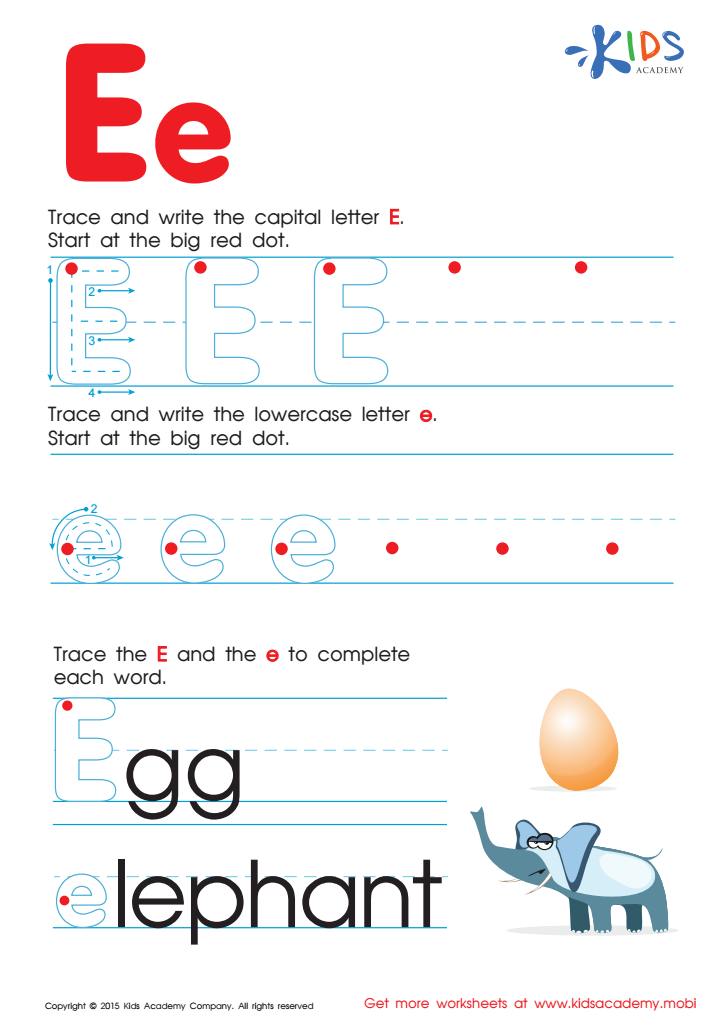
Letter E Tracing Page
Trace and write the uppercase and lowercase "E" starting at the big red dot. Complete words to perfect letter writing. Egg and Elephant must be written carefully. More alphabet worksheets for kindergarten are available for download to spend more time with your children learning.
Letter E Tracing Page
Worksheet
Join Kids Academy for Free
Who is primarily going to use this learning content?






Fine motor skills are crucial for children, especially as they reach the age of nine, when they engage in more complex writing and crafting activities. The development of these skills directly impacts a child's ability to perform tasks that require precision, such as writing letters and numbers legibly and efficiently. Focusing on the normal letter "E" as part of fine motor skill development is important because it offers a tangible benchmark.
At this age, children are refining their grip, coordination, and control over writing instruments. If they struggle with forming the letter "E," it suggests larger concerns about their grasp on writing overall. These skills are not just relevant for academic performance; they foster confidence and independence, impacting students' attitudes toward learning.
Parents and teachers should prioritize fine motor activities—such as cutting, drawing, and manipulating small objects—that encourage precision. Enhancing fine motor skills also lays a foundation for future tasks in science, art, and sports. Overall, paying attention to this aspect of childhood development ensures children are equipped for both their current schooling and future challenges, ultimately fostering their growth as confident learners.