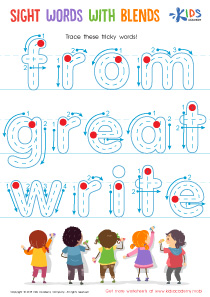
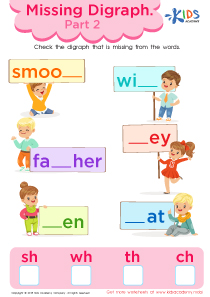
Phonics recognition Normal Grade 1 Phonics Worksheets
4 filtered results
Difficulty Level
Grade
Age
-
From - To
Subject
Activity
Standards
Boost your child's reading skills with our Grade 1 Phonics Recognition Worksheets! Tailored for young learners, these printable worksheets are designed to enhance phonemic awareness and improve sound-letter associations. Children will enjoy engaging activities that introduce various phonics patterns, empowering them to decode words confidently. Our worksheets include interactive exercises that promote critical thinking, phonics recognition, and vocabulary development. Each activity is crafted to align with first-grade learning standards, making them ideal for classroom use or at-home practice. Watch as your child's literacy skills flourish and their love for reading grows with our fun and educational phonics resources!
Favorites
With answer key
Interactive
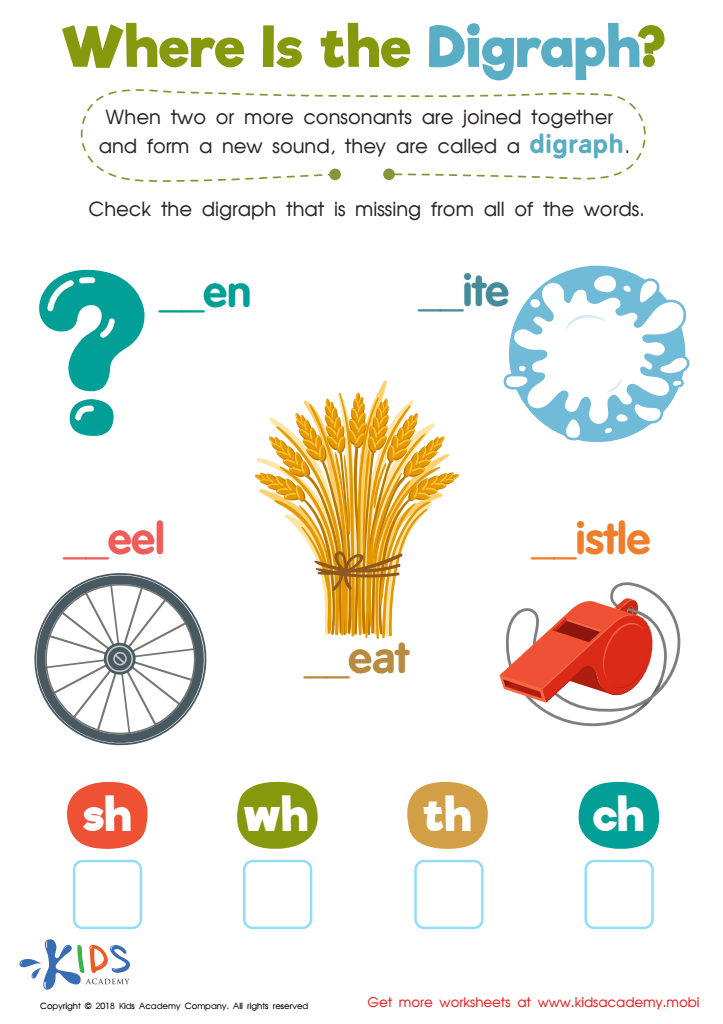
Where Is the Digraph? Worksheet
Teach your child about digraphs - two or more consonants that form one sound, like /wh/, /sh/, and /ch/. Show them words with these sounds and use this worksheet to help. Ask them which digraph is missing from the words and point out the pictures. 80 words.
 Assign to My Students
Where Is the Digraph? Worksheet
Worksheet
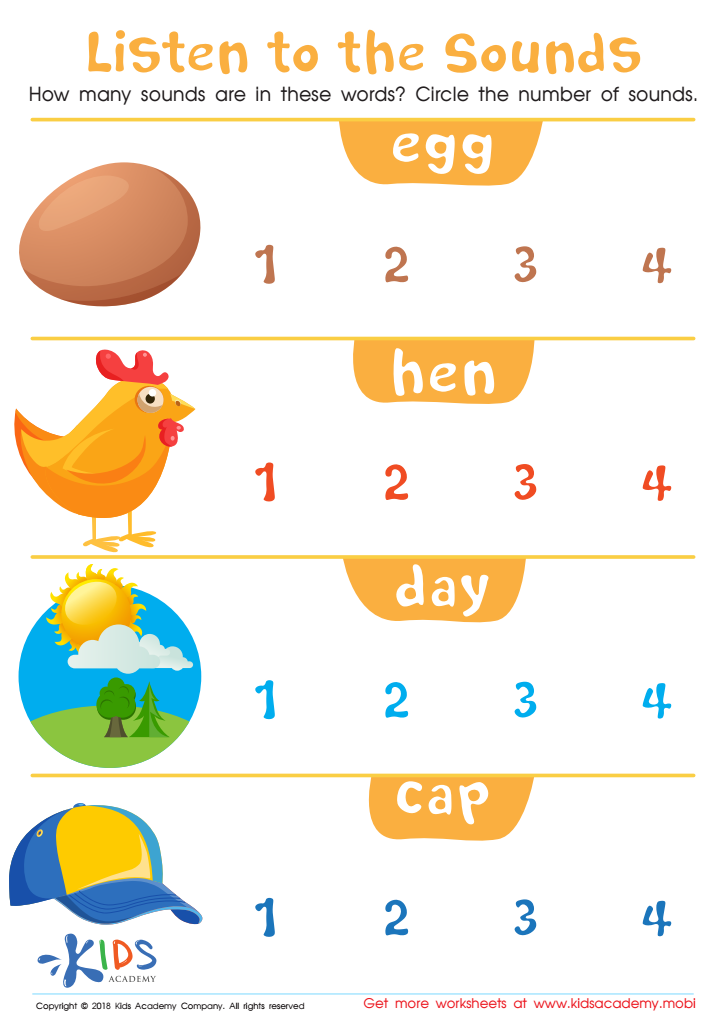
Listen to the Sounds Worksheet
This worksheet builds emerging readers' skills in using sounds for reading and spelling. It helps strengthen auditory processing by having them count the sounds in each word, then trace the corresponding number. Fun and cheerful!
Listen to the Sounds Worksheet
Worksheet
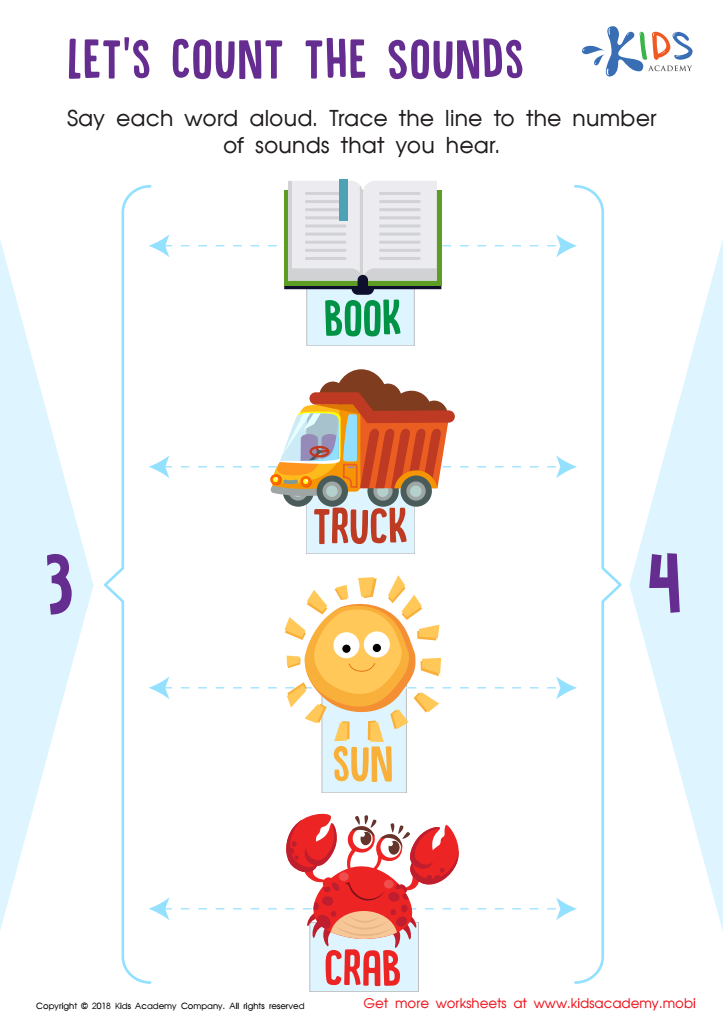
Let's Count the Sounds Worksheet
This bright and cheery traceable worksheet encourages children to practice auditory discrimination and phonological awareness. Using picture clues, they read each word and trace the line that represents the number of sounds heard. This builds decoding skills and helps them become successful readers.
Let's Count the Sounds Worksheet
Worksheet
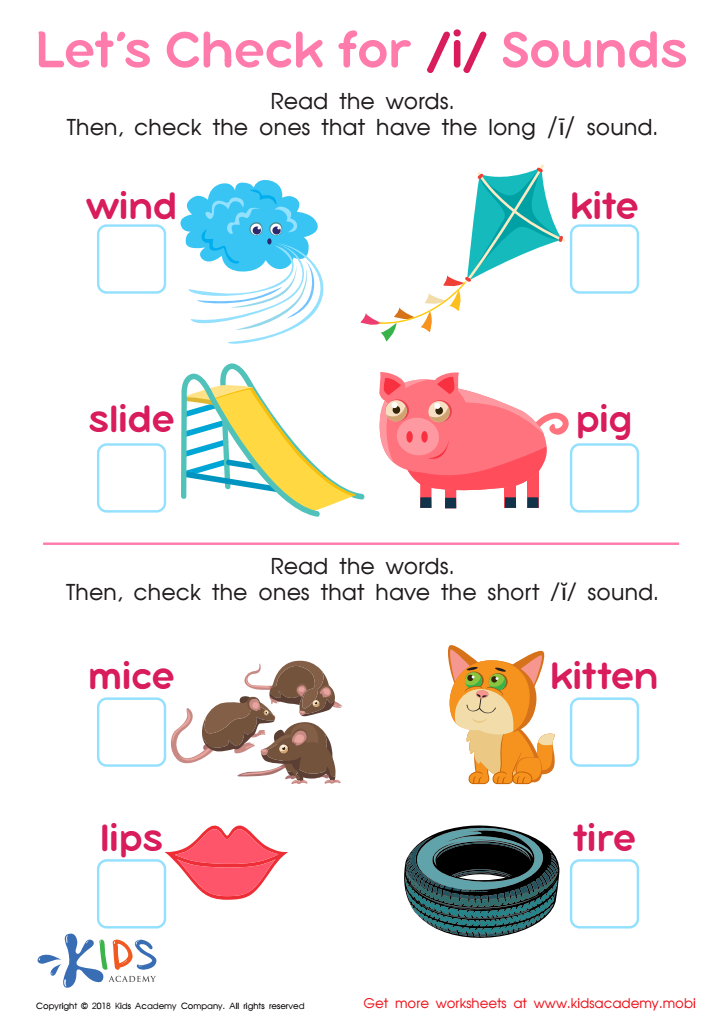
Let's Check for «i» Sounds Worksheet
This fun worksheet with pictures boosts phonics skills - differentiating between long «ī» and short «i» sounds in 1- and 2-syllable words. Kids use picture clues to read words, then check off the correct ones. It's a great way for new readers to practice early reading skills and find success on their own.
Let's Check for «i» Sounds Worksheet
Worksheet
Join Kids Academy for Free
Who is primarily going to use this learning content?


Parents and teachers should care about phonics recognition in Grade 1 because it serves as a foundational skill for literacy development. Phonics teaches children the relationship between letters and sounds, helping them decode words when reading. As students begin to explore texts, strong phonics skills empower them to sound out unfamiliar words, fostering confidence and independence in reading.
Moreover, phonics recognition facilitates comprehension. When children can accurately decode words, they can focus on understanding the meaning of the text rather than struggling to read word by word. This fluency contributes to a positive reading experience and encourages a love for learning.
Early intervention in phonics can prevent future reading difficulties. If children struggle with phonics in Grade 1, they may face ongoing challenges in their education, leading to decreased motivation and performance. Therefore, recognizing the importance of phonics means investing in a child's academic success and long-term literacy skills.
Additionally, parental involvement and support at home, combined with targeted phonics instruction in the classroom, can create a powerful synergy that enhances learning outcomes. By prioritizing phonics recognition, adults can help lay the groundwork for lifelong reading and language skills that are crucial for a child’s future academic and personal success.