Hand-eye Coordination Normal Grade 1 Math Worksheets
4 filtered results
Difficulty Level
Grade
Age
-
From - To
Subject
Activity
Standards
Enhance your first grader's mathematical skills with our hand-eye coordination normal grade 1 math worksheets. Designed specifically for young learners, these worksheets combine engaging, educational activities to develop fine motor skills and cognitive abilities. Students will improve their hand-eye coordination by solving simple math problems, such as counting, addition, and subtraction, while drawing and coloring shapes. Perfect for in-class practice or at-home learning, our worksheets provide a fun, interactive way to reinforce essential math concepts, ensuring your child gains confidence and proficiency with every completed exercise. Explore our collection now to promote your child's holistic academic growth.
Favorites
With answer key
Interactive
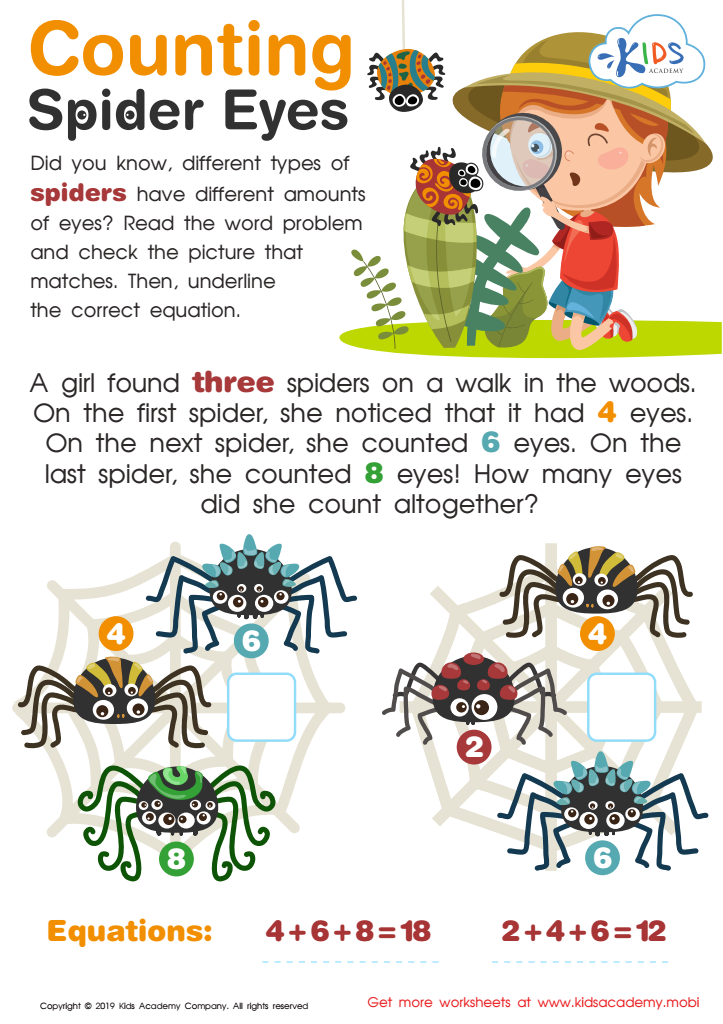
Counting Spider Eyes Worksheet
Did you know different spiders have different eye numbers? Kids will love learning this fact and solving the spider word problems on this free worksheet! Word problems promote a deeper understanding of the concept, plus they get to add up the spiders’ eyes while solving addition problems with more than one addend. Fun and math all in one!
 Assign to My Students
Counting Spider Eyes Worksheet
Worksheet
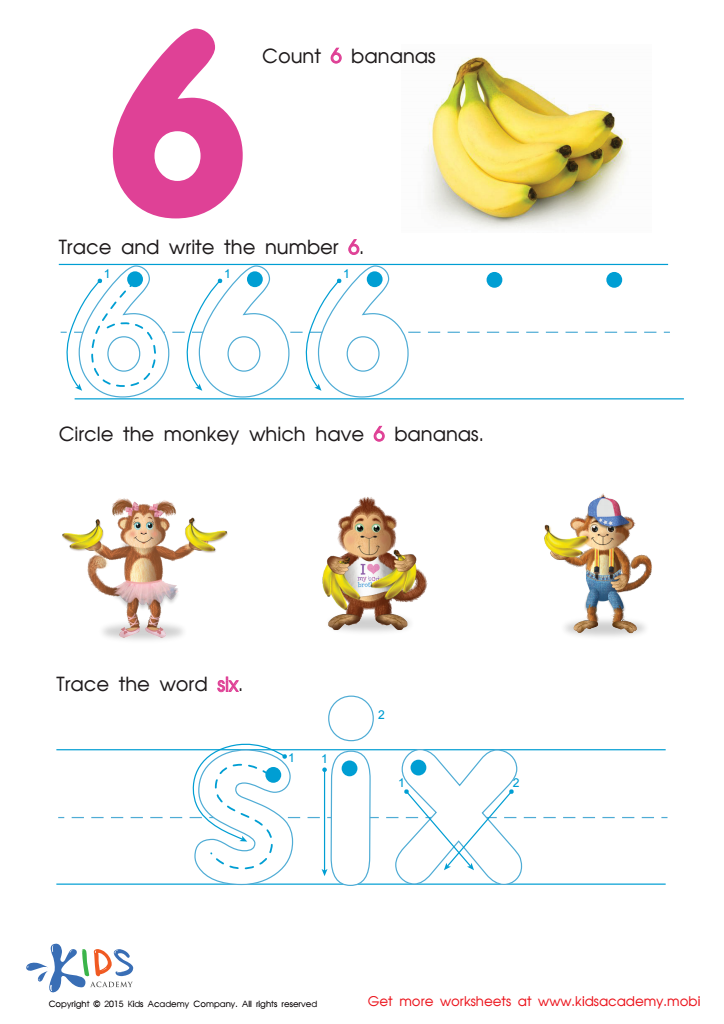
Tracing And Writing Number 6 Worksheet
Learn numbers in a fun way with our preschool number worksheets. Count six bananas, trace and write the number, find the monkey with six bananas, and trace the word "six." Explore more activities at Kids Academy.
Tracing And Writing Number 6 Worksheet
Worksheet
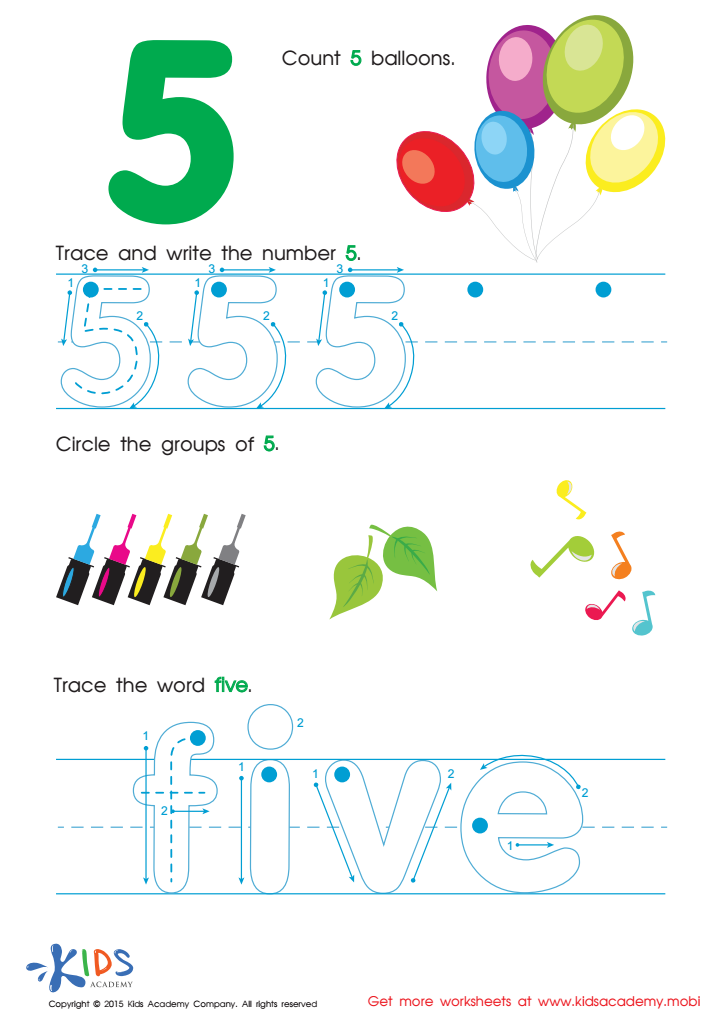
Practice Writing Number 5 Worksheet
Make learning numbers fun! Let your kids count the balloons, trace numbers, and circle the groups with five items. Also, have them trace the word "five" for letter revision. Get the full collection of preschool number worksheets from Kids Academy for a fun and interactive learning experience.
Practice Writing Number 5 Worksheet
Worksheet
Join Kids Academy for Free
Who is primarily going to use this learning content?






Hand-eye coordination is crucial for Grade 1 students, impacting their academic success and everyday activities. For parents and teachers, emphasizing the development of this skill during early math learning is particularly vital.
Hand-eye coordination refers to the ability to synchronize hand movements with visual perception. When Grade 1 students engage in math activities such as writing numbers, drawing shapes, or arranging objects to learn basic arithmetic, they use hand-eye coordination. Good coordination allows them to accurately position their pencil, draw straight lines, or place objects neatly, enhancing their learning experience and reducing frustration.
At this stage, math often involves tactile activities, like using counters, puzzles, or interactive games, which directly improve coordination. These activities also help develop fine motor skills, vital for future tasks such as writing and typing.
Moreover, nurturing this skill can boost a child’s confidence. Successful task completion makes them feel accomplished and encourages a positive attitude towards learning. Teachers and parents who integrate coordination-enhancing activities create a supportive environment that addresses both cognitive and motor development.
Ultimately, focusing on hand-eye coordination links physical abilities with academic development, laying a strong foundation for ongoing educational success and daily life skills. This holistic approach ensures a smoother and more engaging learning trajectory for young children.