Vocabulary expansion Normal Grade 1 Reading Non-Fiction Worksheets
5 filtered results
-
From - To
Accelerate your child's language development with our Grade 1 Non-Fiction Vocabulary Expansion Worksheets. Expertly crafted to boost reading comprehension and vocabulary, these engaging worksheets introduce young learners to a range of factual topics. Through fun activities, first graders enhance their understanding of essential words and concepts, setting a strong foundation for future learning. Perfect for classroom use or as additional practice at home, these resources support kids in making meaningful connections with real-world information. Equip your first grader with the skills needed to excel in reading and beyond with Kids Academy's vocabulary expansion worksheets.
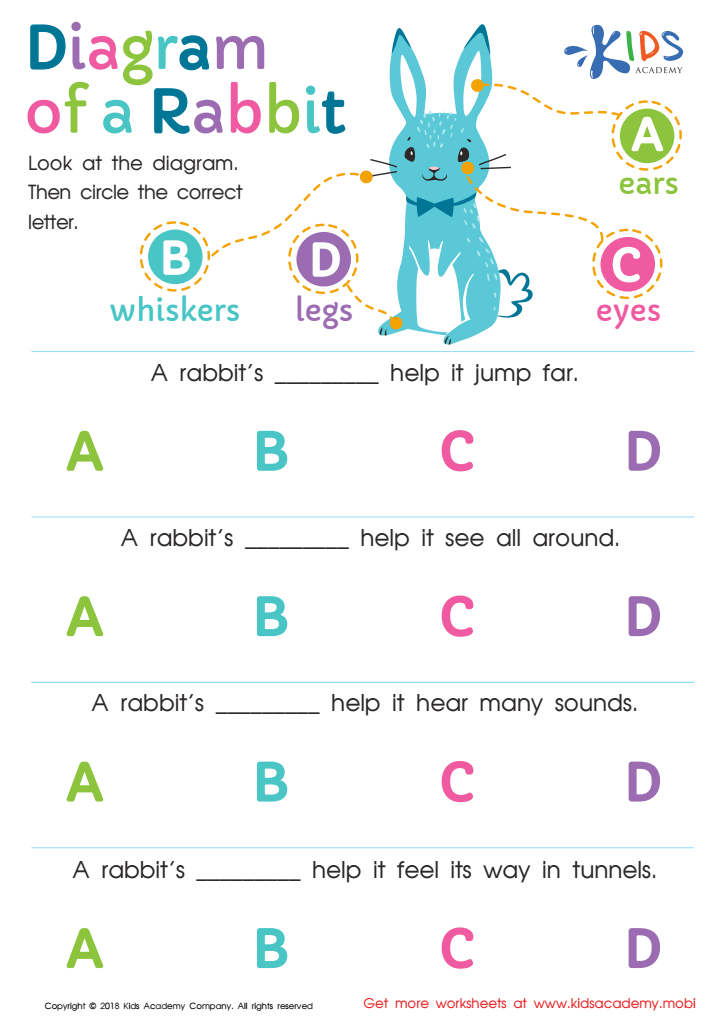
Diagram of a Rabbit Worksheet
 Assign to My Students
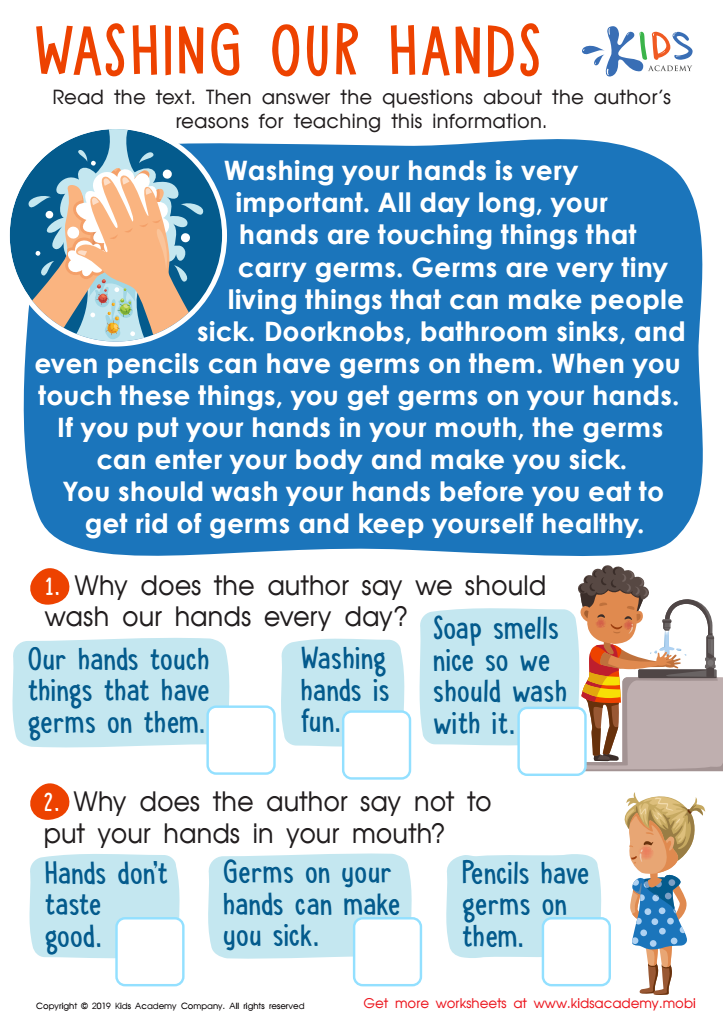
Washing Our Hands Worksheet
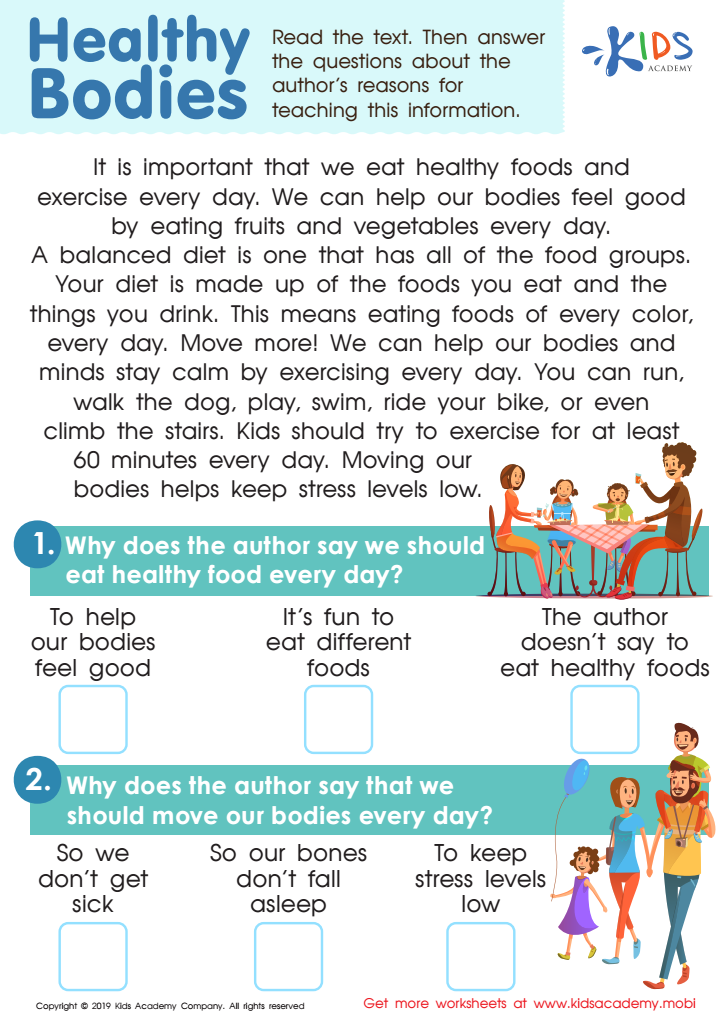
Healthy Bodies Worksheet
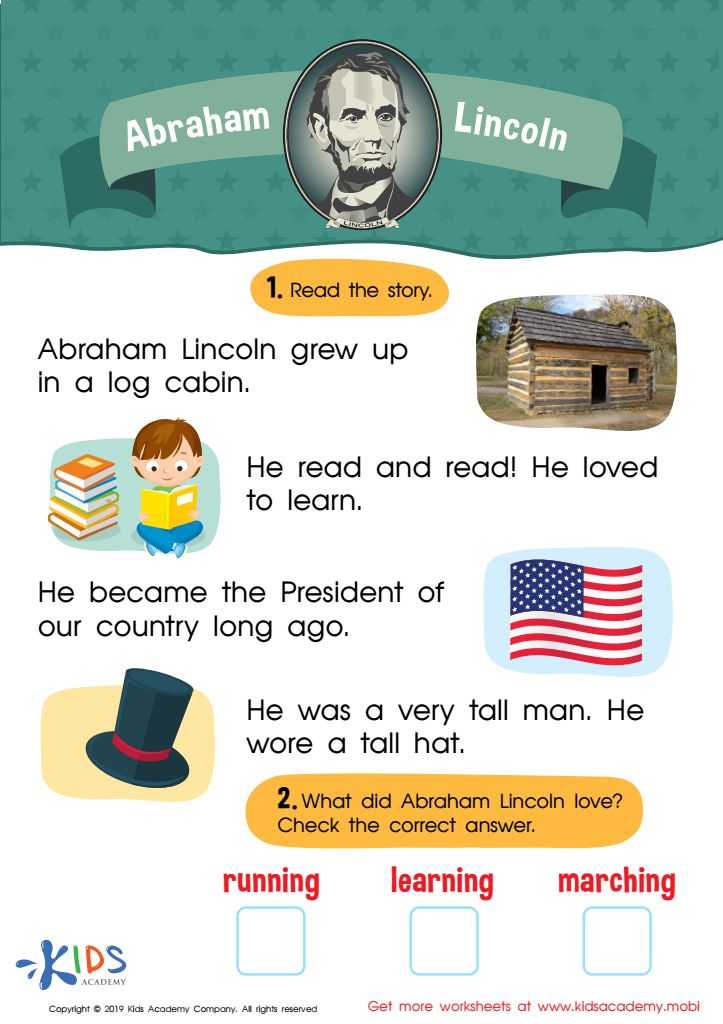
Abraham Lincoln Worksheet
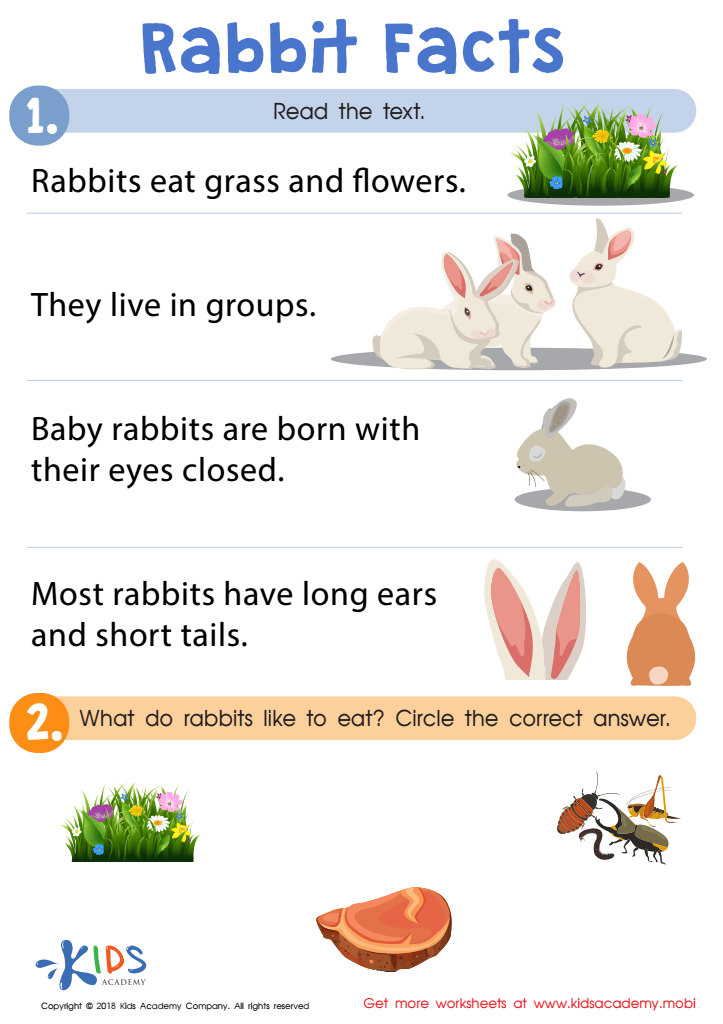
Rabbit Facts Worksheet



Vocabulary expansion in Grade 1 reading, especially in non-fiction, is essential for both parents and teachers to consider because it lays a critical foundation for a child’s overall literacy and cognitive development. First, a robust vocabulary helps young learners understand and comprehend text more easily. This understanding is crucial not just for current reading assignments but also for future academic success, as vocabulary knowledge is closely linked to overall language and reading proficiency.
Exposure to non-fiction texts helps children acquire specific terminology related to various subjects such as science, history, and social studies, further broadening their knowledge base and sparking curiosity about the world. This also fosters critical thinking skills as they learn to analyze and synthesize information.
Moreover, an expanded vocabulary allows children to express themselves more clearly and effectively. This improved communication ability translates to better performance in school activities, healthier social interactions, and increased self-confidence.
Engagement with non-fiction texts also develops a child's ability to differentiate between fictional and factual information, an essential skill in our information-rich society. Supporting vocabulary expansion through non-fiction reading in Grade 1 ultimately sets the stage for lifelong learning and helps children become more informed and articulate individuals.