Motor skills development Normal Kindergarten ABC Letters Worksheets
3 filtered results
Difficulty Level
Grade
Age
-
From - To
Subject
Activity
Standards
Enhance your child's motor skills development with our engaging "Normal Kindergarten ABC Letters Worksheets." Perfect for young learners, these worksheets are designed to promote fine motor skills while familiarizing children with the alphabet. Each activity supports hand-eye coordination, dexterity, and writing readiness and provides fun opportunities for tracing, coloring, and letter recognition. Our carefully crafted worksheets blend educational value with creative expression, making learning enjoyable and effective. Equip your kindergarteners with the foundational skills they need for future academic success while fostering a love for learning! Explore our collection today to support your child's growth in a playful way.
Favorites
With answer key
Interactive
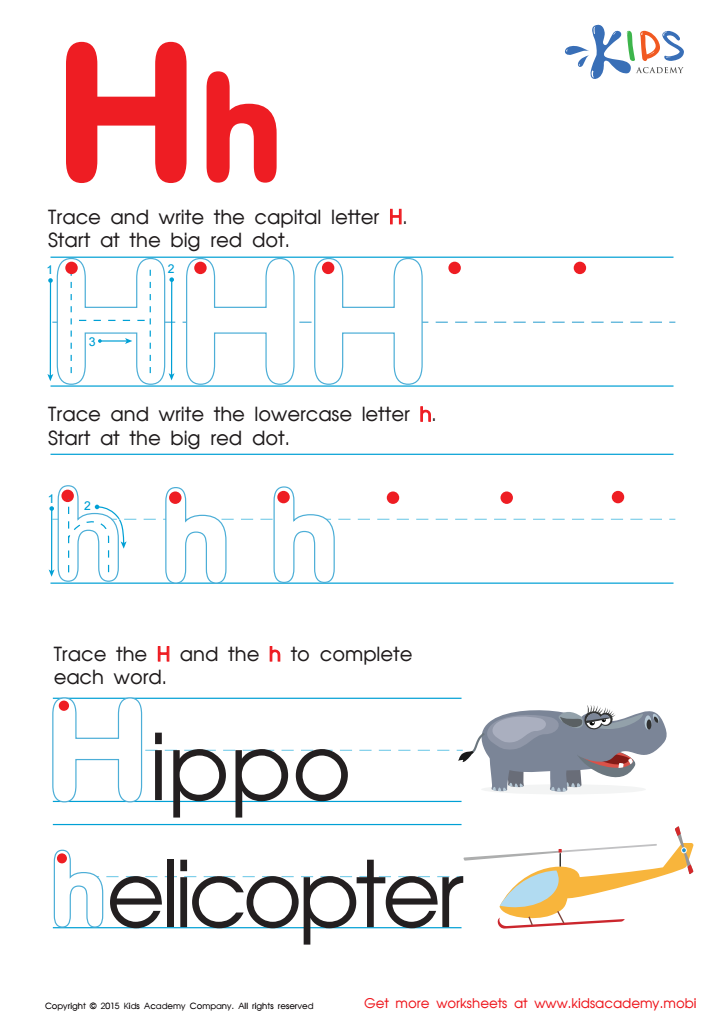
Letter H Tracing Page
Trace the letter "H", then practice writing its lowercase form. Finally, choose your favorite form of transport and ride away! Get our worksheets to make learning fun and easy.
Letter H Tracing Page
Worksheet




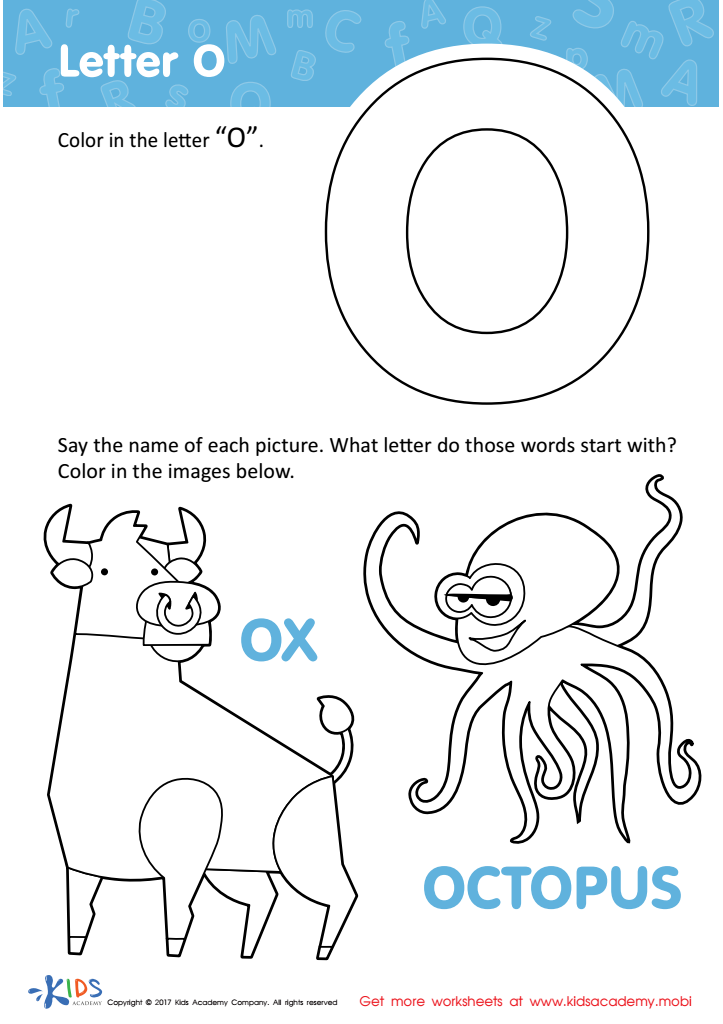
Letter O Coloring Sheet
Oh my! The letter "O" is so much fun. Coloring in the octopus and ox on this delightful letter "O" coloring page can help your child have fun while strengthening their recognition of the letter and sound.
Download (PDF)
 Assign to My Students
Assign to My Students
Letter O Coloring Sheet
Worksheet
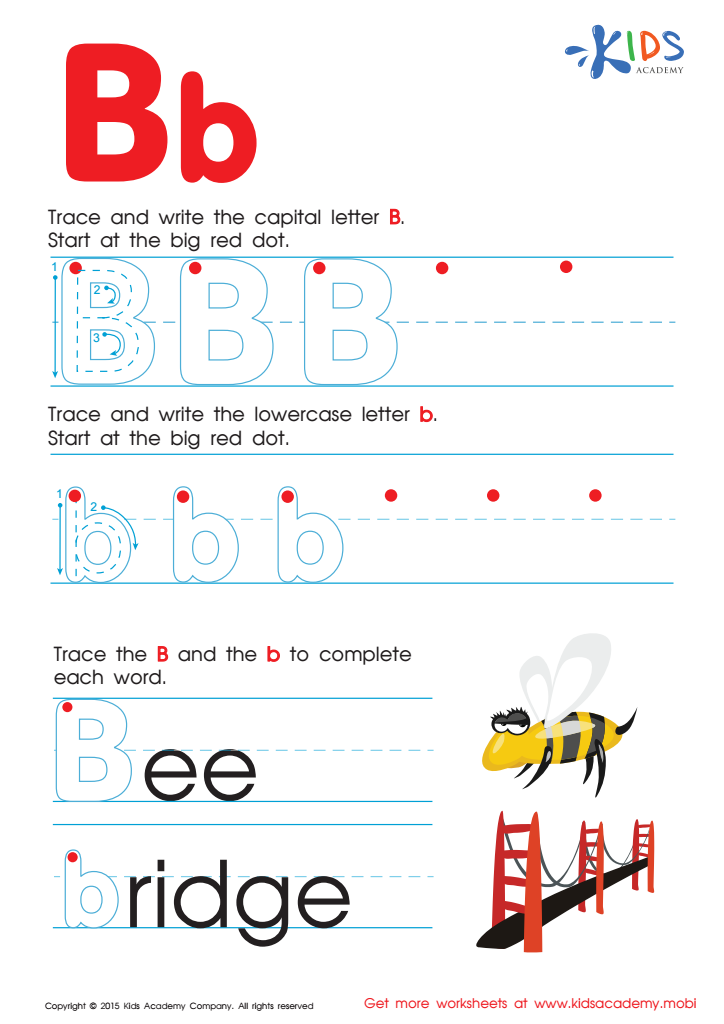
Letter B Tracing Page
Ready to learn the Alphabet? Put your pencil on the red dot and trace & write both capital & lowercase "B". Then have a look at the pictures. Catch the bee, cross the bridge & write the letters to complete the words. More ABC worksheets for kindergarten available!
Letter B Tracing Page
Worksheet
Join Kids Academy for Free
Who is primarily going to use this learning content?








Motor skills development is crucial for kindergarten-aged children as it lays the foundation for their overall growth and learning capabilities. Fine and gross motor skills are essential for performing everyday tasks, such as writing, cutting, and engaging in physical play. Developing these skills directly impacts a child's ability to learn letters, recognize shapes, and understand the concept of writing, which are fundamental components of their early education.
When children learn to manipulate small objects or use their hands effectively, they also enhance their cognitive skills. For instance, tracing letters engages both fine motor skills and hand-eye coordination, helping children develop the necessary dexterity for writing. Moreover, strong motor skills contribute to improved focus and discipline, which are vital for classroom success.
Parents and teachers should prioritize motor skills development because it influences not only academic performance but also social interactions. Children who can physically participate in group activities may have better opportunities for socialization and collaboration. Additionally, fine-tuning these skills can build a child's confidence and self-esteem, making them more willing to engage in learning experiences. Overall, supporting motor skills development in kindergarten fosters a positive environment for children to thrive academically and socially.