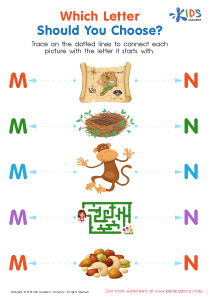
Writing practice Normal Kindergarten Alphabet Coloring Pages Worksheets
3 filtered results
Difficulty Level
Grade
Age
-
From - To
Subject
Activity
Standards
Discover our engaging "Writing Practice Normal Kindergarten Alphabet Coloring Pages Worksheets," designed to enhance preschoolers' writing skills while making learning fun! These interactive worksheets combine coloring activities with essential alphabet practice, providing young learners with a hands-on approach to familiarizing themselves with letters. Each page features vibrant illustrations and ample space for kids to practice writing uppercase and lowercase letters, reinforcing proper letter formation and improving motor skills. Ideal for classroom use or at home, these worksheets create a delightful learning experience, ensuring your child builds a strong foundation in literacy. Foster a love for writing and creativity—explore our collection today!
Favorites
With answer key
Interactive
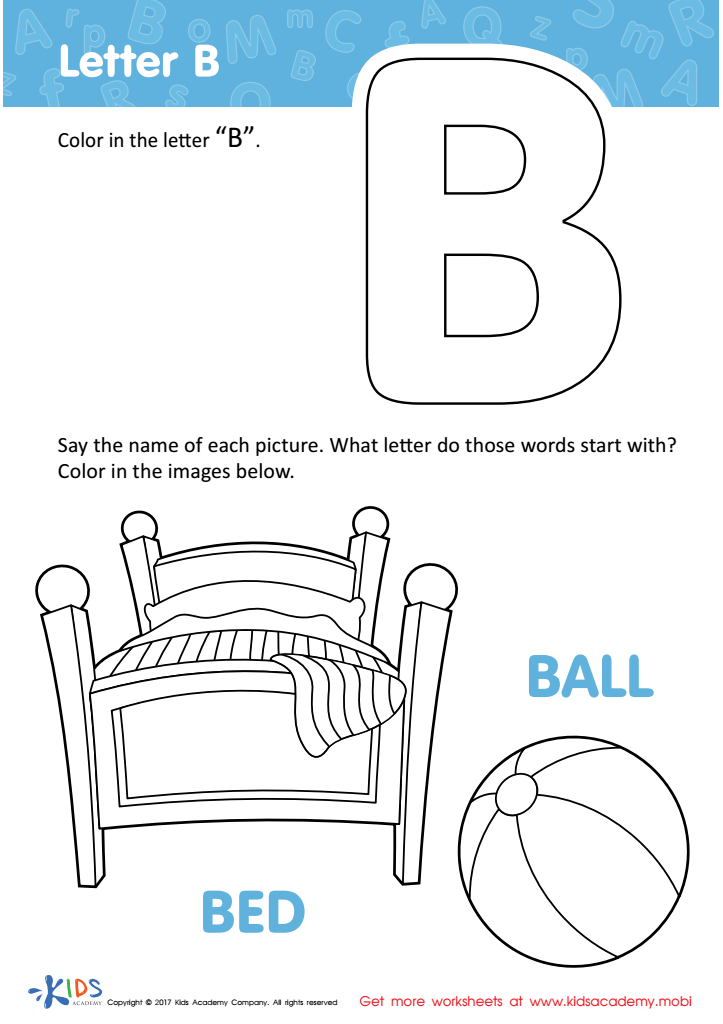
Letter B Coloring Sheet
Kids will love coloring this page that features things they like - balls, bubbles, bugs and bedtime - all words starting with "B"! It's a great way to introduce the alphabet and increase their exposure to letters and sounds. Let them have fun and learn at the same time!
Download (PDF)
 Assign to My Students
Assign to My Students
Letter B Coloring Sheet
Worksheet
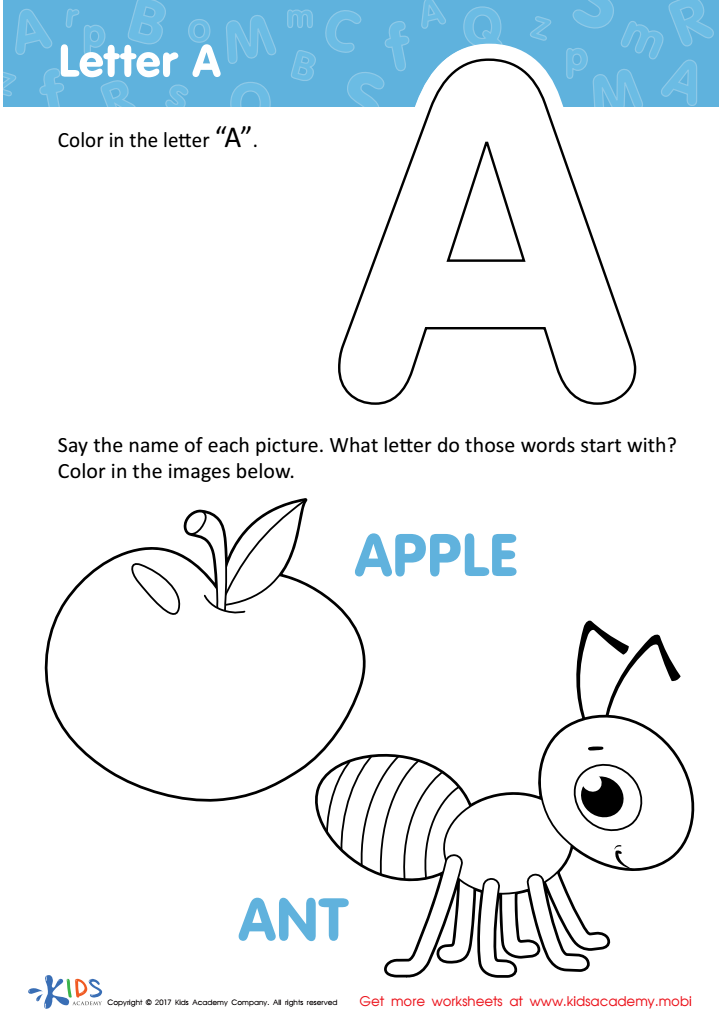
Letter A Coloring Sheet
This letter "A" coloring page is great for introducing kids to the alphabet! Let them exercise their creativity while they learn to recognize letters and sounds - it's a fun and easy way to help them get started.
Download (PDF)
Assign to My Students
Assign to My Students
Letter A Coloring Sheet
Worksheet
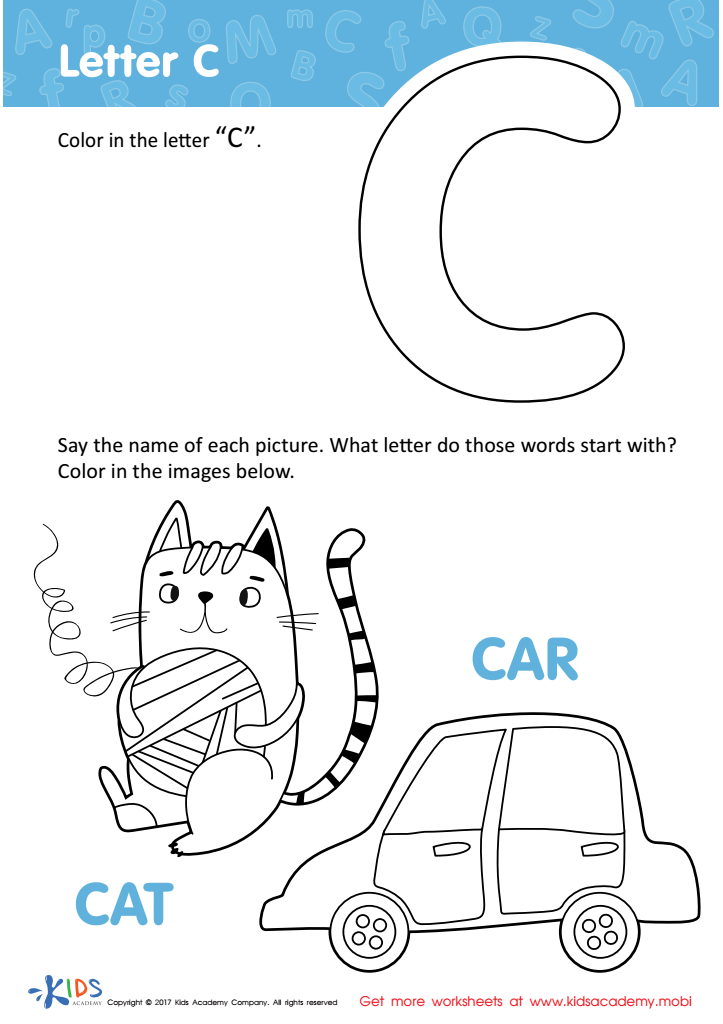
Letter C Coloring Sheet
Introduce kids to the letter 'C' with this fun coloring page! Exposing little ones to letters, words, and sounds helps them learn long before they can read. Start with simple words like 'cat' and 'car' - these are great first sight words for young children.
Download (PDF)
Assign to My Students
Assign to My Students
Letter C Coloring Sheet
Worksheet
Join Kids Academy for Free
Who is primarily going to use this learning content?


Parents and teachers should care about utilizing alphabet coloring pages in normal kindergarten settings for several reasons. First, these activities play a crucial role in early literacy development. As children associate letters with sounds, coloring pages help them recognize and remember the alphabet better. The visual and tactile experience of coloring reinforces their understanding of letter shapes and forms, making learning both engaging and effective.
Second, coloring activites support fine motor skills. As children hold and maneuver crayons and markers, they strengthen the small muscles in their hands, which are essential for writing and other tasks. This development promotes better handwriting in the future.
Moreover, alphabet coloring pages can enhance creativity and self-expression. By choosing colors and creating their designs, children gain confidence in their artistic abilities, encouraging a love for learning that extends beyond letters.
Lastly, these pages provide opportunities for family interaction and bonding. Parents and children can color together, facilitating meaningful conversations about letters and words while creating enjoyable memories. Overall, alphabet coloring pages serve as a multi-faceted resource, supporting literacy, motor skills, creativity, and family connections, making them an essential tool for early childhood education.