Hand-eye Coordination Normal Kindergarten Letter Recognition Worksheets
6 filtered results
Difficulty Level
Grade
Age
-
From - To
Subject
Activity
Standards
Enhance your child's learning experience with our Hand-eye Coordination Normal Kindergarten Letter Recognition Worksheets! Designed for young learners, these engaging worksheets promote essential skills like letter recognition and motor coordination. As children connect the dots, trace letters, and identify shapes, they develop the hand-eye coordination necessary for effective writing and reading. Our fun, interactive activities align with kindergarten standards, making learning enjoyable and effective. Perfect for at-home practice or supplemental classroom resources, these worksheets foster a love for letters while enhancing fine motor skills. Explore our collection today and support your child's foundation for future academic success!
Favorites
With answer key
Interactive
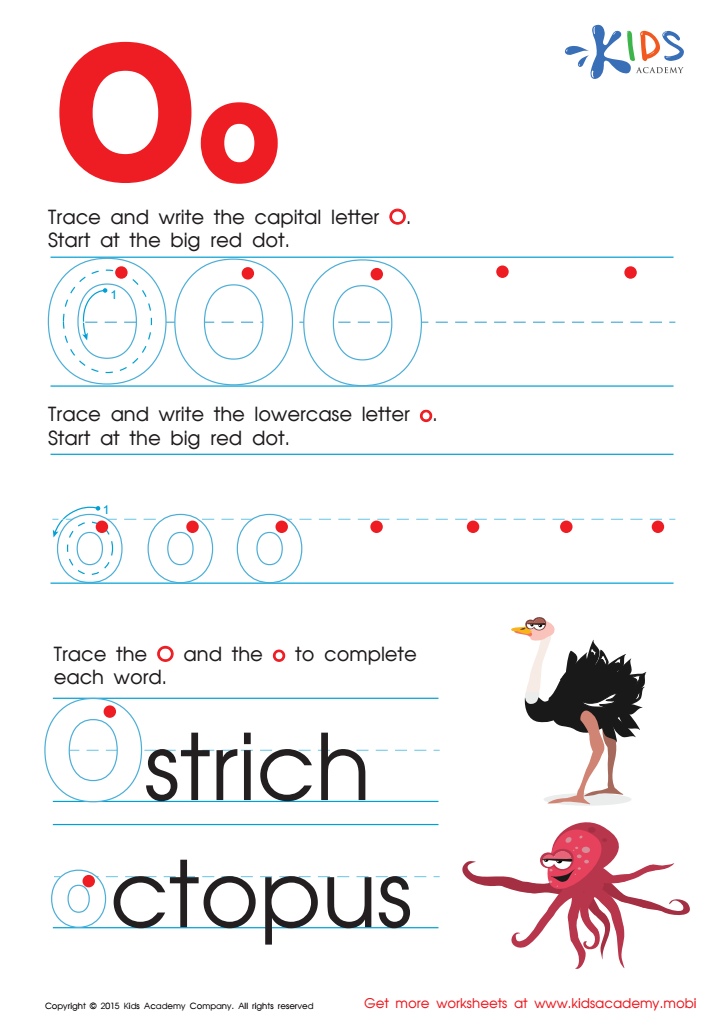
Letter O Tracing Page
Practice writing the letter "O" with our new worksheet. Trace and write the letter several times, starting at the red dot. First do the uppercase letter, then the lowercase. Use the pictures to complete the words "Ostrich" and "octopus". Kids Academy offers more fun alphabet worksheets.
 Assign to My Students
Letter O Tracing Page
Worksheet
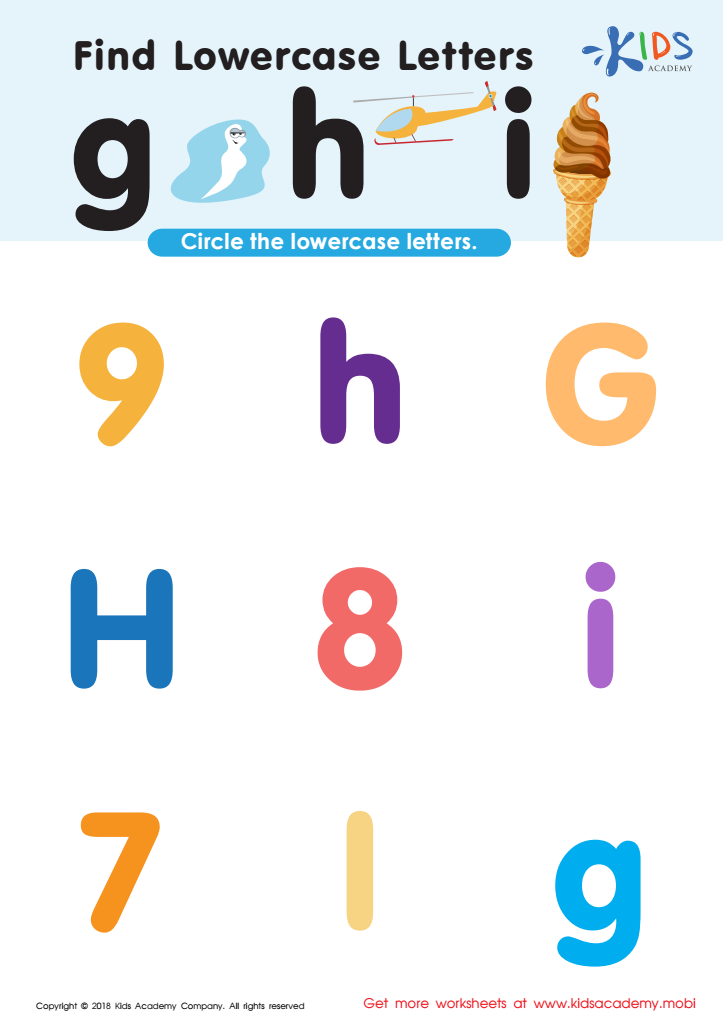
Find Lowercase Letters g h i Worksheet
Turn learning into a fun journey with your child! Use this free worksheet to find and circle the lowercase letters hidden amongst uppercase letters and numbers. Your child will understand what you're teaching them as they enjoy the search.
Find Lowercase Letters g h i Worksheet
Worksheet

Letter P Tracing Page
Trace the lines from the red dot to learn to write "P"! Then practice this letter with the fun activities: complete the word "Pig" and "Pumpkin". Check out Kids Academy to get more free ABC worksheets.
Letter P Tracing Page
Worksheet

Letter H Tracing Page
Trace the letter "H", then practice writing its lowercase form. Finally, choose your favorite form of transport and ride away! Get our worksheets to make learning fun and easy.
Letter H Tracing Page
Worksheet
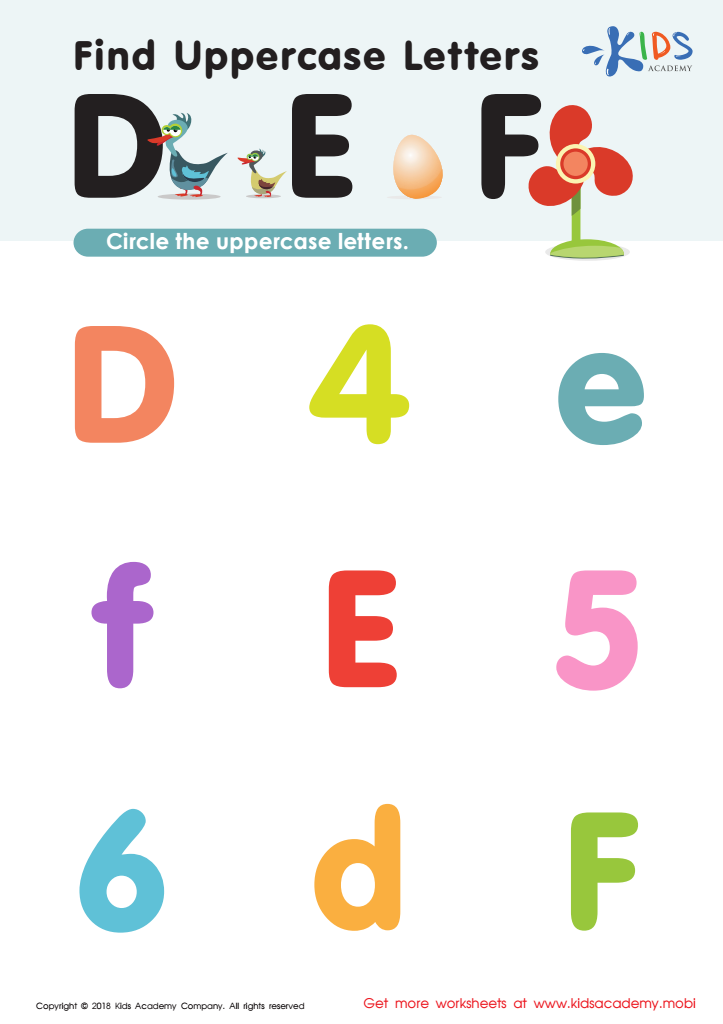
Find Uppercase Letters D, E, and F Worksheet
Follow the duckling and mom to find the capital letters D, E and F on this fun alphabet worksheet! Kids learn to read and recognize letters, while differentiating them from numbers. For extra challenge, don't let the numbers fool them. The pictures above remind them of each letter's sound. Have fun and get letter-savvy!
Find Uppercase Letters D, E, and F Worksheet
Worksheet

Letter D Tracing Page
Trace and write capital and lowercase letter "D" with our free printable alphabet worksheet! Be careful not to mix up "b" and "d" - just look at the ducks and write their first letter. The dolphin wants to join the fun too - do you like dolphins? Get more fun worksheets and activities at Kids Academy!
Letter D Tracing Page
Worksheet
Join Kids Academy for Free
Who is primarily going to use this learning content?






Hand-eye coordination and letter recognition are critical components of early childhood development, particularly in kindergarten, where foundational skills are built for future learning. Hand-eye coordination allows children to smoothly integrate visual input with motor actions, essential for tasks such as writing, playing sports, and using tools. By developing this skill, children enhance their ability to explore their environment, leading to greater independence and confidence in their abilities.
Letter recognition, on the other hand, forms the basis of literacy skills. Recognizing letters is the first step towards reading and writing. Children who can identify letters typically progress faster in their ability to form words and comprehend text, which are crucial skills for academic success.
For teachers and parents, fostering these abilities can be both gratifying and essential, as it contributes to a child's overall readiness for academia. Engaging children in activities that promote hand-eye coordination, such as arts and crafts, puzzles, and interactive games, simultaneously offers enjoyable opportunities to embed letter recognition into play.
By emphasizing these two areas, adults can support children's learning experiences, ensuring they are prepared to thrive in the classroom and beyond, building a solid foundation for lifelong learning.