Handwriting improvement Normal Kindergarten Letter Recognition Worksheets
3 filtered results
Difficulty Level
Grade
Age
-
From - To
Subject
Activity
Standards
Discover our Handwriting Improvement Normal Kindergarten Letter Recognition Worksheets, designed to enhance your child's writing and reading skills! These engaging worksheets combine fun activities with essential letter recognition practices, promoting early literacy in young learners. Each worksheet focuses on individual letters, allowing children to practice writing while identifying uppercase and lowercase forms. With a variety of exercises that include tracing, coloring, and matching, your child will sharpen their handwriting skills in an enjoyable way. Perfect for use at home or in the classroom, these resources empower kindergarteners to build a strong foundation in letter recognition, setting them up for future success!
Favorites
With answer key
Interactive
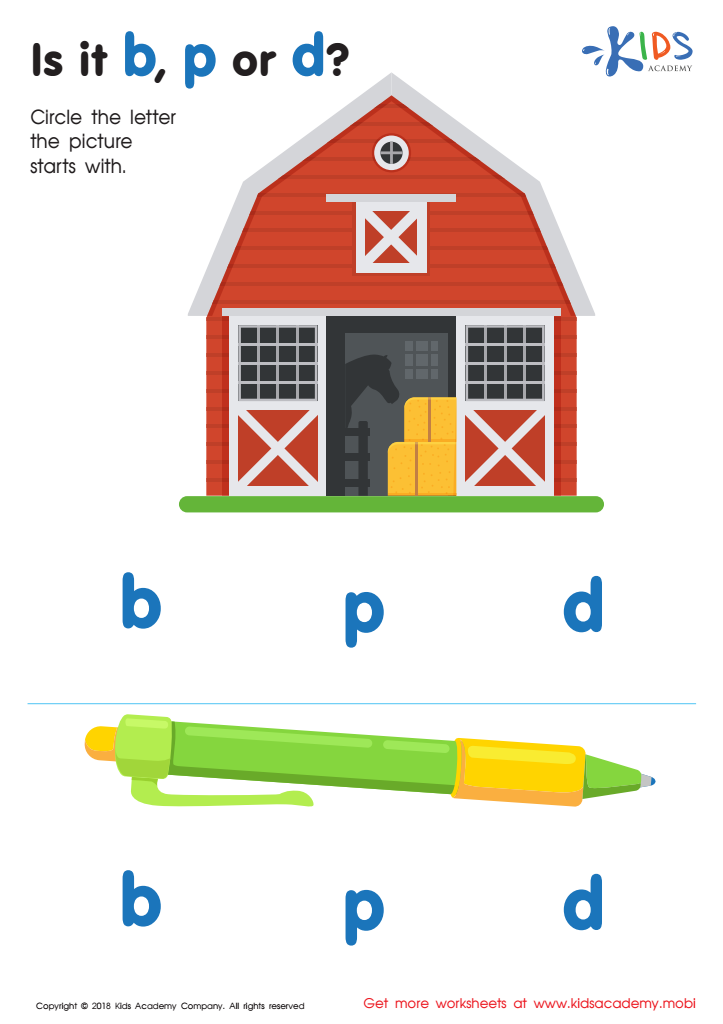
Is it b, p or d? Worksheet
Test your child's identification skills with this worksheet. They must identify the image and then circle the letter it begins with: 'b', 'p', or 'd' (e.g. an image of the sun would mean they circle 's').
 Assign to My Students
Is it b, p or d? Worksheet
Worksheet
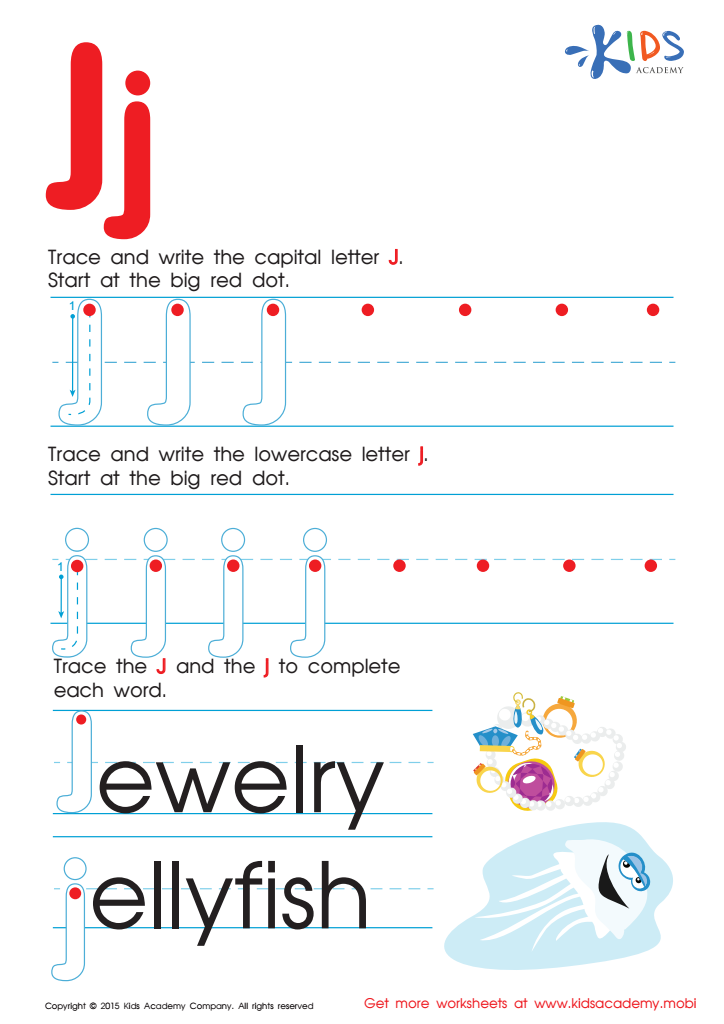
Letter J Tracing Page
Trace and write the letter "J" with our ABC worksheet - start at the big red dot! Have fun completing words like jewelry, jellyfish and more. Check out our kindergarten activities for more alphabet practice.
Letter J Tracing Page
Worksheet
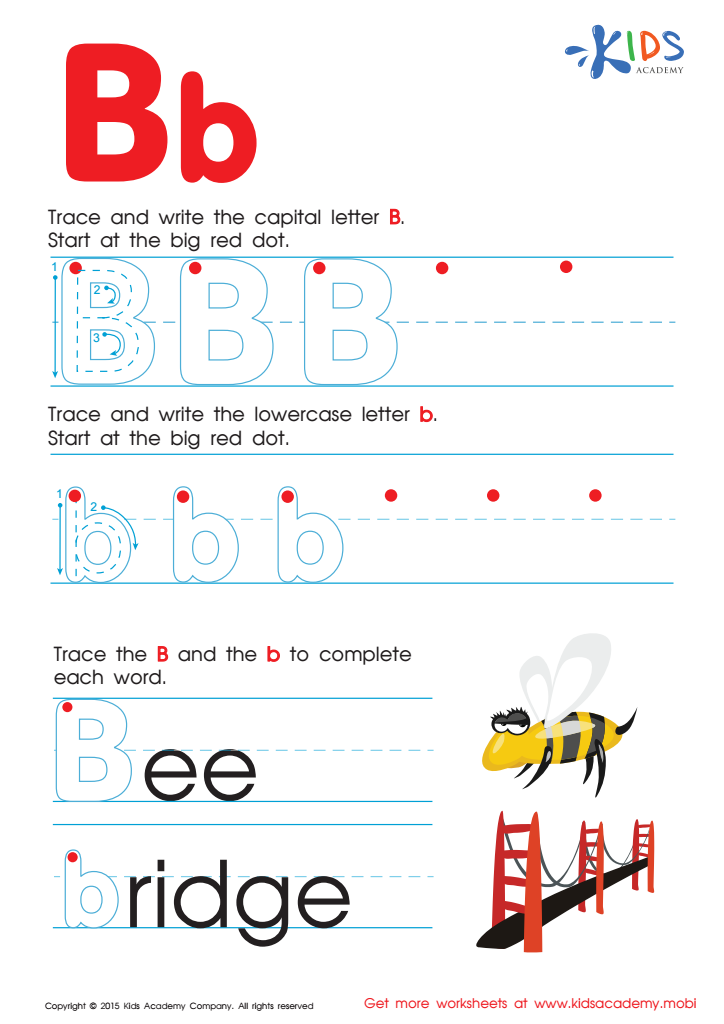
Letter B Tracing Page
Ready to learn the Alphabet? Put your pencil on the red dot and trace & write both capital & lowercase "B". Then have a look at the pictures. Catch the bee, cross the bridge & write the letters to complete the words. More ABC worksheets for kindergarten available!
Letter B Tracing Page
Worksheet
Join Kids Academy for Free
Who is primarily going to use this learning content?






Handwriting improvement and letter recognition are essential skills for young learners in kindergarten. These foundational skills not only contribute to effective communication but also influence a child’s overall academic success. As children develop their handwriting, they reinforce their understanding of letter shapes and sounds, which are crucial components of literacy development.
When children master letter recognition, they become more confident in their reading and writing abilities. This confidence encourages them to participate actively in classroom activities and fosters a love for learning. Additionally, improved handwriting enhances fine motor skills, promoting agility and coordination that are essential for various everyday tasks.
Parents and teachers should care about writing improvement as it reflects the child's cognitive and emotional growth. Slow or messy writing can lead to frustration, potentially discouraging students from engaging with written material. Furthermore, strong handwriting skills support better classroom performance, ensuring students can complete assignments succinctly and legibly.
By prioritizing handwriting and letter recognition, educators and parents play a critical role in bridging the gap between early literacy and a lifelong love of learning, paving the way for success in higher grades and beyond.