Visual discrimination Normal Kindergarten Letter Recognition Worksheets
4 filtered results
-
From - To
Boost your child's reading skills with our Visual Discrimination Normal Kindergarten Letter Recognition Worksheets! These engaging, expertly-crafted resources are designed to enhance visual discrimination and letter recognition for your kindergartener. Our worksheets make learning fun, helping young learners distinguish between similar letters, identify differences, and improve overall reading readiness. Perfect for classroom or home practice, these printable activities bolster foundational literacy skills through playful, interactive exercises. Ensure your child's academic success and confidence with Kids Academy’s free, high-quality worksheets. Start fostering essential early learning skills today and watch your child thrive in their literacy journey!
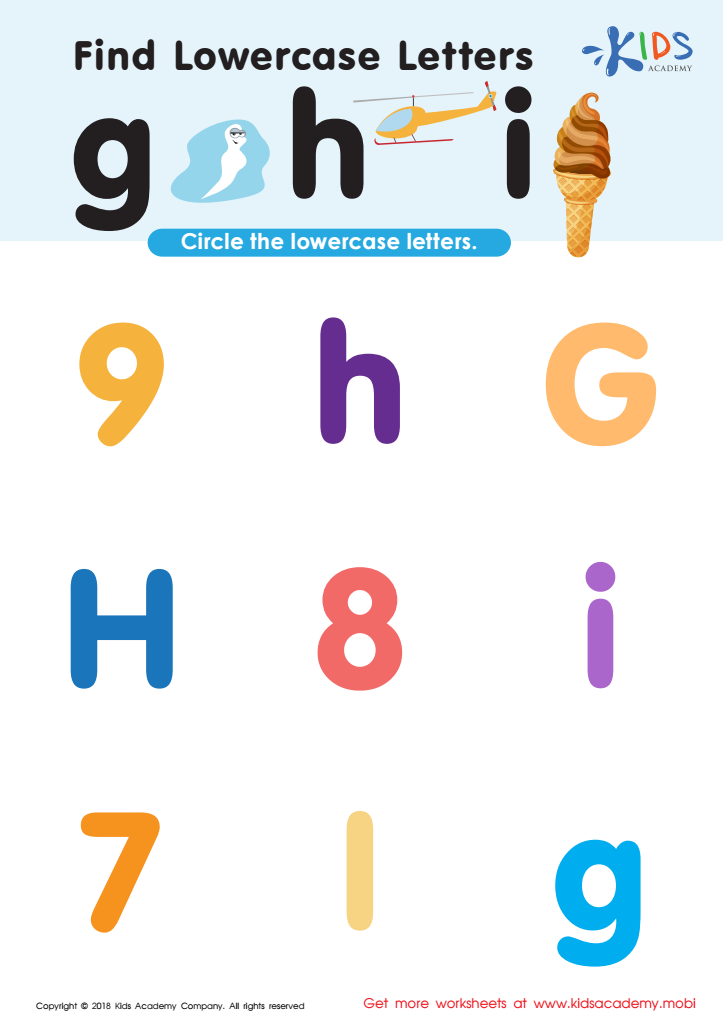
Find Lowercase Letters g h i Worksheet
 Assign to My Students
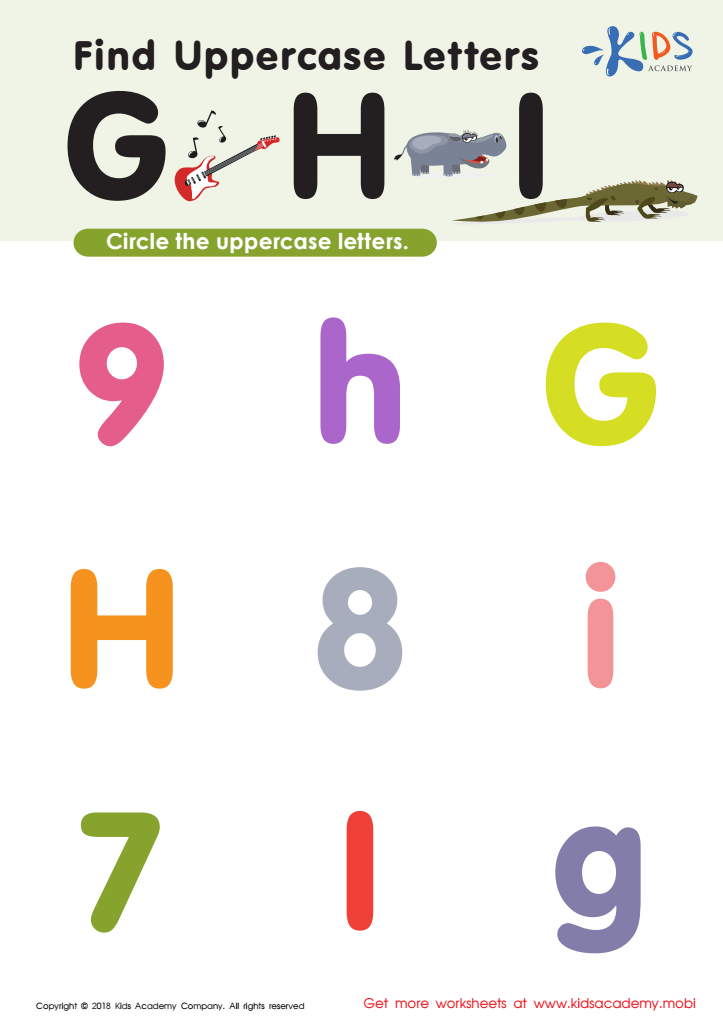
Find Uppercase Letters G, H, and I Worksheet
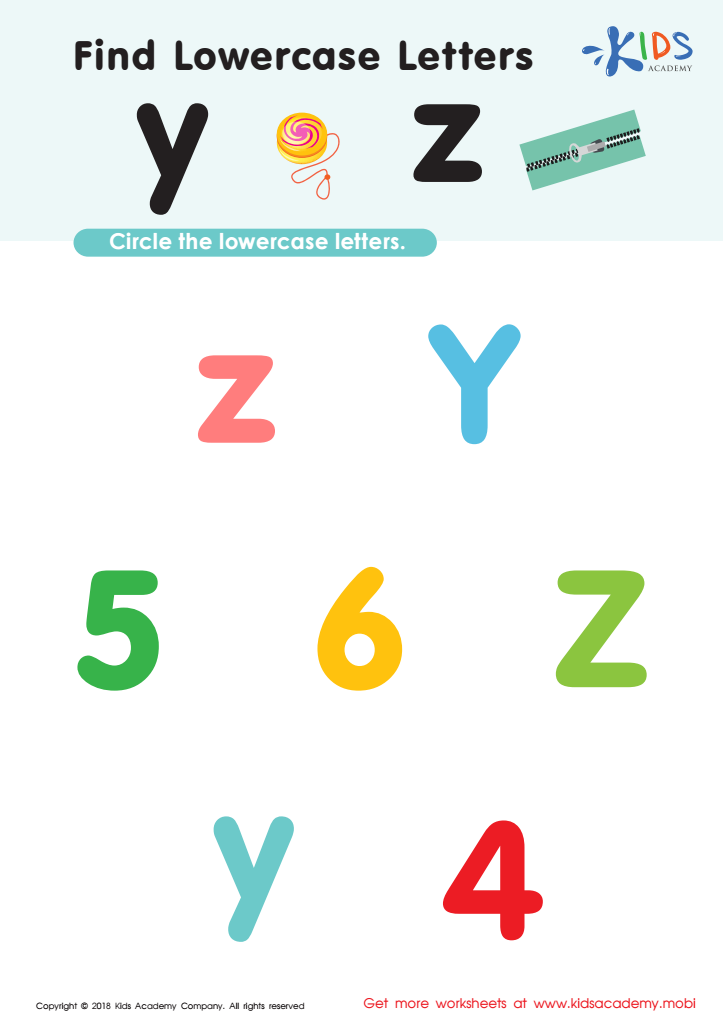
Find Lowercase Letters y z Worksheet
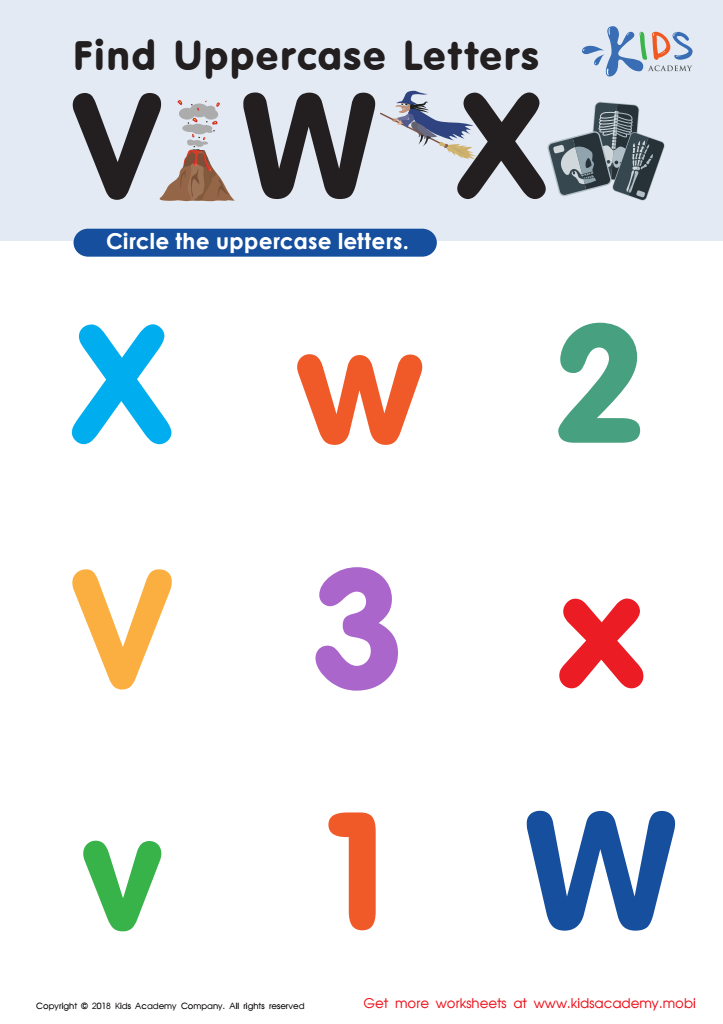
Find Uppercase Letters V, W, X Worksheet






Visual discrimination is the ability to recognize differences and similarities in shapes, patterns, and objects. In kindergarten, visual discrimination plays a crucial role in letter recognition, which is foundational for reading development. Parents and teachers should care about this skill because it lays down the groundwork for effective literacy skills and overall academic success.
When children can effectively differentiate between letters such as "b" and "d" or "p" and "q," they can more readily learn to read and write. Misidentification can lead to frustration and delays in learning, reducing a child's confidence and enthusiasm for learning activities. Teachers with a keen understanding of visual discrimination can integrate activities that enhance this skill, like sorting games, matching exercises, and letter tracing, to promote accurate letter recognition.
For parents, encouraging activities at home that strengthen visual discrimination, like puzzles, drawing, and reading together, can reinforce what is taught in school. Early intervention in developing visual discrimination can identify potential learning difficulties, such as dyslexia, providing opportunities for timely support.
Ultimately, attention to visual discrimination in kindergarten creates a supportive and collaborative effort between parents and educators to ensure a smooth and successful transition into reading, writing, and lifelong learning.