Alphabet sequencing Normal Kindergarten Lowercase/Small Letters Worksheets
3 filtered results
Difficulty Level
Grade
Age
-
From - To
Subject
Activity
Standards
Enhance your child's literacy skills with our engaging Alphabet Sequencing worksheets designed specifically for kindergarteners! These printable activities focus on lowercase letters, helping young learners practice and master the order of the alphabet. Our colorful and interactive worksheets make learning fun, promoting letter recognition and sequencing abilities essential for reading readiness. Each worksheet is crafted to nurture fine motor skills through tracing and writing exercises, ensuring a playful yet educational experience. Ideal for classroom or home use, these resources empower children to build a solid foundation in literacy as they embark on their learning journey. Print and start exploring the alphabet today!
Favorites
With answer key
Interactive
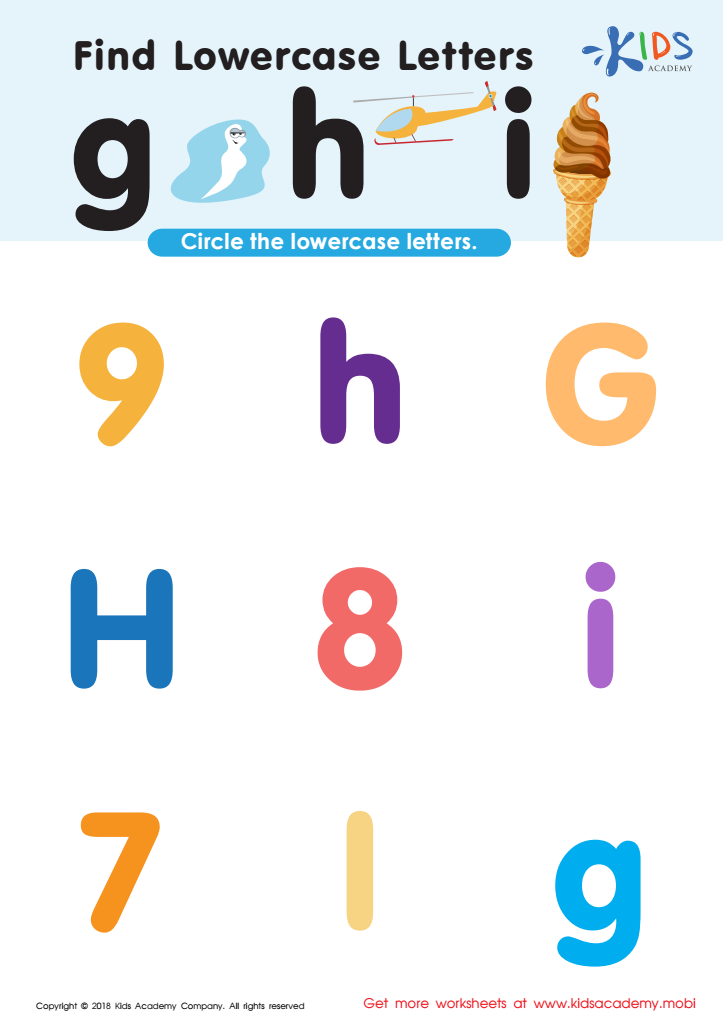
Find Lowercase Letters g h i Worksheet
Turn learning into a fun journey with your child! Use this free worksheet to find and circle the lowercase letters hidden amongst uppercase letters and numbers. Your child will understand what you're teaching them as they enjoy the search.
 Assign to My Students
Find Lowercase Letters g h i Worksheet
Worksheet
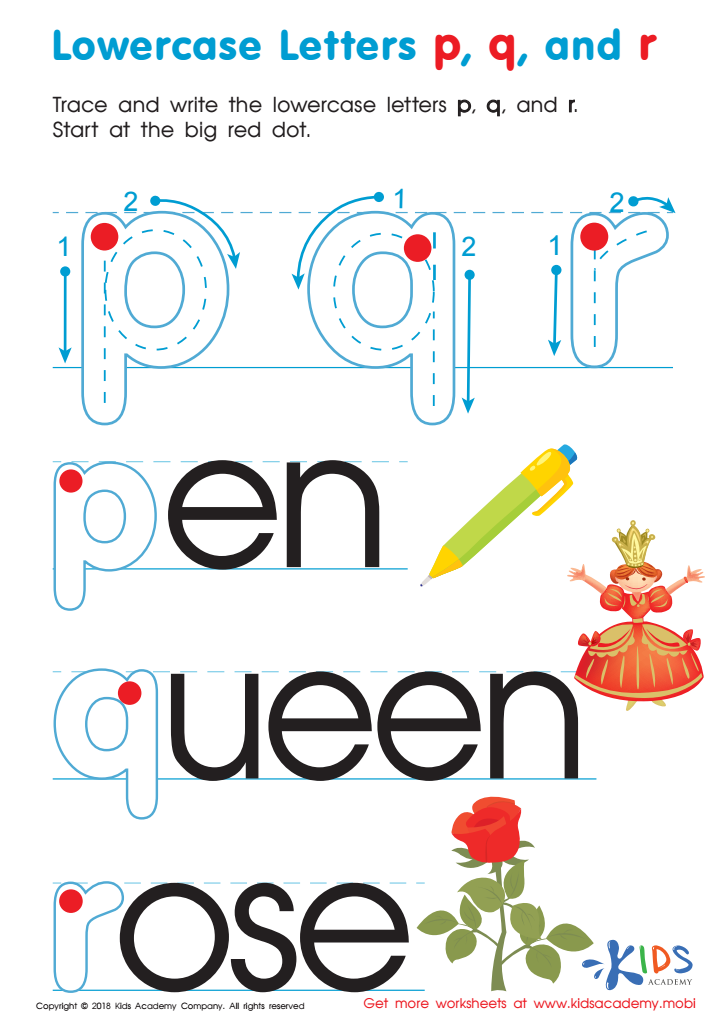
Lowercase Letters p q r Worksheet
Trace and write lowercase letters p, q and r with this fun worksheet. Each letter has a large red dot to mark the start, and dotted lines to follow with a pencil. Colorful images and text make it an enjoyable way to learn.
Lowercase Letters p q r Worksheet
Worksheet
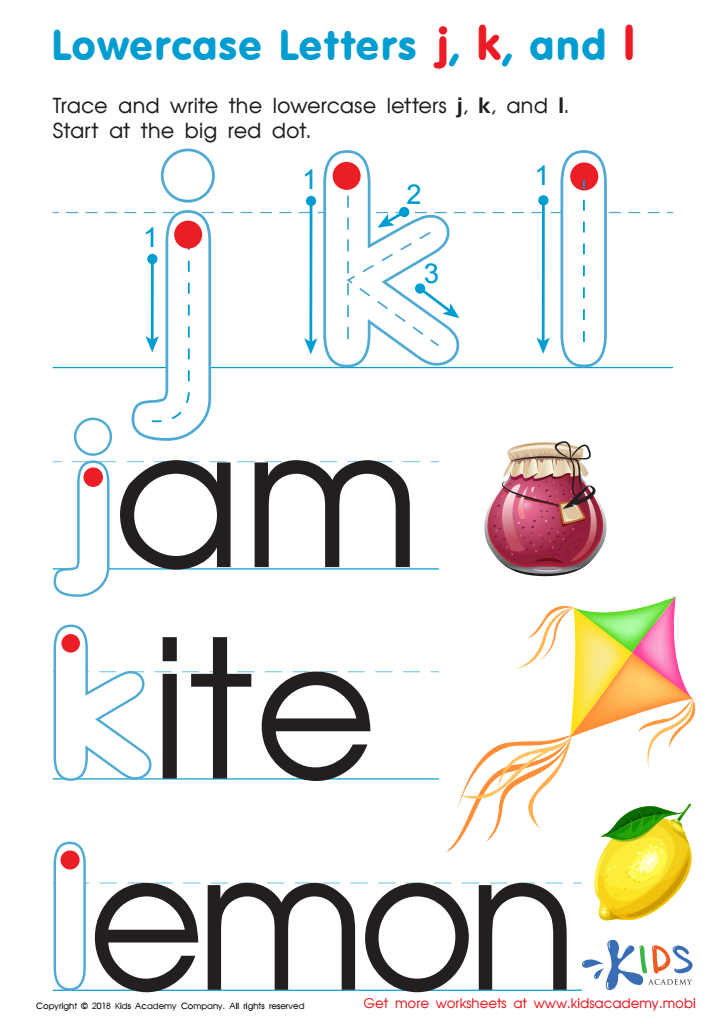
Lowercase Letters j k l Worksheet
Teach your child the difference between uppercase and lowercase letters. Have them trace and write the lowercase letters j, k, and l, starting at the red dot. Guide your child's hand to form the letters correctly.
Lowercase Letters j k l Worksheet
Worksheet
Join Kids Academy for Free
Who is primarily going to use this learning content?


Parents and teachers should prioritize understanding alphabet sequencing for lowercase letters in kindergarten because it plays a crucial role in early literacy development. Mastering the sequence of lowercase letters is foundational for reading and writing skills. When children can recognize and sequence these letters, they develop phonemic awareness, which is critical for decoding words.
Additionally, by learning the conventional order of letters, children enhance their ability to alphabetize words and other information, laying the groundwork for organizational skills in reading and writing tasks. Familiarity with sequencing also aids in easier access to dictionaries, books, and resources, thereby encouraging a love for reading and knowledge exploration.
Furthermore, learning lowercase letters helps in identifying sight words, early vocabulary, and enhances handwriting skills. It also strengthens fine motor skills as children practice writing these letters. By creating an engaging, supportive environment around this skill, parents and teachers can boost confidence and motivation in young learners.
Ultimately, alphabet sequencing serves as a stepping-stone for more complex literacy skills, enabling children to gain fluency in reading, which is essential for academic achievement across all subjects. Investing time and resources to nurture this foundational literacy skill is critical for fostering lifelong learning.