Reading comprehension Normal Kindergarten Rhyming Worksheets
4 filtered results
Difficulty Level
Grade
Age
-
From - To
Subject
Activity
Standards
Boost your child’s reading comprehension skills with our engaging Kindergarten Rhyming Worksheets! Specifically designed for early learners, these worksheets focus on enhancing phonemic awareness and vocabulary through fun, rhyming activities. Children will explore various word pairs while developing their comprehension abilities in a playful environment. Our colorful, easy-to-use printables include matching games, fill-in-the-blank exercises, and more, making learning to read both enjoyable and effective. Perfect for classroom settings or at-home learning, these resources foster critical thinking and improve literacy skills. Encourage a love for reading and help your child succeed with these delightful rhyming worksheets, tailored just for Kindergarteners!
Favorites
With answer key
Interactive
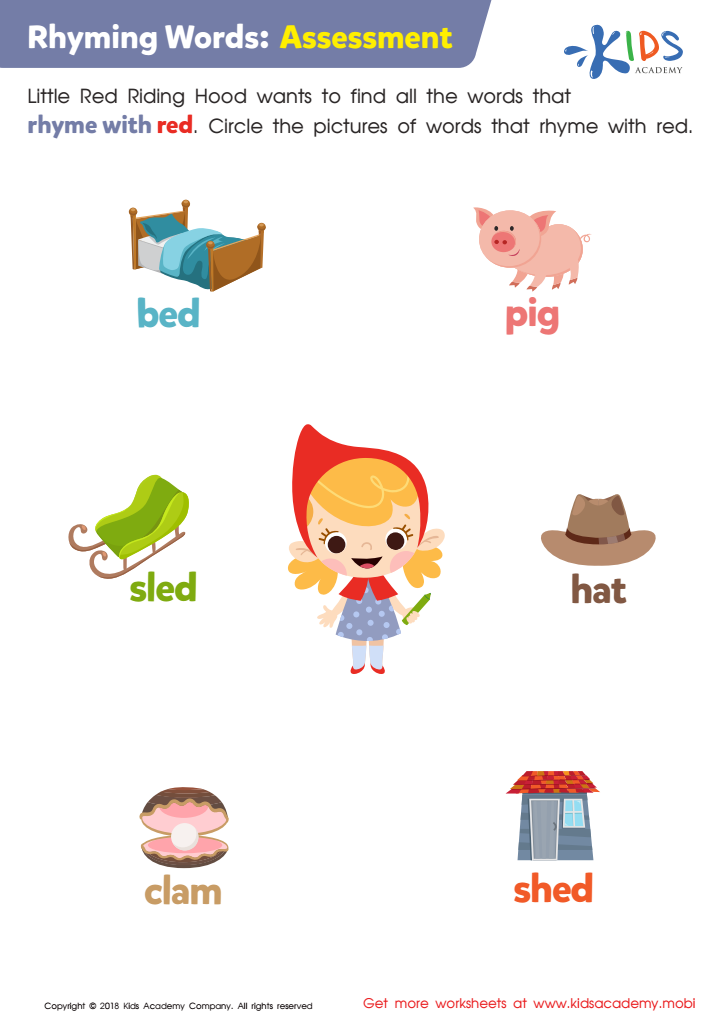
Rhyming Words: Assessment Worksheet
Help Little Red Riding Hood find rhyming words with "red". Download and print this worksheet. Have your child circle the rhyming words and pictures. Get them to say each word out loud and compare it to the word "red". When they're done, review the answers and talk about any words that don't rhyme.
 Assign to My Students
Rhyming Words: Assessment Worksheet
Worksheet
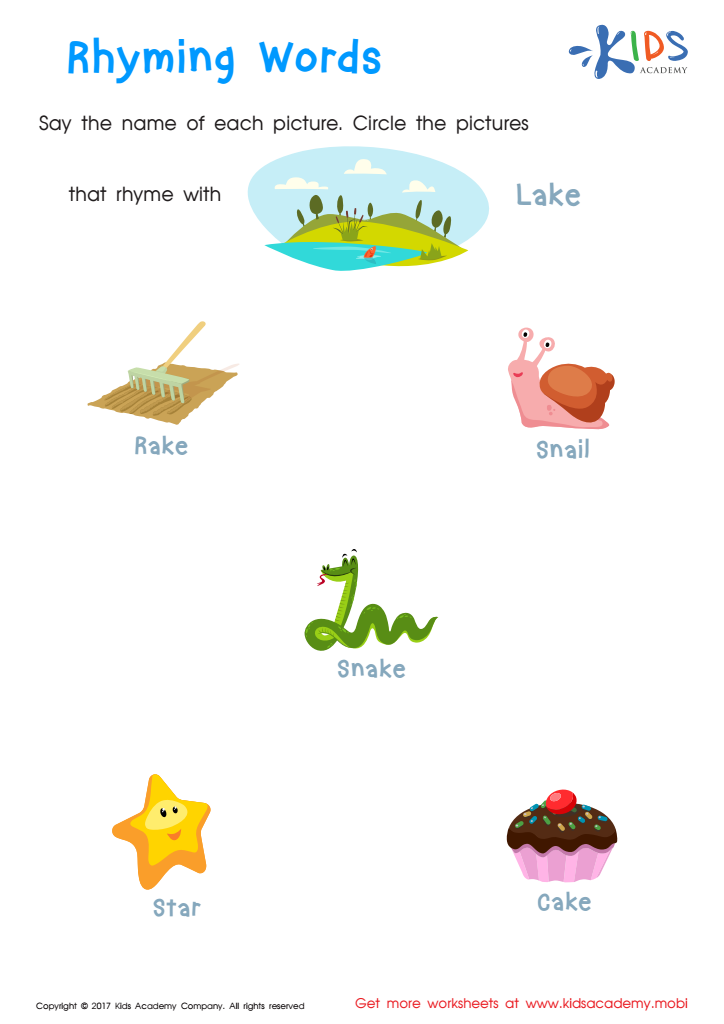
Rhyming Words Rhyming Worksheet
This worksheet is great for honing pre-reading skills. It helps kids make connections between pictures and written words, use problem-solving, and recognize sounds and words that rhyme. Have fun exploring rhyming words with your child, and they'll be rhyming in no time!
Rhyming Words Rhyming Worksheet
Worksheet
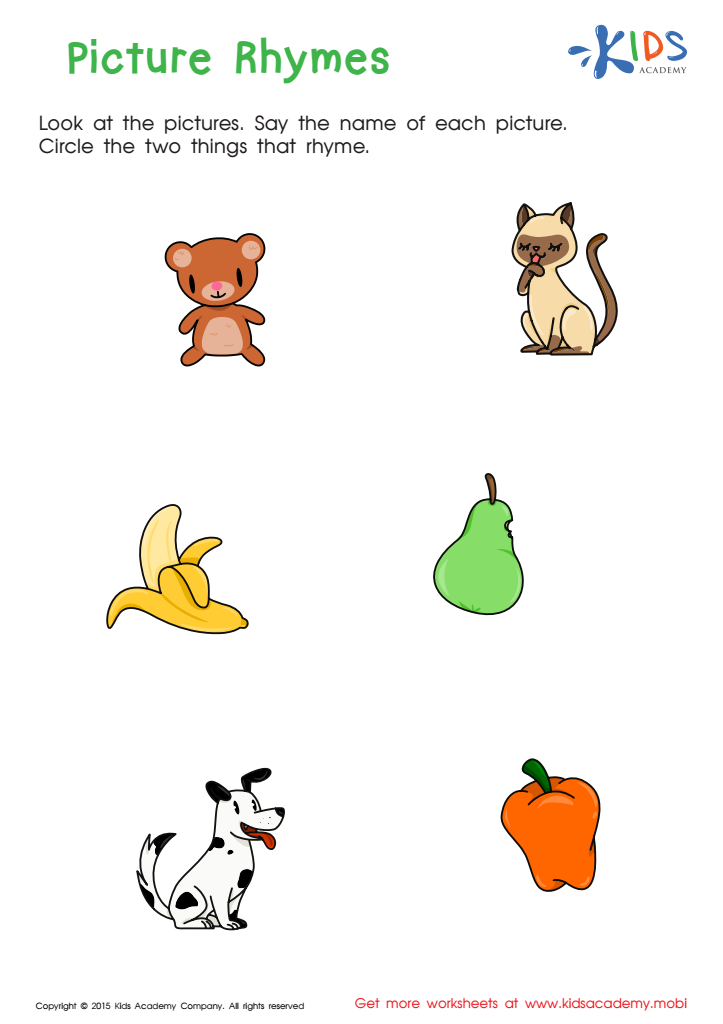
First Words: Picture Rhymes Worksheet
Rhyming helps kids understand language, read and write better. This printable worksheet boosts problem-solving and cognitive skills with vibrant pictures. It teaches kids to identify words, recognize rhymes, complete mental tasks and write words. An extra activity: show them how rhyming words share some of the same letters.
First Words: Picture Rhymes Worksheet
Worksheet
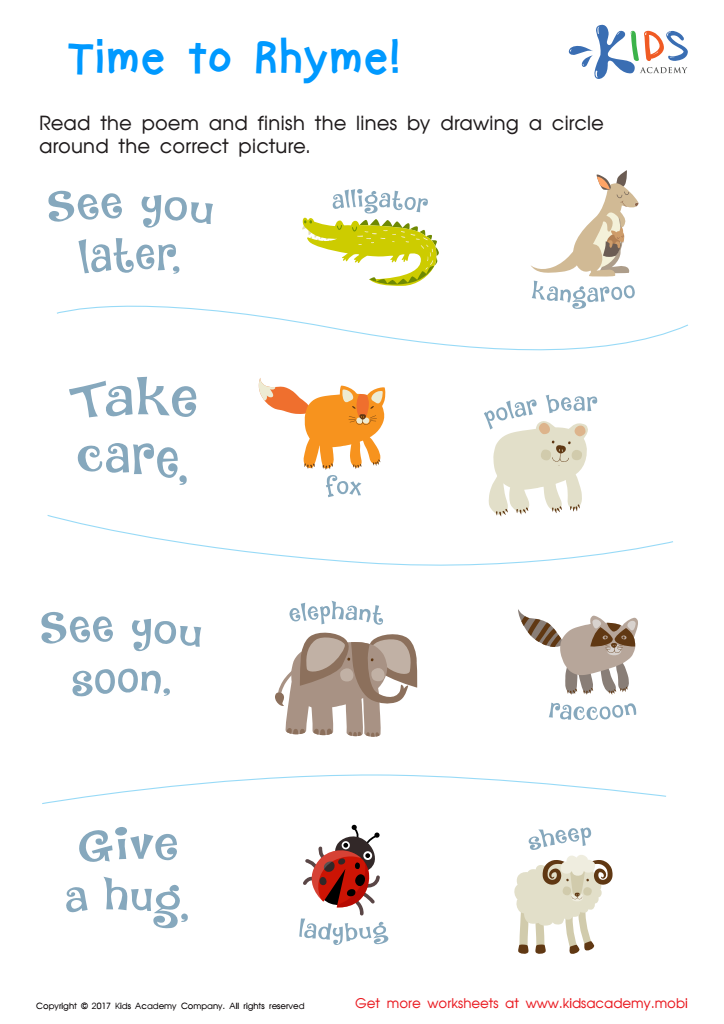
Time to Rhyme Rhyming Worksheet
This worksheet helps kids learn catchy sayings with rhymes, notice words and sounds that rhyme, and use problem solving to solve expressions. By using these expressions in everyday talk, kids gain the repetition needed to internalize the skills they've learned. Check out our nursery rhymes to further support them!
Time to Rhyme Rhyming Worksheet
Worksheet
Join Kids Academy for Free
Who is primarily going to use this learning content?




Reading comprehension and rhyming activities in kindergarten play a crucial role in early literacy development. For parents and teachers, fostering these skills sets the foundation for successful learning. Rhyming introduces children to the sound structure of language, helping them discern similar sounds and patterns. This phonemic awareness is vital for developing skills in decoding and spelling as they progress in their literacy journey.
Moreover, engaging with rhyming texts encourages playful interaction with words, making reading enjoyable and memorable. It enhances vocabulary and provides a context for understanding meanings through repetition and rhythm. When children can recognize and produce rhymes, they develop confidence in their reading abilities.
Additionally, reading comprehension extends beyond merely understanding text; it promotes critical thinking and imaginative engagement. As children rhyme and read, they learn to make predictions, draw connections, and summarize ideas, all essential components of comprehension.
Overall, investing time in reading comprehension and rhyming not only ignites a passion for reading but also equips young learners with vital skills to navigate further educational challenges. By prioritizing these activities, parents and teachers create a supportive environment that nurtures lifelong learners who appreciate and understand language.