Hand-eye Coordination Normal Kindergarten Upper & Lowercase Letters Worksheets
3 filtered results
-
From - To
Enhance your child's hand-eye coordination with our "Positive Shortcut’s Hand-eye Coordination in Kindergarten Upper & Lowercase Letters Worksheets." These expertly crafted printable worksheets offer engaging activities focused on helping young learners master letter recognition and formation. By practicing upper and lowercase letters, children will improve their ability to coordinate visual and motor skills effectively. Each worksheet is designed with fun exercises to keep kids motivated and excited about learning. Perfect for classroom use or at-home practice, our worksheets make it enjoyable for kindergartners to develop essential writing skills while strengthening their fine motor abilities. Try them today!
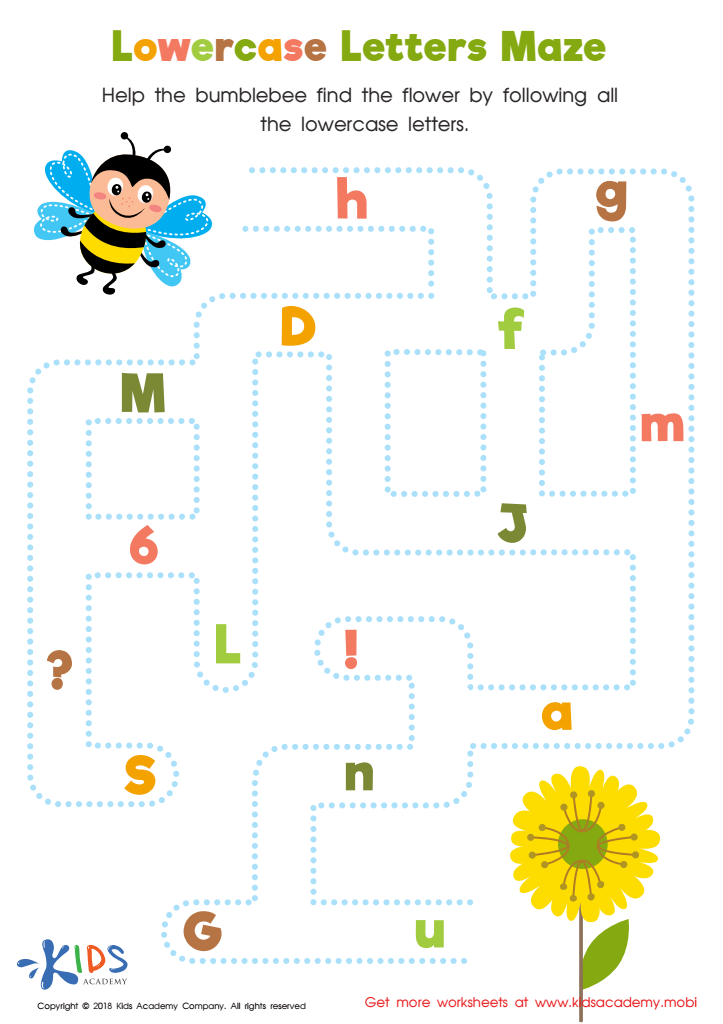
Lowercase Letters Maze Worksheet
 Assign to My Students
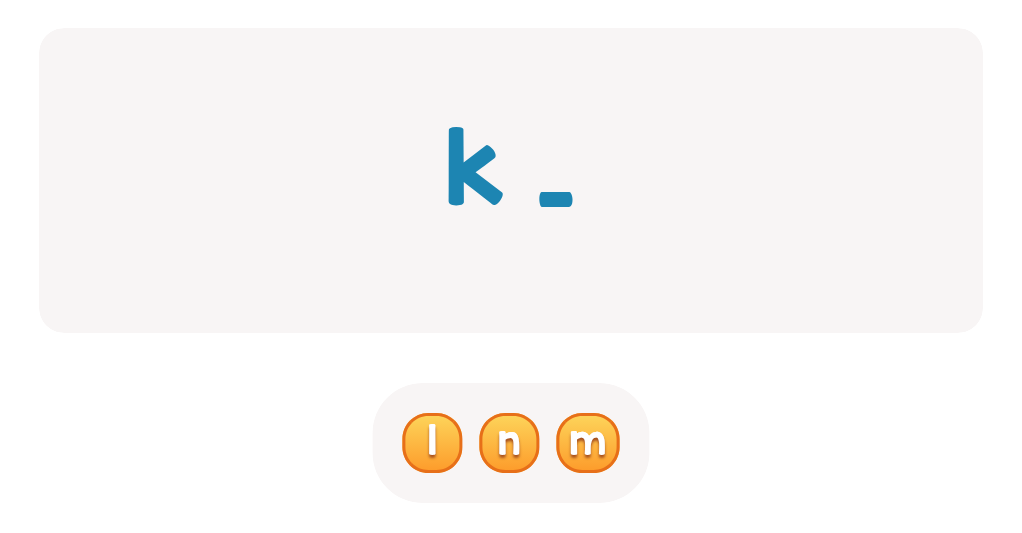


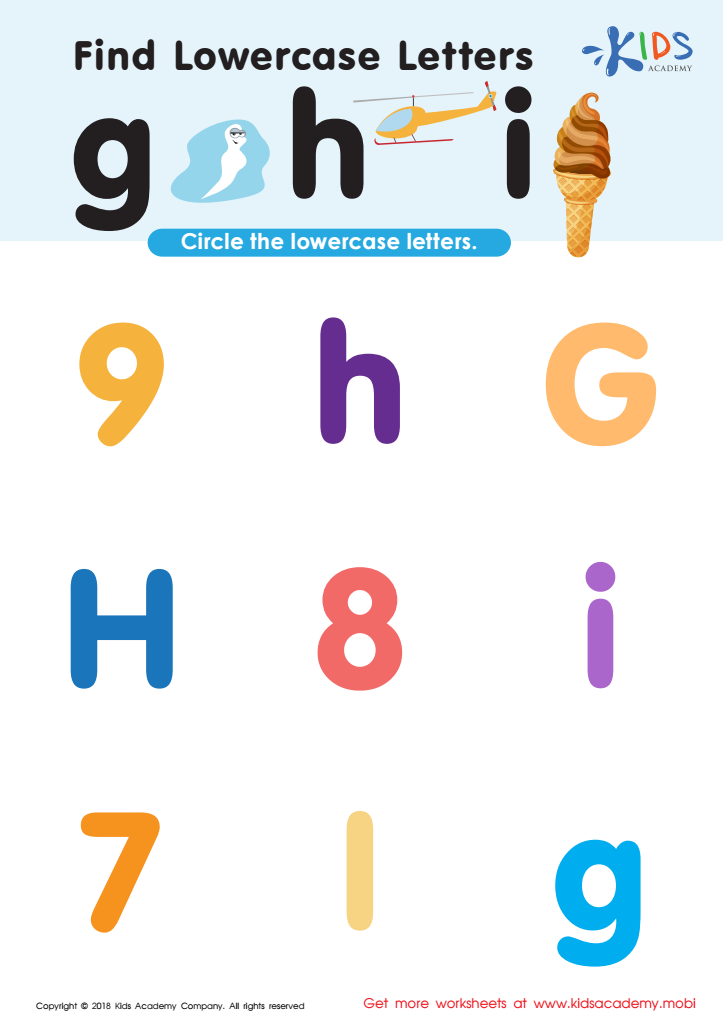
Find Lowercase Letters g h i Worksheet
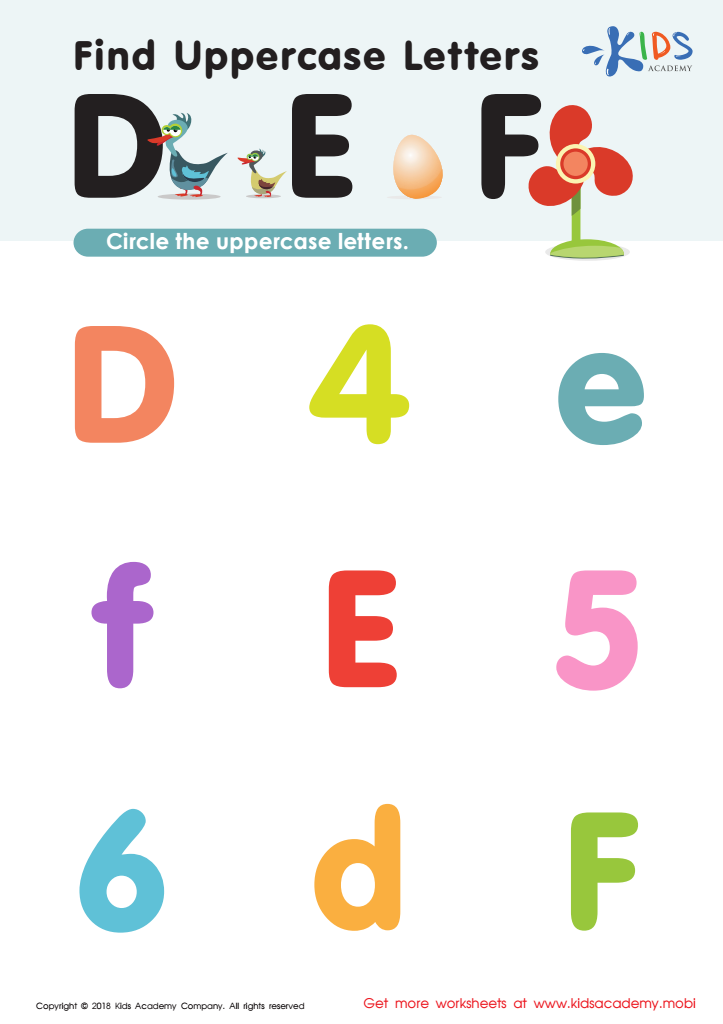
Find Uppercase Letters D, E, and F Worksheet





Hand-eye coordination is a fundamental skill for young children that integrates visual information with physical movement. For parents and teachers of kindergarten-aged children, focusing on this skill when teaching uppercase and lowercase letters can have significant benefits. Enhanced hand-eye coordination helps children write letters more accurately and clearly, forming a solid foundation for literacy development.
When young learners actively practice tracing and writing alphabet letters, they engage in complex motor activities that boost coordination. This process reinforces muscle memory required for effective handwriting. Good hand-eye coordination also aids in tasks like cutting paper, tying shoelaces, and playing sports, which are crucial for overall physical development and independence.
Moreover, integrating hand-eye coordination exercises with letter recognition helps in better visual discrimination between uppercase and lowercase forms, essential for reading proficiency. Seamless identification of letter shapes and their appropriate usage in sentences underpins effective communication skills.
Investing attention and time in fostering hand-eye coordination encourages more competent, confident, and self-sufficient young learners. Opening pathways to enhanced motor skills, literacy, and overall cognitive development, reinforces the belief that these early educational practices can yield lasting benefits throughout a child's academic journey and beyond.