Alphabet familiarity Normal Kindergarten Uppercase Letters Worksheets
4 filtered results
-
From - To
Enhance your child's literacy skills with our Alphabet Familiarity Normal Kindergarten Uppercase Letters Worksheets! These interactive resources are designed specifically for young learners, helping them recognize and master uppercase letters in a fun and engaging way. Each worksheet offers a variety of activities, including tracing, matching, and identifying uppercase letters, tailored to reinforce your child's understanding of the alphabet. With vibrant illustrations and user-friendly layouts, these worksheets make learning enjoyable and effective. Perfect for home or classroom use, they foster early literacy development and build a strong foundation for reading. Start your child's alphabet journey today with our comprehensive worksheets!
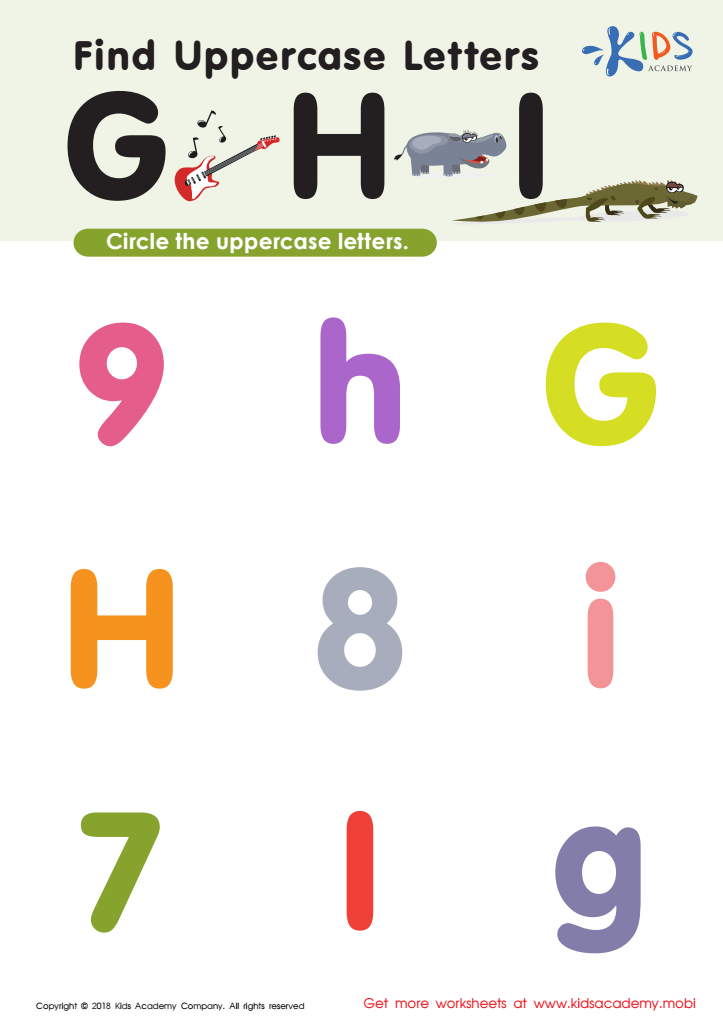
Find Uppercase Letters G, H, and I Worksheet
 Assign to My Students
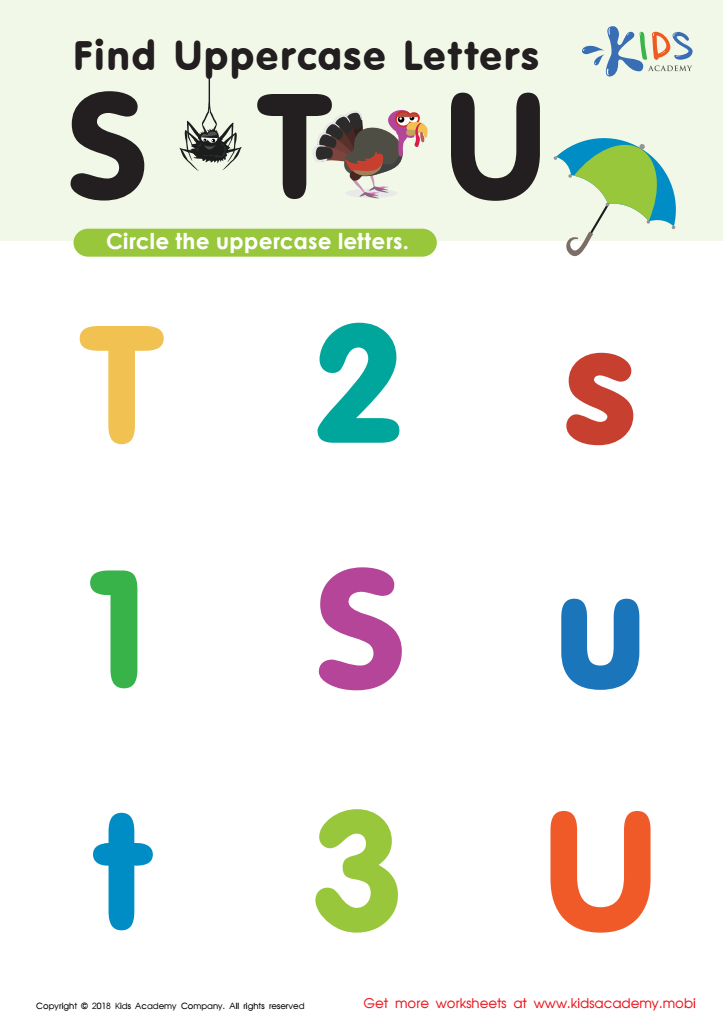
Find Uppercase Letters Worksheet
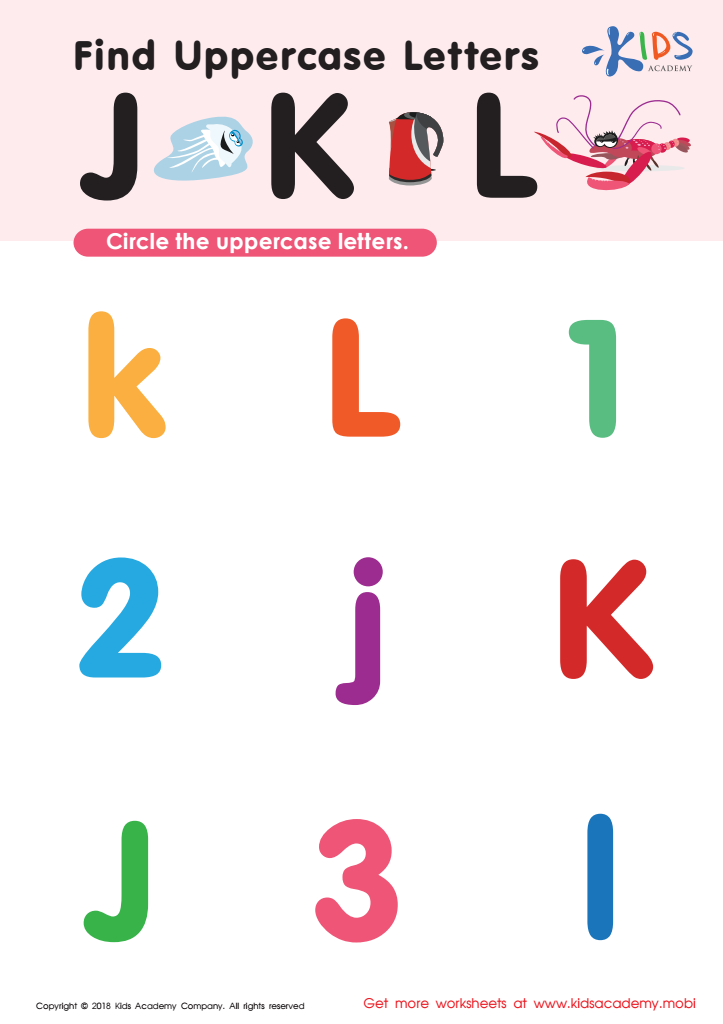
Find Uppercase Letters J, K, and L Worksheet

Find Uppercase Letters A, B, and C Worksheet






Alphabet familiarity, particularly with uppercase letters in kindergarten, is crucial for young learners as it lays the foundation for language skills and literacy. Uppercase letters are frequently encountered in everyday life, such as in signs, books, and digital content. By understanding and recognizing these letters, children can begin to decode words, promoting reading proficiency early on.
Additionally, familiarizing children with uppercase letters fosters their writing skills. When kids learn to identify and write uppercase letters, they gain confidence in expressing themselves through written communication. This skill is essential for developing fine motor skills and hand-eye coordination.
Moreover, uppercase letters are often used in names, titles, and the beginning of sentences, making them a vital part of understanding written language structure. Parents and teachers play an important role in creating engaging learning environments that make the alphabet accessible and enjoyable. Activities like singing the alphabet song, using flashcards, and engaging in interactive games can significantly enhance letter recognition.
Ultimately, the focus on uppercase letters prepares children for effectively grasping literacy concepts, ensuring that they can transition smoothly into more advanced reading and writing tasks in the future. Hence, investing time in alphabet familiarity is essential for emerging learners.