Basic measurement concepts Normal Kindergarten Worksheets
3 filtered results
-
From - To
Introduce young learners to the exciting world of measurement with our "Basic Measurement Concepts Kindergarten Worksheets." Designed for curious kindergarten minds, these worksheets make learning fun and engaging while teaching essential measurement skills like length, height, and weight. These colorful and interactive worksheets provide hands-on activities that help kids understand how to compare, contrast, and measure objects using everyday items. Perfect for home or classroom use, our measurement worksheets support early academic development and build a strong foundation for future math success. Explore our collection today and watch your child's confidence in measurement concepts grow!
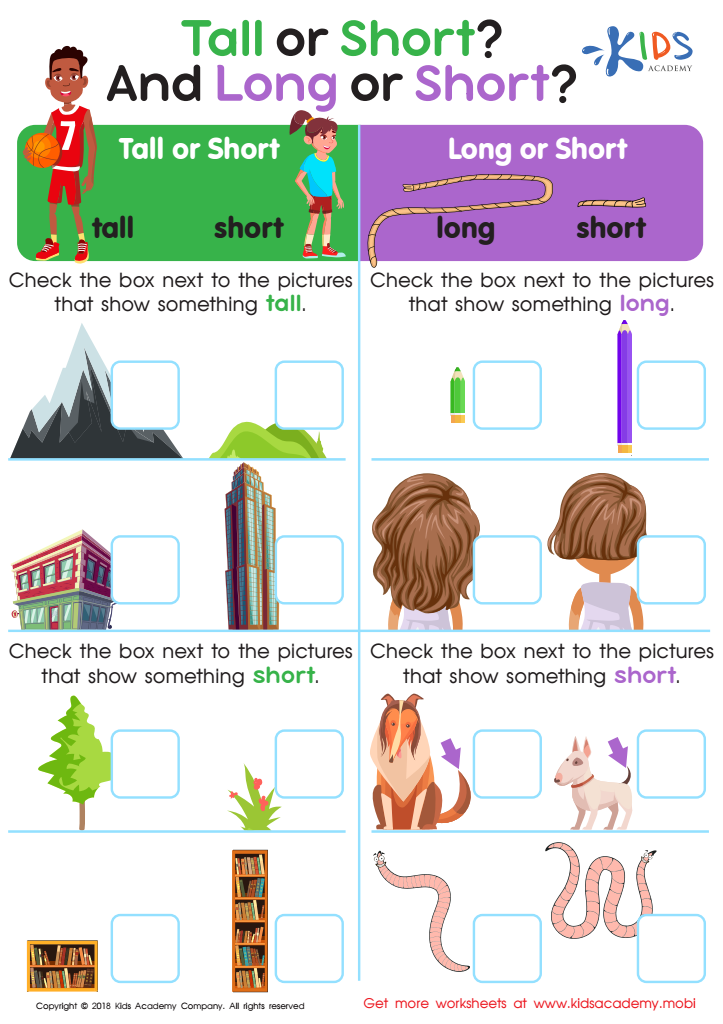
Tall or Short and Long or Short? Worksheet
 Assign to My Students
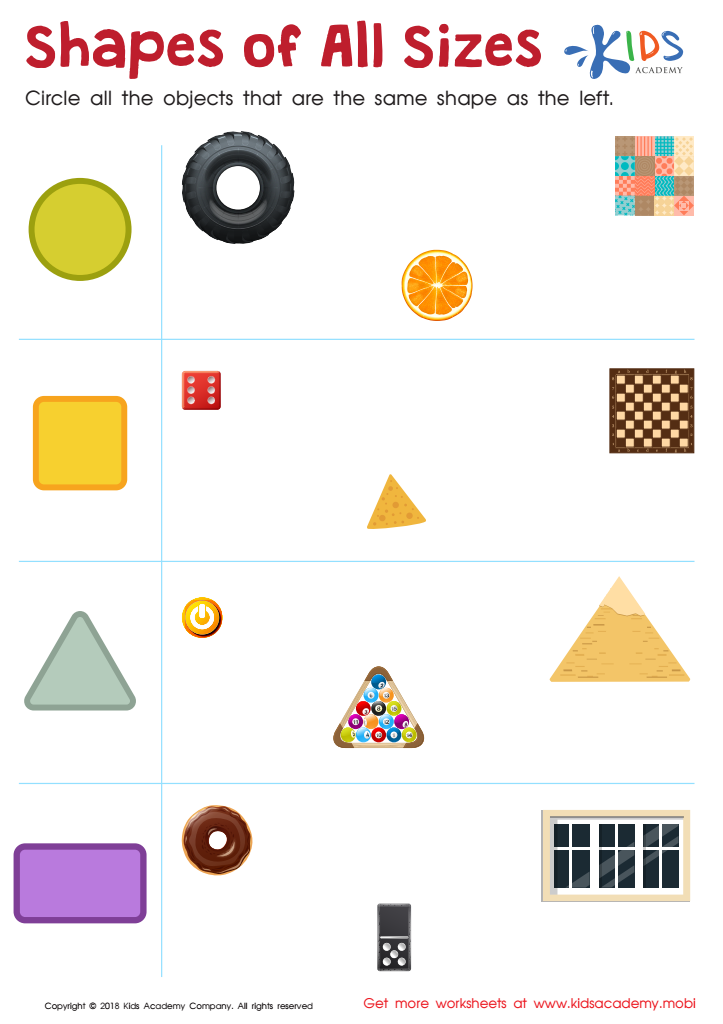
Shapes of All Sizes Worksheet
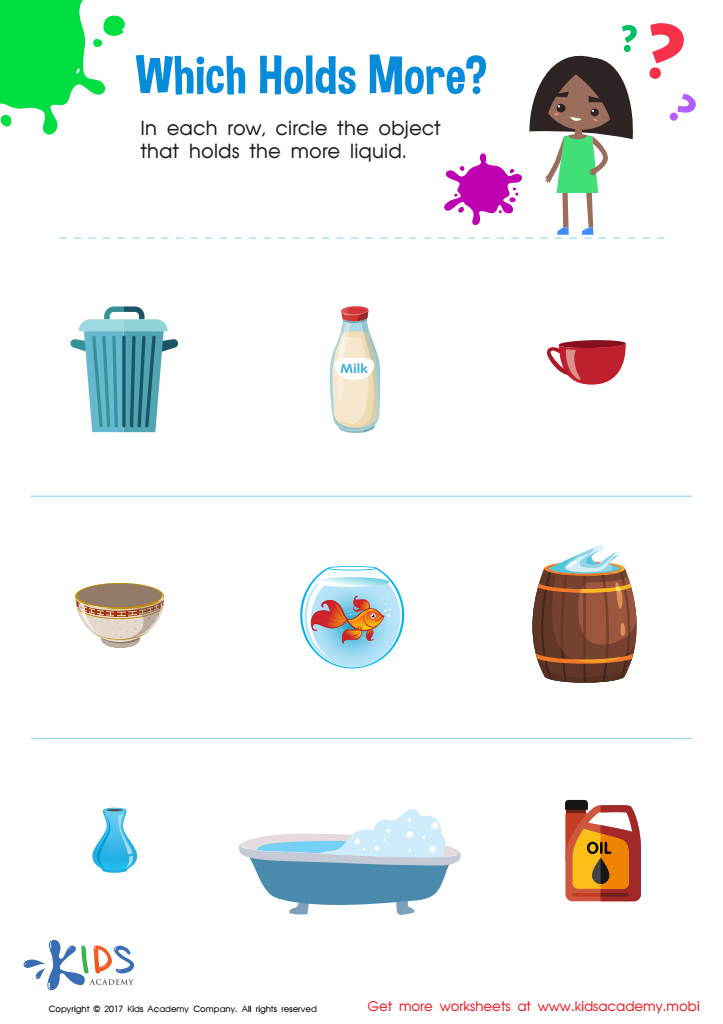
Which Holds More: Capacity Worksheet







Basic measurement concepts are fundamental for young learners, and parents or teachers should recognize their importance for several reasons. First, understanding measurement helps children make sense of their world. Whether comparing the length of two sticks, measuring how much water fills a container, or determining the time needed for a task, these concepts are foundational in everyday life.
Second, learning measurement supports the development of critical thinking skills. Children engage in reasoning when they estimate, compare, and quantify objects. They begin to understand abstract concepts such as long and short, heavy and light, or fast and slow, which builds the groundwork for more complex problem-solving abilities.
Third, early measurement activities foster numeracy skills beyond counting. Concepts like units of measure, size, volume, and weight integrate with other areas of mathematics. This holistic understanding promotes a more comprehensive math skillset. For example, when children measure objects, they often count increments on a ruler, reinforcing their number sense.
Lastly, early exposure to measurement concepts ties in with various aspects of early science education. Understanding and experimenting with measurement tools and concepts encourages curiosity and scientific inquiry, important for academic success and lifelong learning.
Overall, by paying attention to basic measurement concepts, parents and teachers set children on a path of holistic educational growth that will benefit them far beyond kindergarten.