Shape identification Normal Kindergarten Worksheets
5 filtered results
-
From - To
Unlock your child’s potential with our Shape Identification Normal Kindergarten Worksheets! Tailored for young learners, these engaging resources help children recognize and differentiate various shapes through fun activities and colorful illustrations. Each worksheet encourages creativity and critical thinking, making learning shapes enjoyable. Kids will connect with real-world objects, reinforcing their understanding of shapes like circles, squares, triangles, and more. Ideal for classroom use or home schooling, our worksheets support early math skills development. Perfect for enhancing fine motor skills, these printable resources are an essential tool for any kindergarten curriculum. Start your child's learning journey today with our interactive shape identification worksheets!
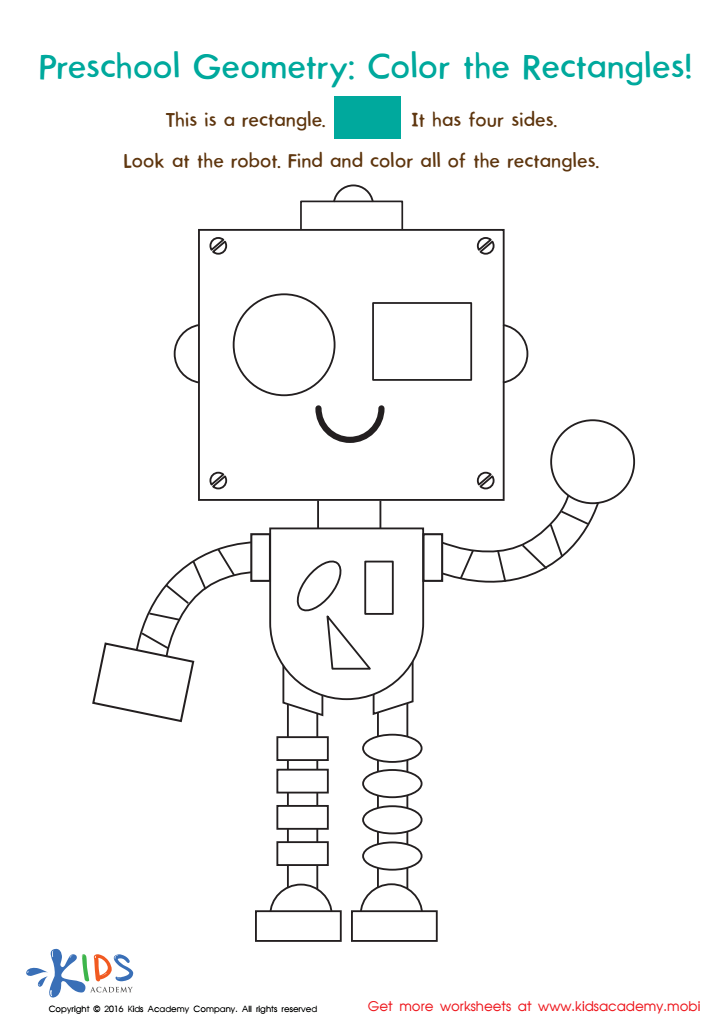
Geometry Worksheet
 Assign to My Students
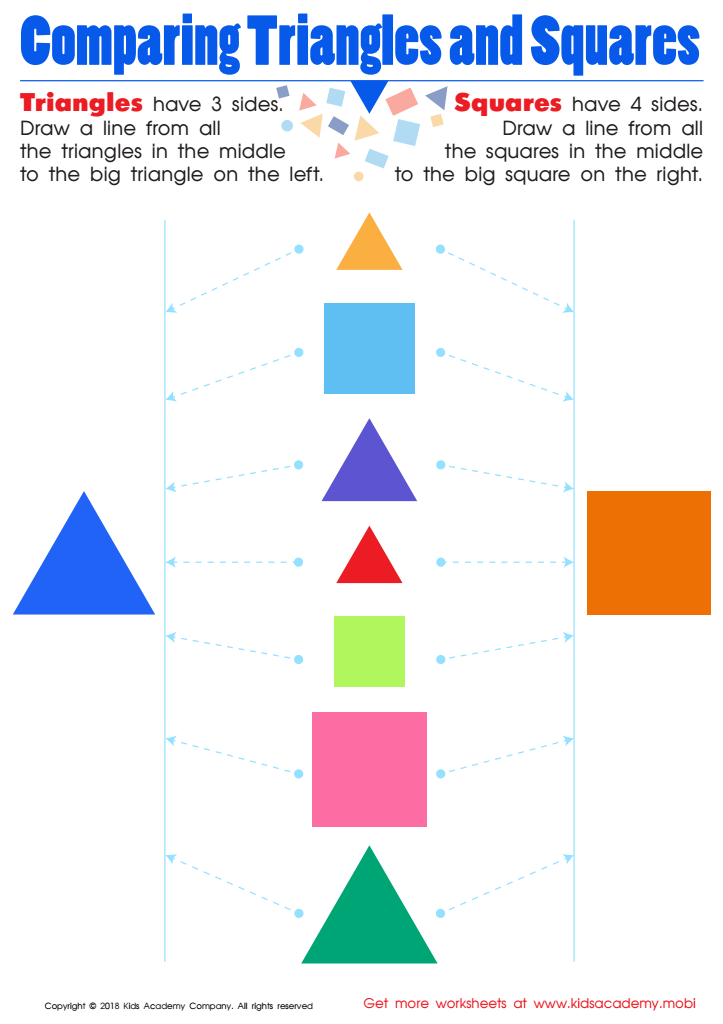
Comparing Triangles Squares Worksheet
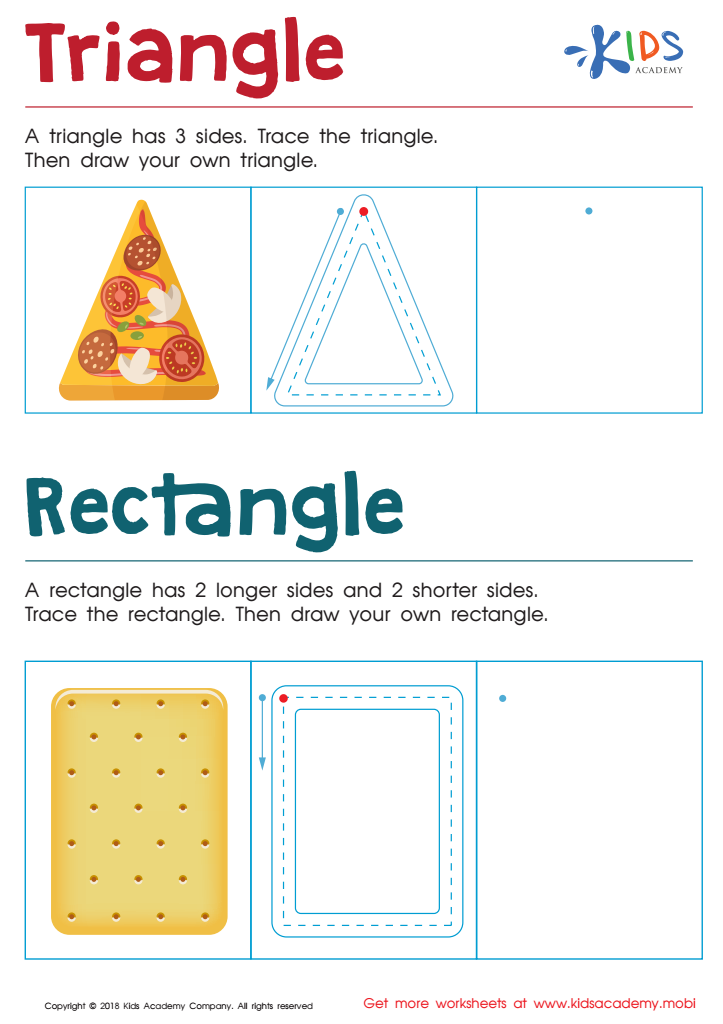
Triangle Rectangle Worksheet
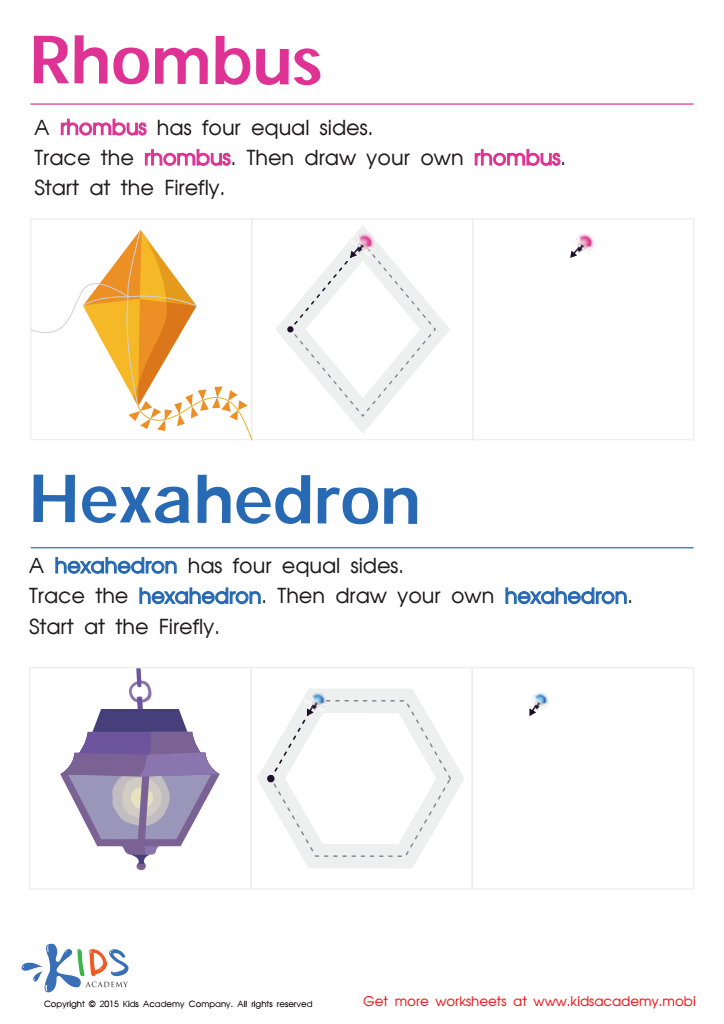
Draw a Rhombus And a Hexahedron Printable
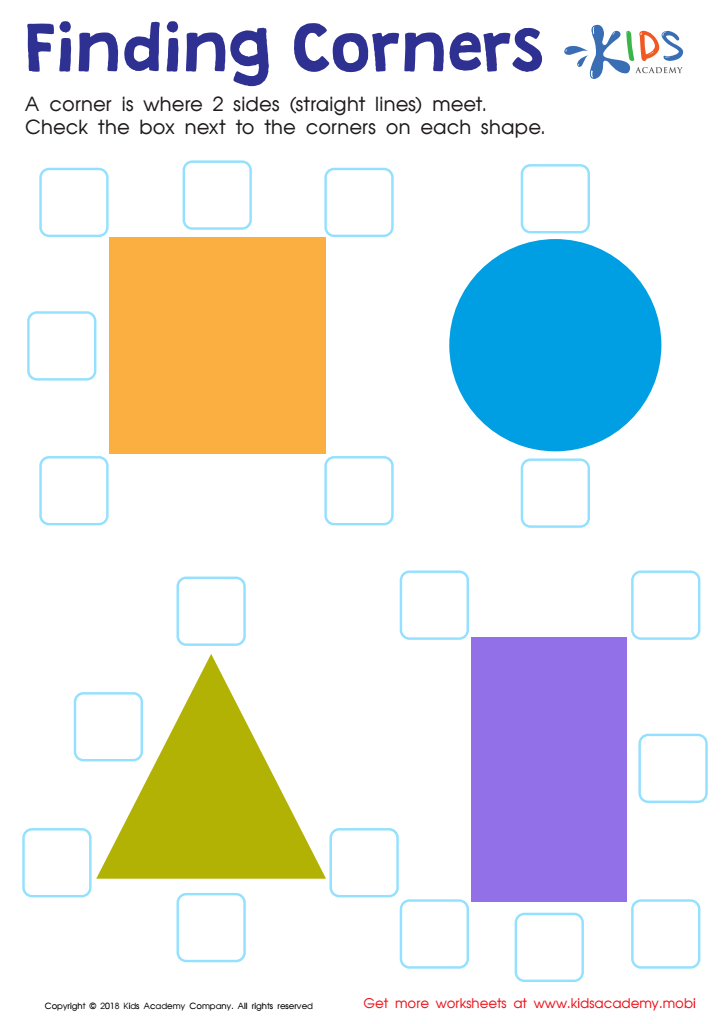
Finding Corners Worksheet







Shape identification is a foundational skill in early childhood education that plays a crucial role in a child's cognitive development. For parents and teachers, understanding the significance of shape identification in Kindergarten is paramount for several reasons.
Firstly, recognizing and naming shapes helps children build essential mathematical concepts. Understanding shapes lays the groundwork for more complex topics like geometry, spatial awareness, and problem-solving later on. When children can identify shapes, they begin to see patterns and relationships, fostering analytical thinking.
Secondly, shape identification supports language development. When children learn the names and attributes of different shapes, they expand their vocabulary and enhance communication skills. Describing shapes fosters descriptive language, which is critical in literacy development.
Furthermore, early shape recognition activities can be integrated into various subjects, making learning dynamic and engaging. Teachers and parents can use everyday objects to teach shapes in a fun way through play, art, and storytelling.
Lastly, recognizing shapes contributes to fine motor skill development as children engage in hands-on activities. By prioritizing shape identification, parents and teachers can provide children with a strong educational foundation, promoting a love of learning and exploration.