Uppercase identification Normal Kindergarten Worksheets
5 filtered results
-
From - To
Discover our engaging Uppercase Identification Normal Kindergarten Worksheets, designed to enhance your child's letter recognition skills! These interactive and visually appealing worksheets help young learners identify and differentiate uppercase letters through fun activities. Your little ones will enjoy tracing, matching, and coloring while building their confidence in letter identification. Perfect for preschool and kindergarten educators, our resources make learning enjoyable and effective. These worksheets align with early literacy standards, ensuring that children develop foundational skills essential for reading and writing. Download now and empower your students with exciting hands-on practice that promotes a love for learning in a vibrant classroom environment!
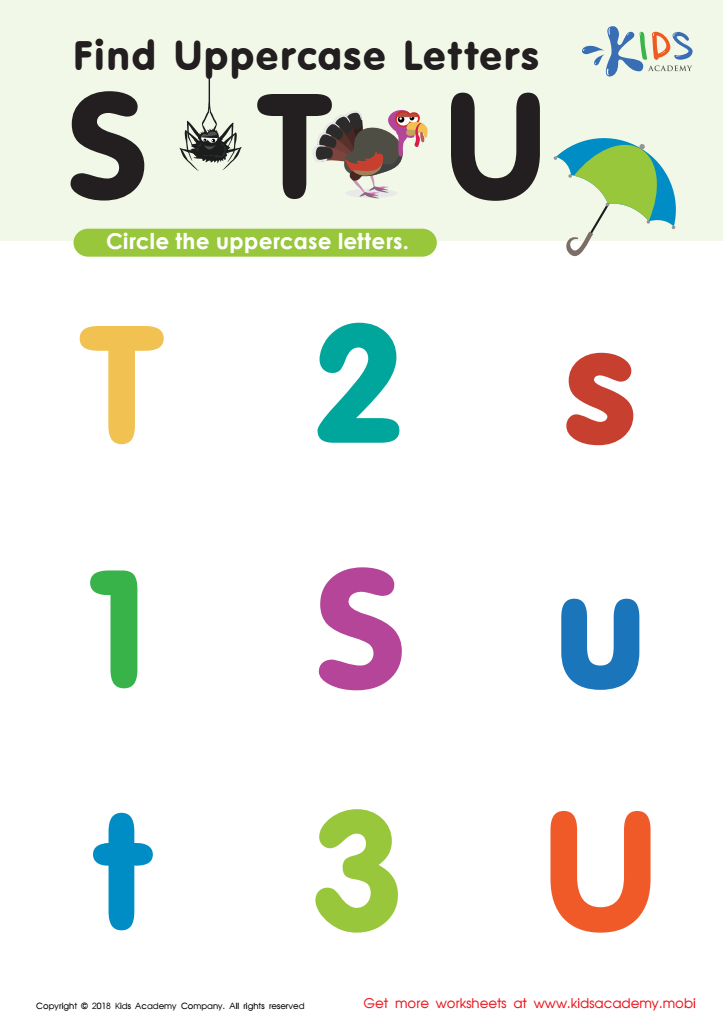
Find Uppercase Letters Worksheet
 Assign to My Students
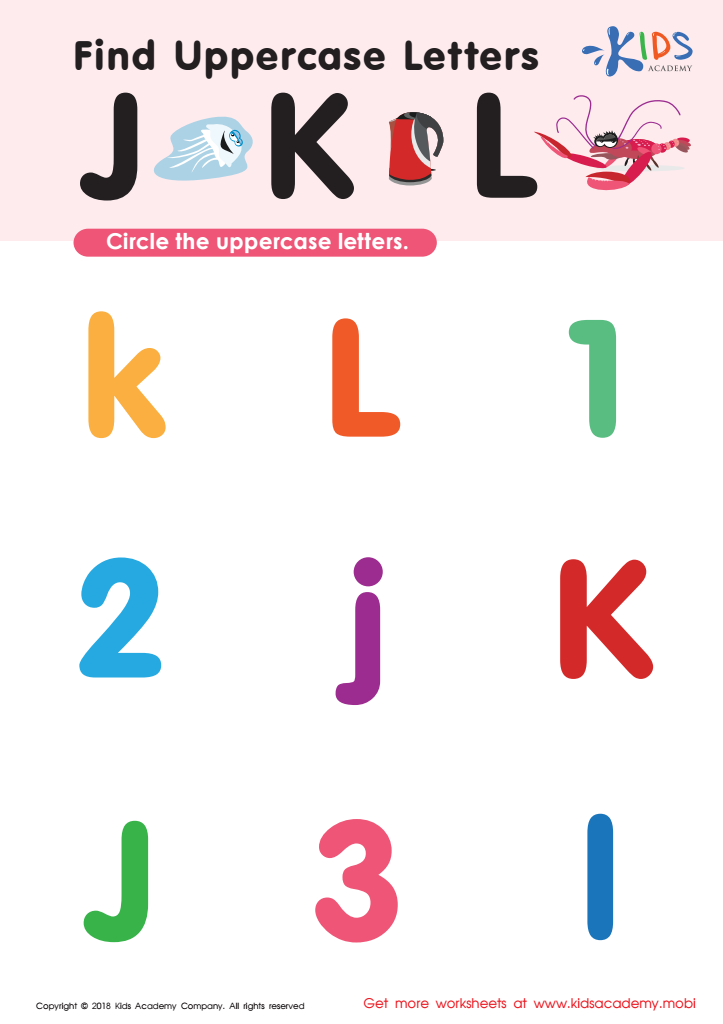
Find Uppercase Letters J, K, and L Worksheet
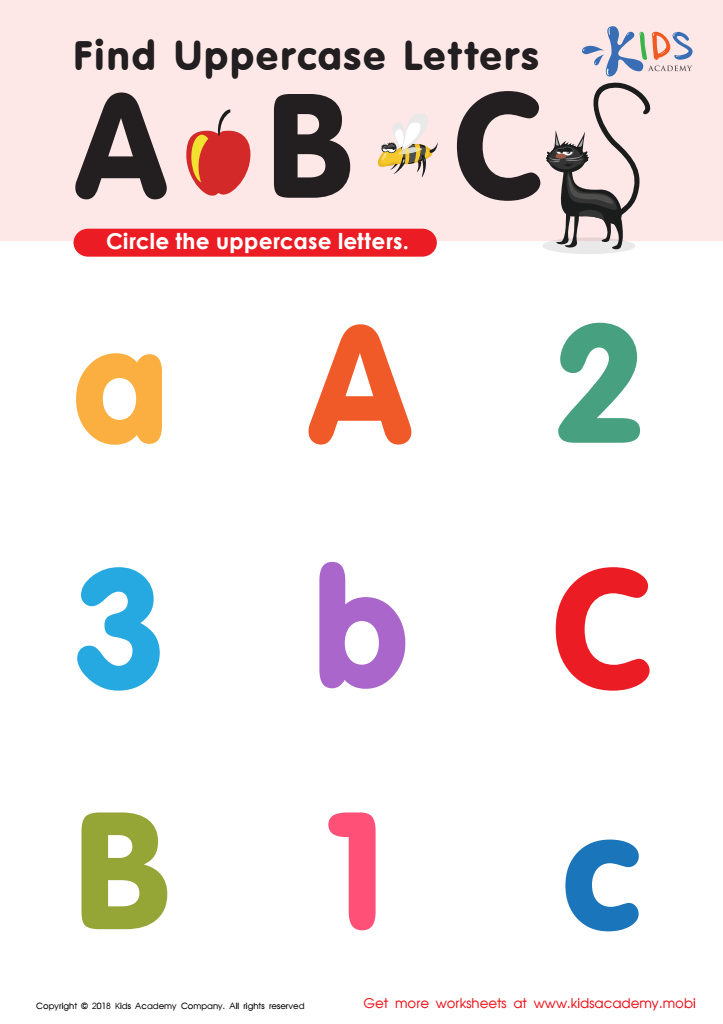
Find Uppercase Letters A, B, and C Worksheet
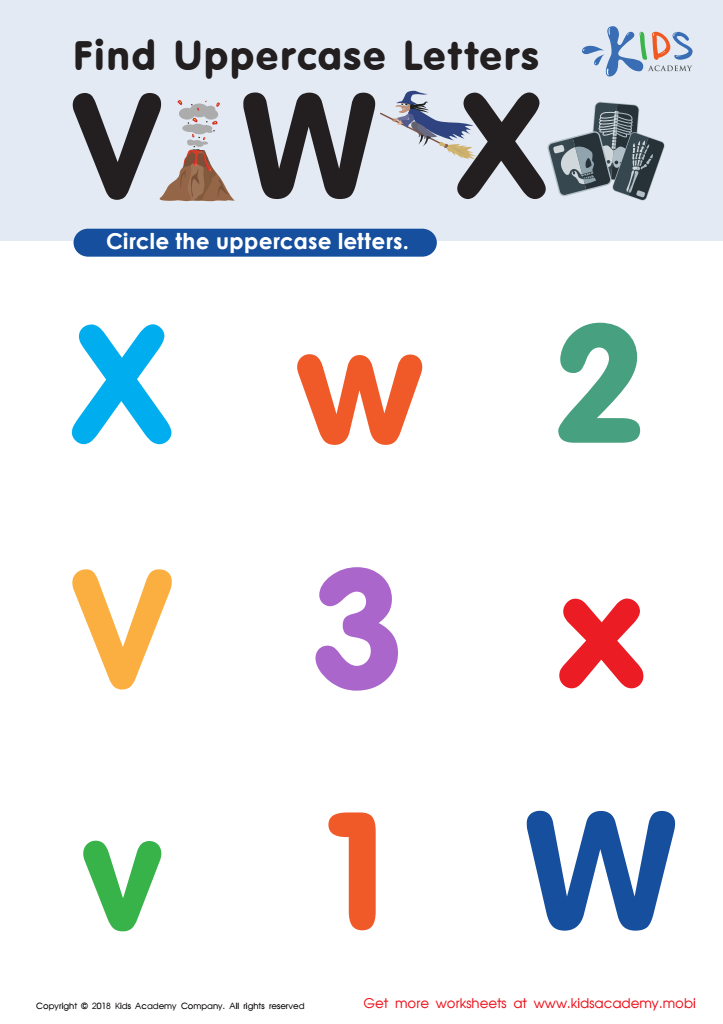
Find Uppercase Letters V, W, X Worksheet
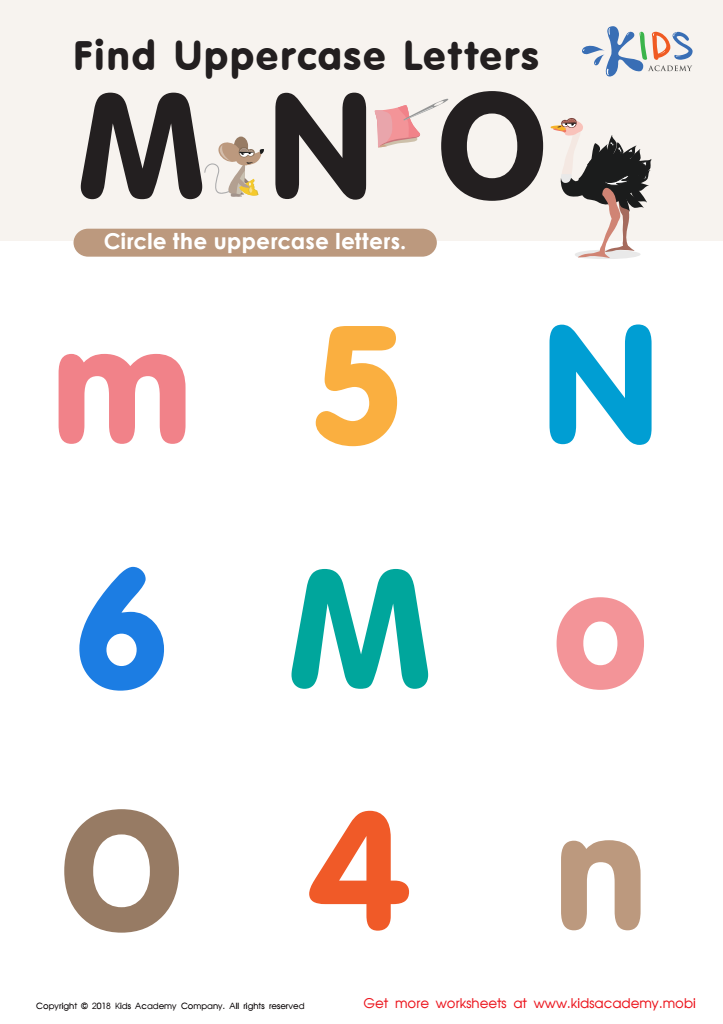
Find Uppercase Letters M, N, and O Worksheet


.jpg)




Uppercase letter identification is a fundamental skill for children in Kindergarten and plays a crucial role in early literacy development. Parents and teachers should care about this milestone for several reasons. First, recognizing uppercase letters helps children learn the alphabet, a key pre-reading skill. This recognition is essential for reading words and understanding written text later on.
Additionally, many children's books and classroom materials predominantly use uppercase letters, making familiarity vital for building confidence. When children can identify these letters, they can engage more fully with the reading process, enhancing motivation and enjoyment in learning.
Moreover, uppercase letter identification supports other crucial skills, such as handwriting development and language structure. Knowing uppercase letters teaches children about letter formation, spacing, and starting sentences, fundamental elements of writing.
Supporting children in this area also fosters cognitive development. It encourages them to make connections between letters, sounds, and words, prompting critical thinking and problem-solving skills.
Furthermore, recognizing uppercase letters helps create a foundation for social communication. Children who can identify these letters will more readily understand signs in their environment, contributing to their navigation of the world around them. Thus, acknowledging the significance of uppercase letter recognition can greatly enhance a child’s educational journey.