Visual interpretation Normal Kindergarten Worksheets
3 filtered results
Difficulty Level
Grade
Age
-
From - To
Subject
Activity
Standards
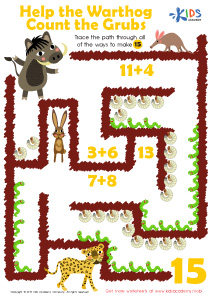
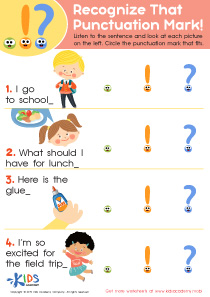
Explore our engaging Visual Interpretation Normal Kindergarten Worksheets designed to enhance your child's understanding of visual cues. These worksheets focus on developing essential skills such as observation, comprehension, and critical thinking through fun, interactive activities. Kids will learn to interpret images, recognize patterns, and identify colors while boosting their confidence and creativity. Ideal for both classroom and at-home learning, these worksheets provide a playful way for young learners to sharpen their abilities. Help your child excel in visual literacy and make learning an enjoyable experience with our thoughtfully crafted worksheets. Dive into a world of discovery and growth today!
Favorites
With answer key
Interactive
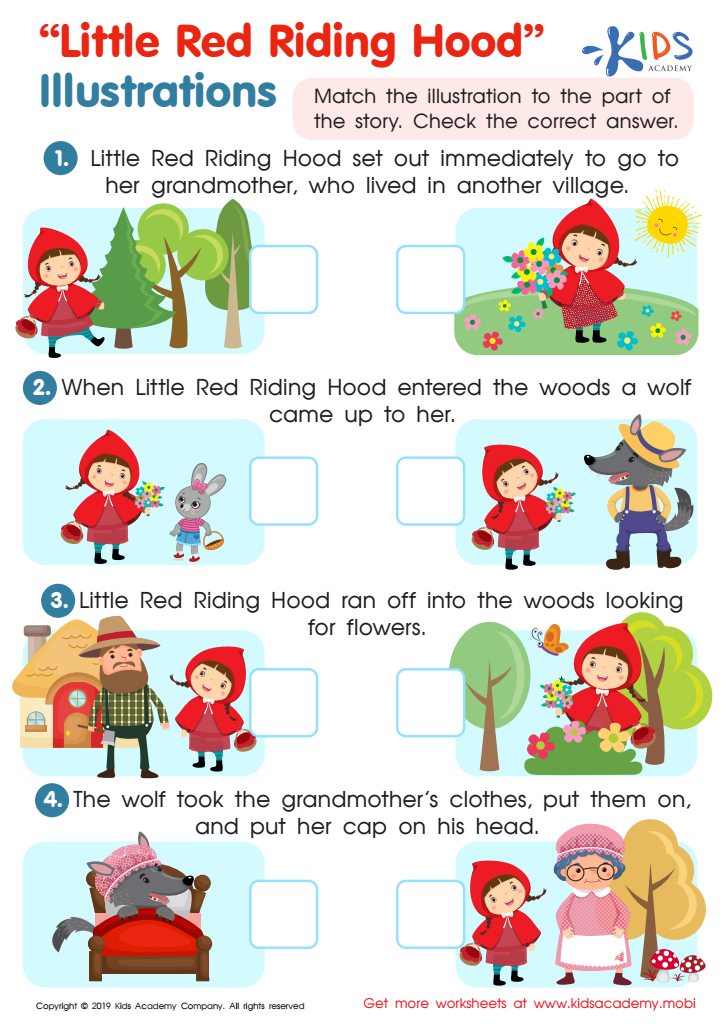
Little Red Riding Hood: Illustrations Worksheet
Comprehension is improved by having young readers recall and retell stories. This worksheet uses colorful illustrations of the fairytale Little Red Riding Hood. Children use their comprehension skills and strategy to match illustrations to the story parts, check off the appropriate boxes and use the pictures as clues.
 Assign to My Students
Little Red Riding Hood: Illustrations Worksheet
Worksheet
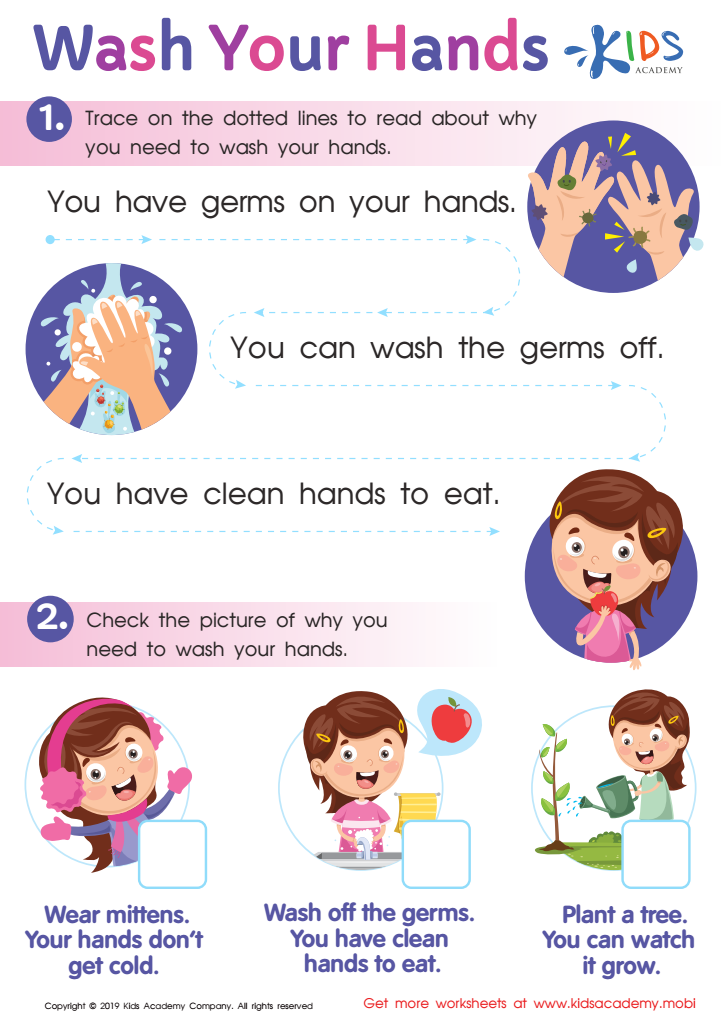
Wash Your Hands Worksheet
Kids learn best when they understand why they need to do something. This free worksheet uses traceable lines and pictures to teach them about germs and why washing hands is important. The child follows a left-to-right sequence and must check the correct picture to show they understand.
Wash Your Hands Worksheet
Worksheet
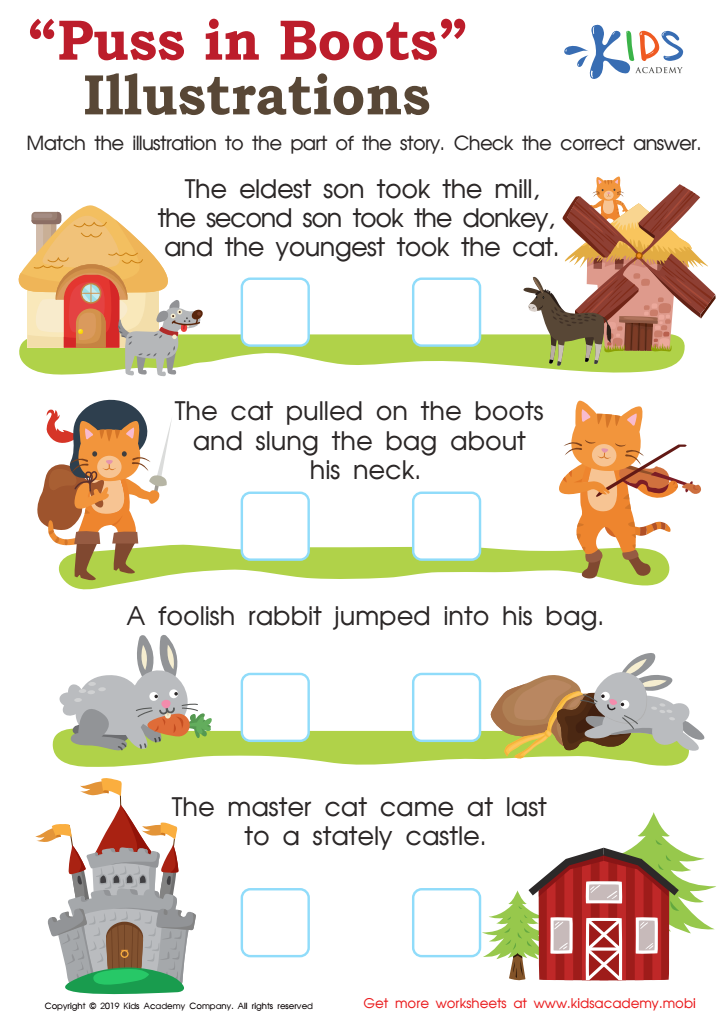
Puss in Boots Illustrations Worksheet
This Puss In Boots Illustrations worksheet is a great way to help kids learn about retelling stories. They'll match images to different parts of the story and check off the correct answer. As they recall events and put them in sequence they'll enjoy this fun and creative activity.
Puss in Boots Illustrations Worksheet
Worksheet
Join Kids Academy for Free
Who is primarily going to use this learning content?







Visual interpretation is a crucial skill for kindergarten children, as it forms the foundation for their future learning experiences. Parents and teachers should prioritize this skill because it enhances children's ability to understand and analyze visual information, which is increasingly important in our visually-driven world.
By developing visual interpretation skills, children learn to recognize patterns, shapes, and symbols, fostering their cognitive abilities. This lays the groundwork for critical thinking and problem-solving, as they begin to make connections between visual elements and concepts. Additionally, understanding visual cues strengthens their comprehension of stories, instructions, and lessons, allowing for more effective communication.
Moreover, visual interpretation plays a role in creativity and self-expression. By interpreting and creating visuals, children develop confidence in their abilities and engage their imaginations. This skill also supports literacy development, as children can relate pictures to words and ideas, making reading and writing more accessible and enjoyable.
For parents and teachers, fostering visual interpretation in young learners contributes to a holistic educational approach. It enables children to navigate their environment confidently, leads to better academic performance, and prepares them for the demands of a complex, visually-oriented society. Encouraging this skill in early education is essential for holistic growth and lifelong learning.