
Animal recognition Normal Kindergarten Math Worksheets
7 filtered results
Difficulty Level
Grade
Age
-
From - To
Subject
Activity
Standards
Discover the Animal Recognition Normal Kindergarten Math Worksheets designed to enhance your child's learning experience through engaging activities. These expertly-crafted worksheets combine fun and education, helping young learners identify various animals while strengthening their math skills. Perfect for kindergarten students, they focus on developing critical thinking and cognitive abilities. Each worksheet features colorful illustrations and easy-to-follow instructions to keep children motivated. Ideal for both home and classroom use, these resources support foundational math proficiency in a delightful and impactful way. Boost your child's confidence and enthusiasm for learning with our dynamic Animal Recognition worksheets today!
Favorites
With answer key
Interactive
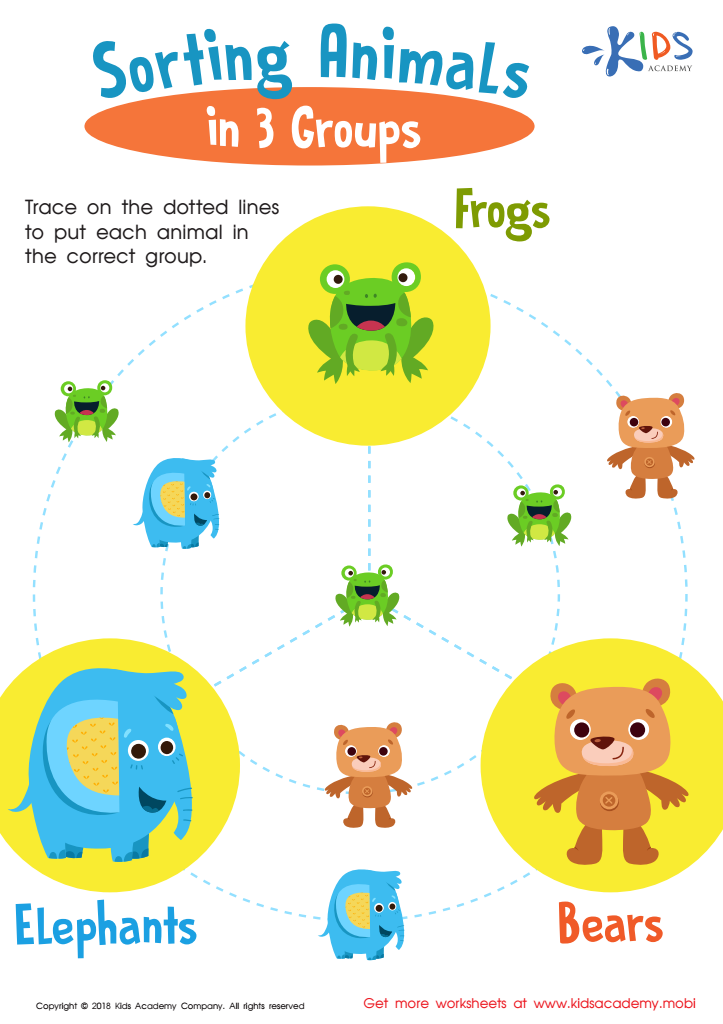
Sorting Animals in 3 Groups Worksheet
Let your kids practice and build skills for future Venn Diagrams with this PDF worksheet. They'll trace lines to match and group animals, and learn the differences and similarities of animals by categorizing with pictures and words. Plus, it's a great way to develop fine motor skills.
 Assign to My Students
Sorting Animals in 3 Groups Worksheet
Worksheet
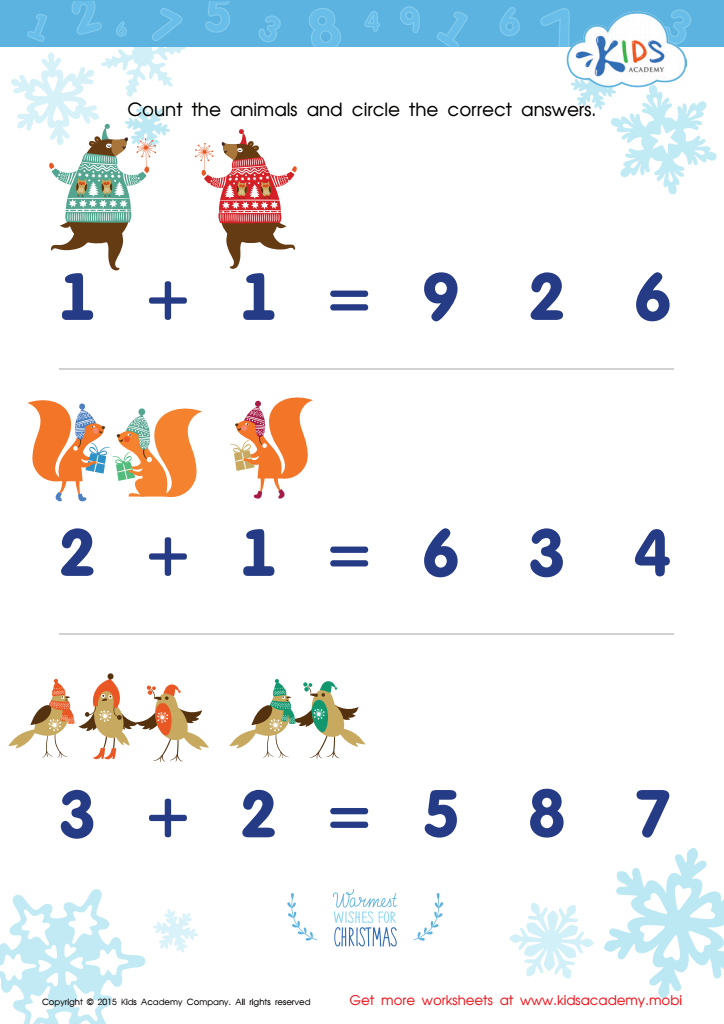
Count Funny Animals Worksheet
Get your kid in the Christmas spirit with this festive addition worksheet! They'll have fun counting the colorful animals and writing in the numbers. Our graphic layout makes it easy for them to visualize and solve the task. Print it out and help your kid keep their math skills sharp this winter with Kids Academy!
Count Funny Animals Worksheet
Worksheet
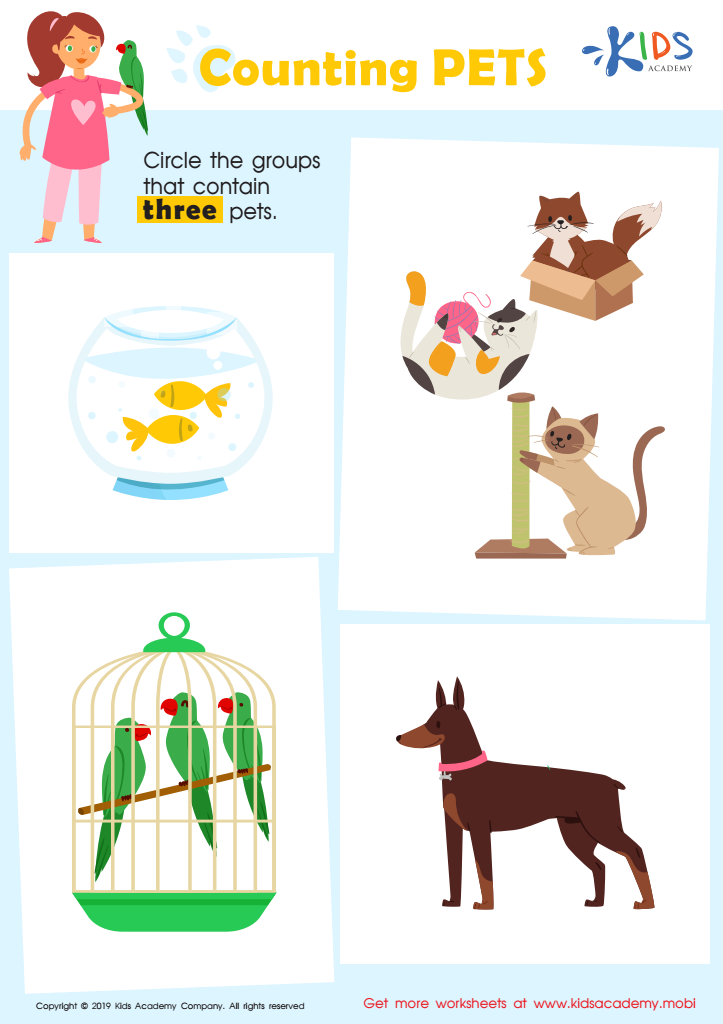
Counting Pets Worksheet
Kids adore their pets, making this free pet counting worksheet the perfect way to combine something they love with math skills. They'll count the number of pets, circle the pictures with three pets, and use one-to-one picture representation to help. This exercise will cultivate their learning and reinforce their love of animals!
Counting Pets Worksheet
Worksheet
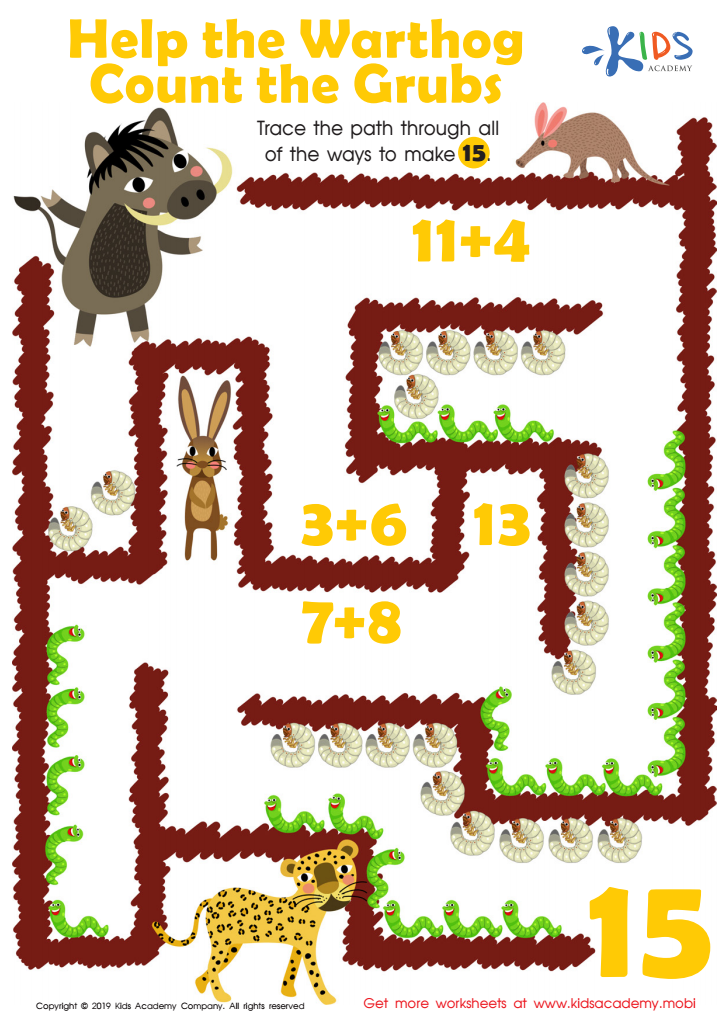
Help the Warthog Count the Grubs Worksheet
Test your kids' knowledge of wild animals. Ask them to name some they know, then have them identify the animals on this worksheet. If they can't, take the time to tell them the names. Finally, trace the warthog's path through the maze by solving the equations and going through paths that make 15.
Help the Warthog Count the Grubs Worksheet
Worksheet
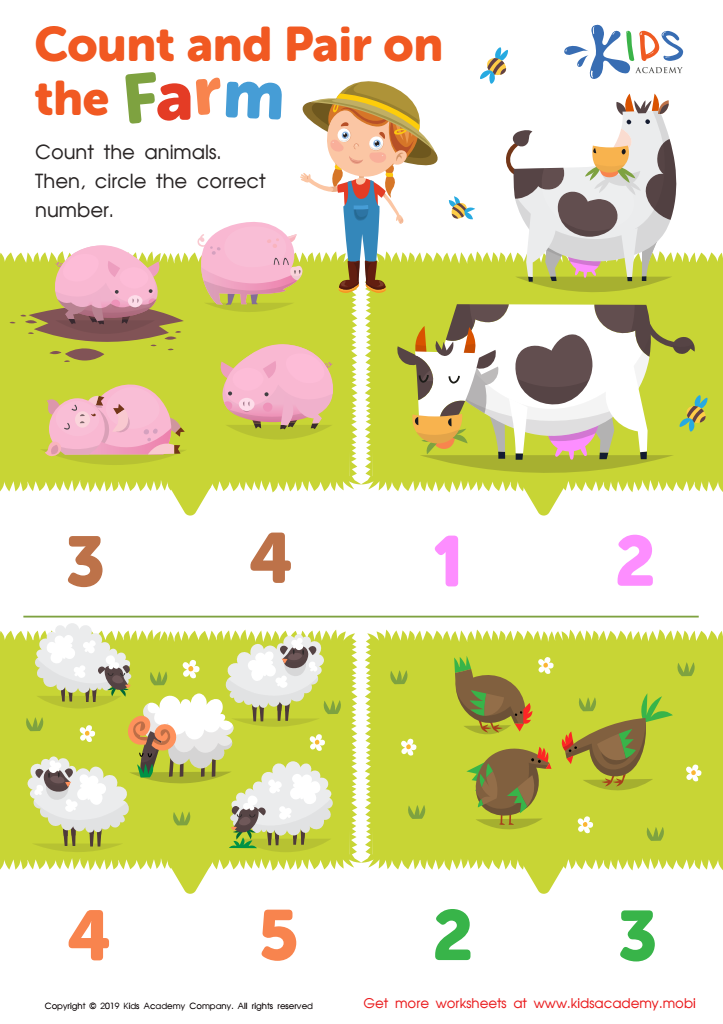
Count and Pair on the Farm Worksheet
Farms are essential to our society: they grow food and crops, and raise animals for us to use. Kids can have a great time at a farm, engaging in activities like identifying animals, counting them, and circling the correct number. On this worksheet, ask your kids to try all three!
Count and Pair on the Farm Worksheet
Worksheet
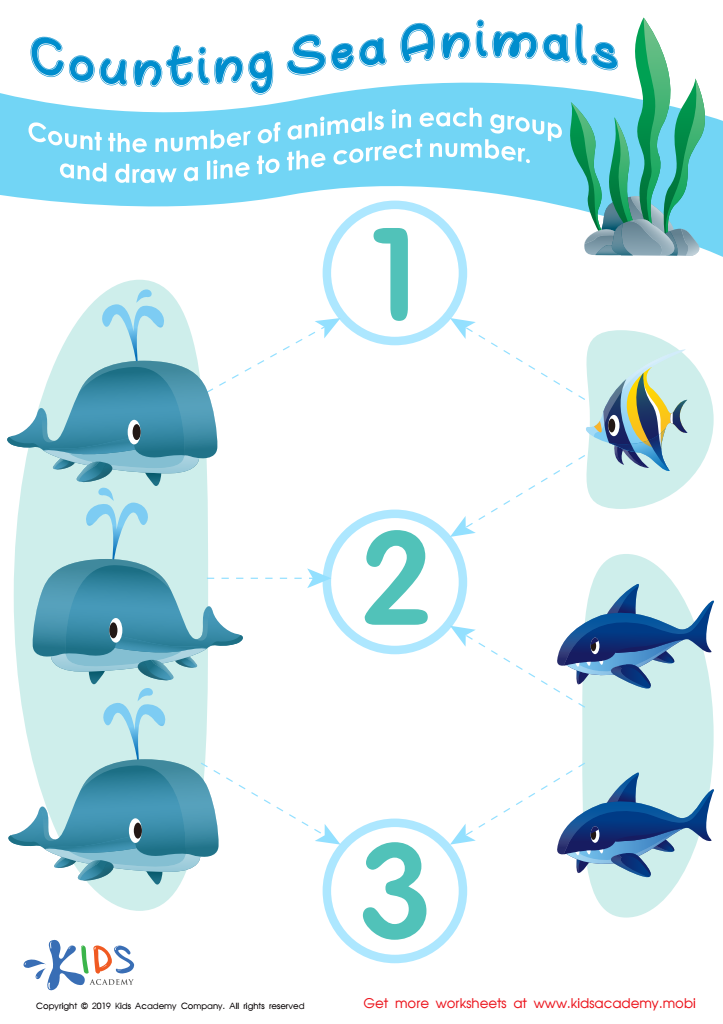
Counting Sea Animals Worksheet
Kids adore sea creatures for their captivating, unknown nature. Let them use this free worksheet to practice counting, where they match numbers to groups of animals. Through traceable lines, they'll easily connect numbers to sea creatures and learn math with vibrant, underwater fun!
Counting Sea Animals Worksheet
Worksheet
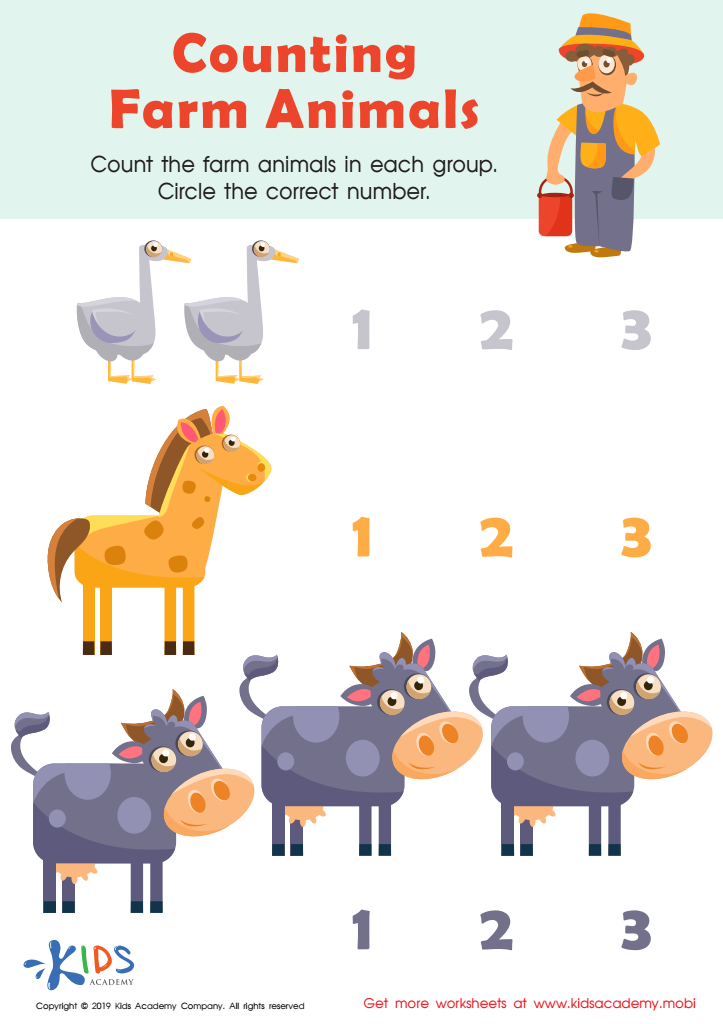
Counting Farm Animals Worksheet
Kids love farms! That's why this free farm animals counting worksheet is great for building number sense and counting skills. Have your young mathematician count the pictures, then circle the corresponding number. It's a fun and meaningful way to practice counting.
Counting Farm Animals Worksheet
Worksheet
Join Kids Academy for Free
Who is primarily going to use this learning content?







.jpg)
Animal recognition and basic math skills are foundational elements in early childhood education that significantly contribute to a child's cognitive and socio-emotional development. Parents and teachers should prioritize these areas in kindergarten for several compelling reasons.
Firstly, animal recognition fosters a connection with the natural world, promoting curiosity and empathy towards living creatures. By learning to identify and understand animals, children develop observational skills, increasing their cognitive abilities and enhancing their appreciation for biodiversity and the environment.
Incorporating math through animal themes makes early arithmetic more engaging. Children could count the number of spots on a ladybug, compare sizes of different animals, or sort them into categories (big and small, land and water). This contextual learning helps solidify abstract math concepts by grounding them in real-world scenarios that children find interesting and relatable.
Furthermore, these activities support critical thinking and problem-solving skills. For pre-readers, visual and kinesthetic learning that involves animals can bridge the gap to higher-order math, encouraging pattern recognition, sequencing, and even beginning notions of addition and subtraction.
Overall, integrating animal recognition with early math leverages young children's natural interests, promoting a love for learning while laying the groundwork for future academic success. Teachers and parents should therefore actively engage in these integrated educational practices to nurture well-rounded, curious, and capable young learners.








