Categorization skills Normal Kindergarten Science Worksheets
4 filtered results
Difficulty Level
Grade
Age
-
From - To
Subject
Activity
Standards
Discover our engaging Categorization Skills worksheets designed specifically for Kindergarten science learning! These printable resources help young learners develop essential skills by sorting and grouping objects based on various attributes. Each worksheet is thoughtfully crafted to encourage exploration and critical thinking, allowing students to categorize animals, plants, and everyday items. Ideal for teachers and parents alike, these worksheets facilitate hands-on learning experiences while reinforcing core concepts in science. With colorful visuals and child-friendly designs, our Categorization Skills worksheets not only make learning fun but also enhance students’ understanding of the world around them. Start your child's adventurous learning journey today!
Favorites
With answer key
Interactive
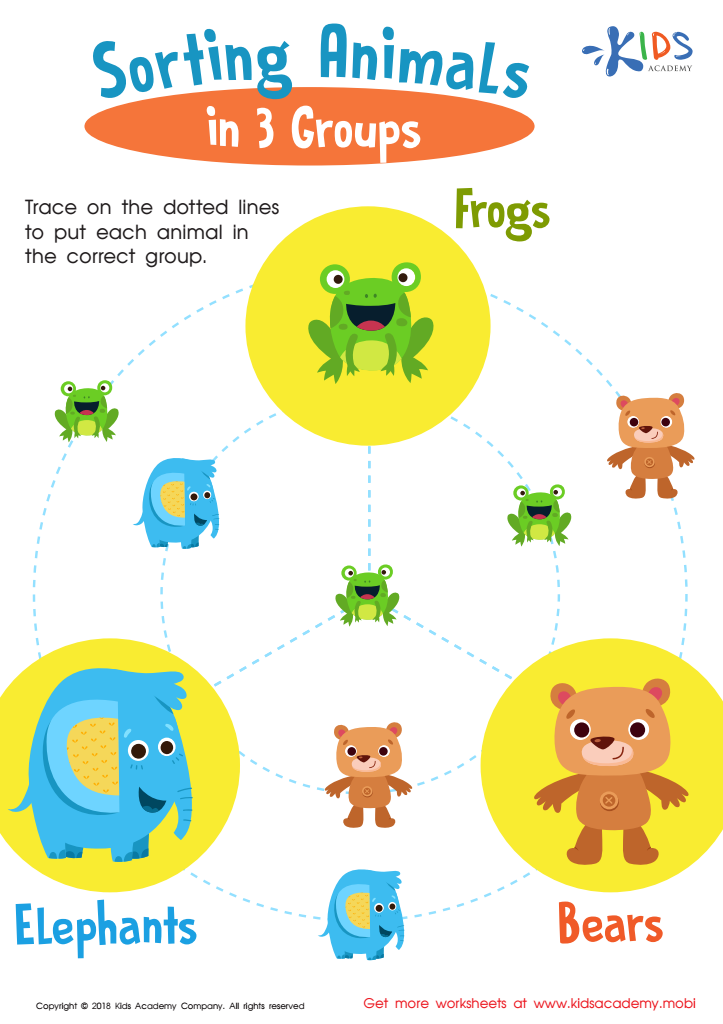
Sorting Animals in 3 Groups Worksheet
Let your kids practice and build skills for future Venn Diagrams with this PDF worksheet. They'll trace lines to match and group animals, and learn the differences and similarities of animals by categorizing with pictures and words. Plus, it's a great way to develop fine motor skills.
 Assign to My Students
Sorting Animals in 3 Groups Worksheet
Worksheet
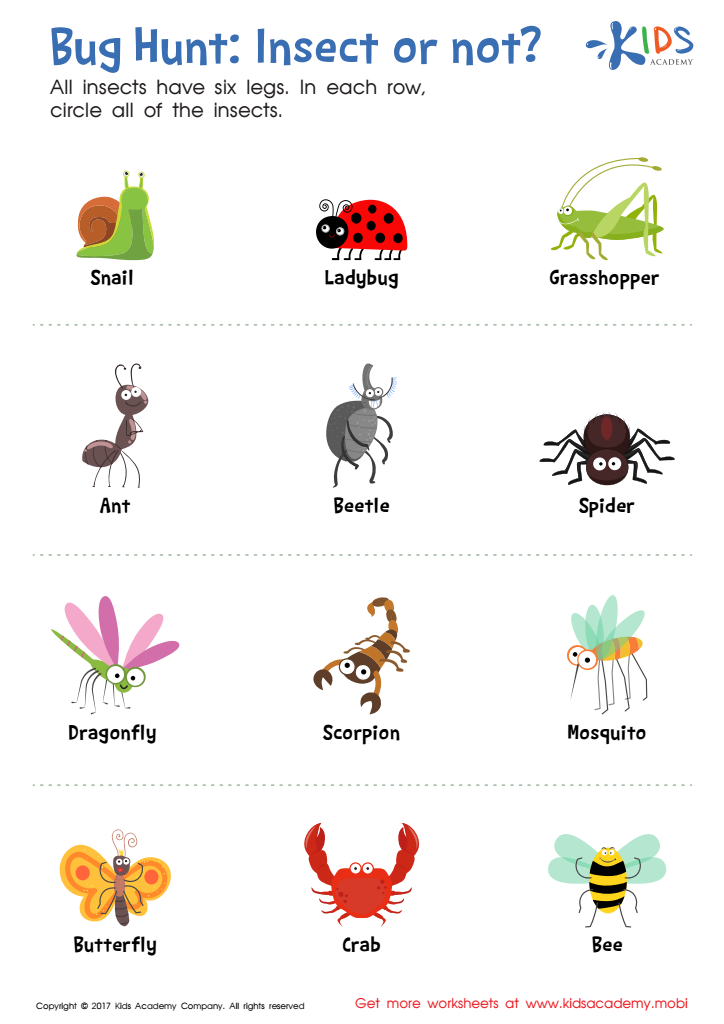
Insect or Not? Worksheet
Worksheet
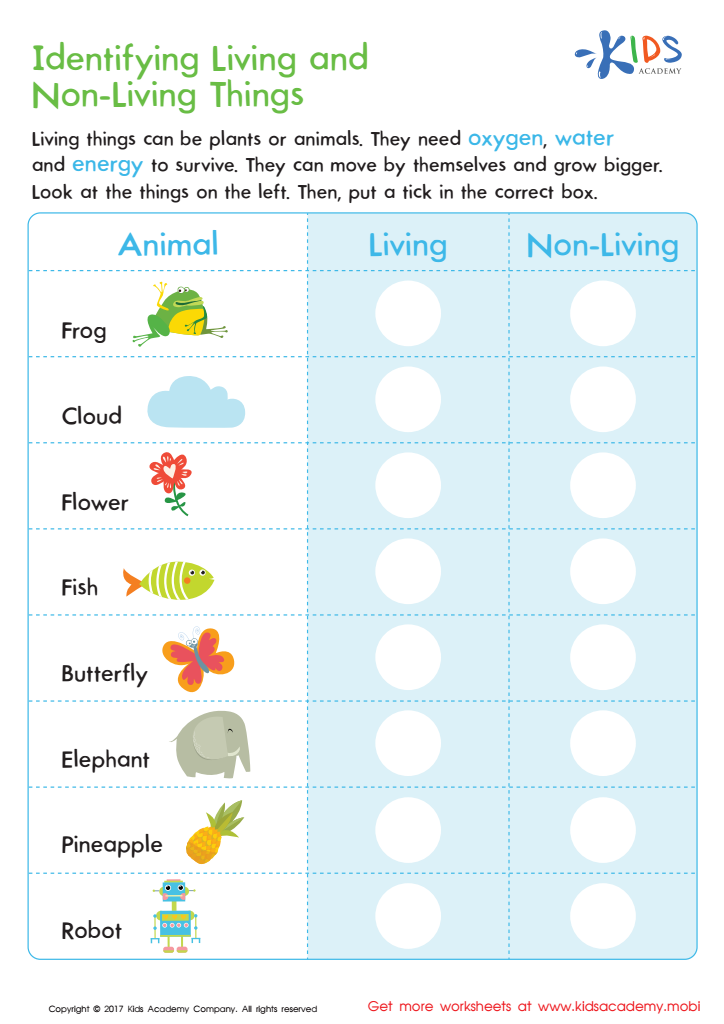
Identifying Living or Non–living Worksheet
Help your child learn to sort and categorize in a new way! Teach them to classify things as living or non-living using this worksheet. It's the perfect way to build their scientific understanding, and to have some learning fun! Print this worksheet and watch them discover the world of science!
Identifying Living or Non–living Worksheet
Worksheet
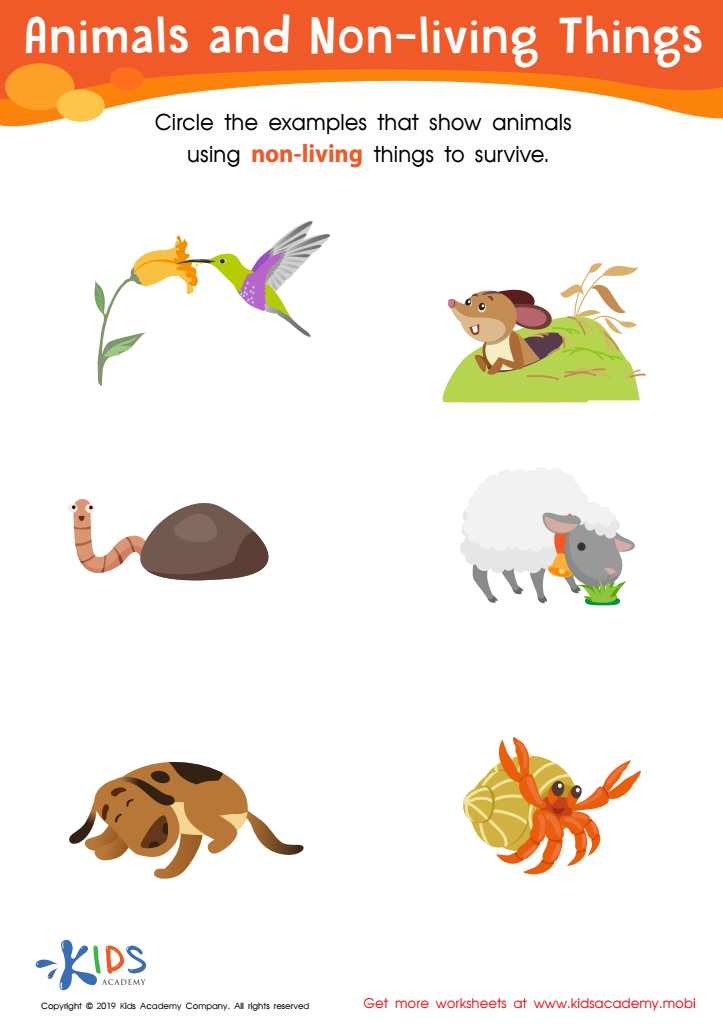
Animals and Non-Living Things Worksheet
People and animals both require more than food to survive. We need shelter, clothing and water, while animals use non-living things like rocks and trees. Ask your kids what else is necessary to survive - then have them identify the objects in the worksheet and circle the examples of animals using non-living things.
Animals and Non-Living Things Worksheet
Worksheet
Join Kids Academy for Free
Who is primarily going to use this learning content?





.jpg)
%20(1).jpg)
Categorization skills are fundamental for young learners in a Kindergarten science setting, as they lay the groundwork for critical thinking and organizational abilities. By teaching children to categorize objects based on shared characteristics—like color, size, shape, or function—parents and teachers can enhance students’ understanding of the natural world. This skill helps them make sense of their environment and promotes inquiry-based learning, as children learn to ask questions, recognize similarities and differences, and understand the relationships between objects.
Moreover, categorization fosters cognitive development; as children sort and group items, they engage in problem-solving processes that enhance their reasoning skills. These skills also support language development, as children acquire new vocabulary related to classification (e.g., "mammals," "fruits," "textures").
Additionally, early exposure to categorization aids in later academic achievement. Students with strong skills in organizing and categorizing information are better equipped to tackle more complex subjects in science and beyond. Therefore, cultivating these skills early in a nurturing classroom environment empowers children, encouraging curiosity, exploration, and a lasting desire for learning. Ultimately, prioritizing categorization skills in Kindergarten science benefits both personal and academic growth, setting a solid foundation for future success.