Sound recognition Normal Preschool Alphabet Worksheets
3 filtered results
Difficulty Level
Grade
Age
-
From - To
Subject
Activity
Standards
Discover our engaging Sound Recognition Normal Preschool Alphabet Worksheets, designed to enhance early literacy skills in young learners. These worksheets focus on helping preschoolers identify and connect sounds with corresponding letters, creating a solid foundation for reading and writing. Each activity is crafted to make learning fun, featuring vibrant illustrations and interactive exercises that promote active participation. Perfect for parents and educators alike, our resources cultivate a love for learning while building essential phonemic awareness. Explore our collection today to inspire curiosity and improve sound recognition skills in your preschool classroom or at home!
Favorites
With answer key
Interactive
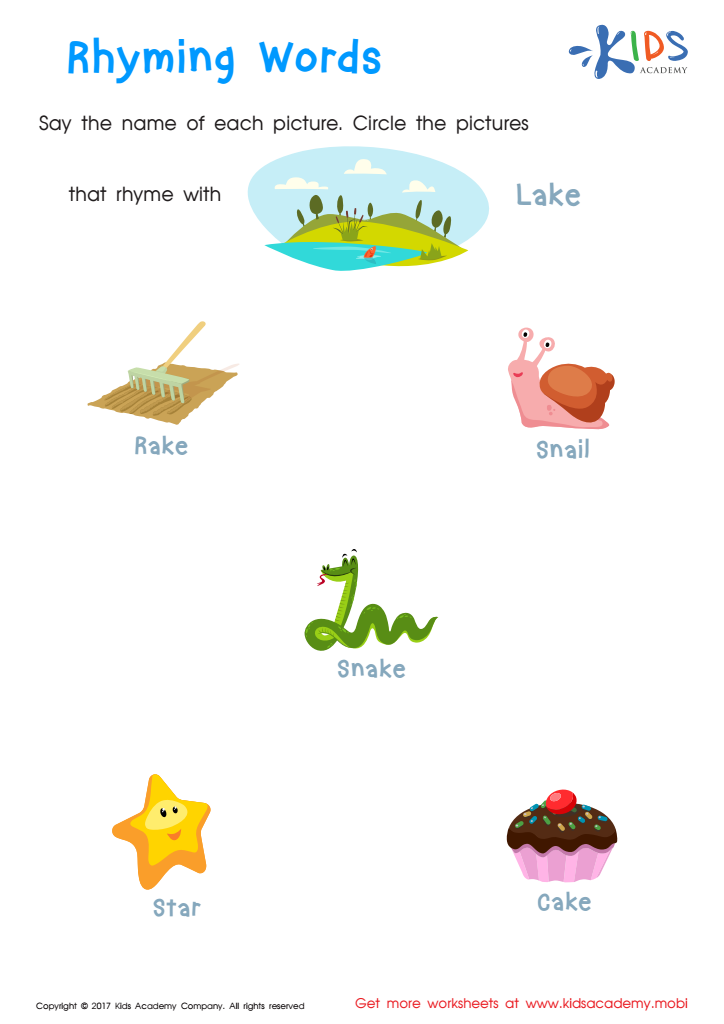
Rhyming Words Rhyming Worksheet
This worksheet is great for honing pre-reading skills. It helps kids make connections between pictures and written words, use problem-solving, and recognize sounds and words that rhyme. Have fun exploring rhyming words with your child, and they'll be rhyming in no time!
Rhyming Words Rhyming Worksheet
Worksheet

Long and Short U Worksheet
Revised: Spice up your lesson on long and short vowels with this fun printout! Kids read the words "tube" and "tub," then reinforce the sound by coloring in the words and pictures. It's a great way to make phonics class enjoyable!
Download (PDF)
 Assign to My Students
Assign to My Students
Long and Short U Worksheet
Worksheet
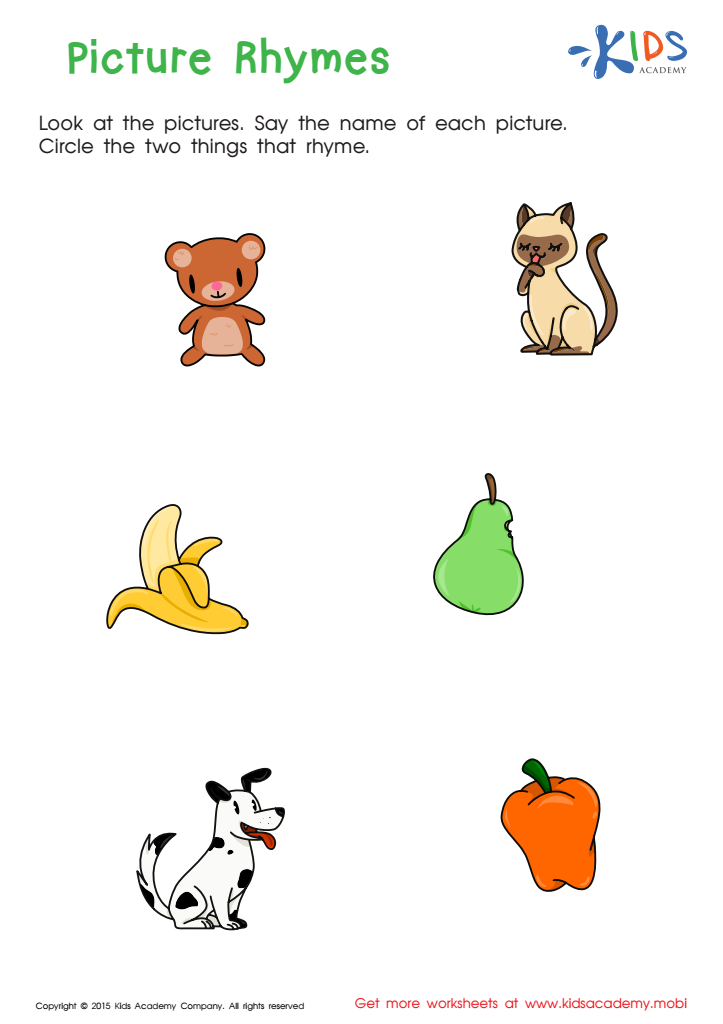
First Words: Picture Rhymes Worksheet
Rhyming helps kids understand language, read and write better. This printable worksheet boosts problem-solving and cognitive skills with vibrant pictures. It teaches kids to identify words, recognize rhymes, complete mental tasks and write words. An extra activity: show them how rhyming words share some of the same letters.
First Words: Picture Rhymes Worksheet
Worksheet
Join Kids Academy for Free
Who is primarily going to use this learning content?





.jpg)


Sound recognition is a fundamental skill in early childhood education, particularly within the preschool context. Understanding the sounds associated with letters—also known as phonemic awareness—serves as a building block for reading. When children learn to recognize sounds linked to letters, they become equipped to decode words, facilitating effective reading and writing skills in later years.
Parents and teachers should care about sound recognition because it directly impacts a child’s literacy development. Early exposure to phonemic awareness activities fosters confidence and a love for reading, setting the stage for academic success. Additionally, children who grasp sound recognition are more likely to excel in spelling and vocabulary, essential components of language development.
Furthermore, sound recognition also boosts cognitive skills, including memory and auditory processing. By supporting youngsters’ understanding of letter sounds, parents and teachers better prepare them to navigate the increasingly complex literacy demands of later schooling. As partners in a child's education, both parents and teachers play a crucial role in encouraging activities, such as rhymes or sound games, reinforcing the importance of sound recognition in a fun and engaging manner. Ultimately, fostering this foundational skill is key to helping children achieve their fullest potential in learning.