Upper & Lowercase Letters worksheets activities for Ages 4-6
2 filtered results
-
From - To
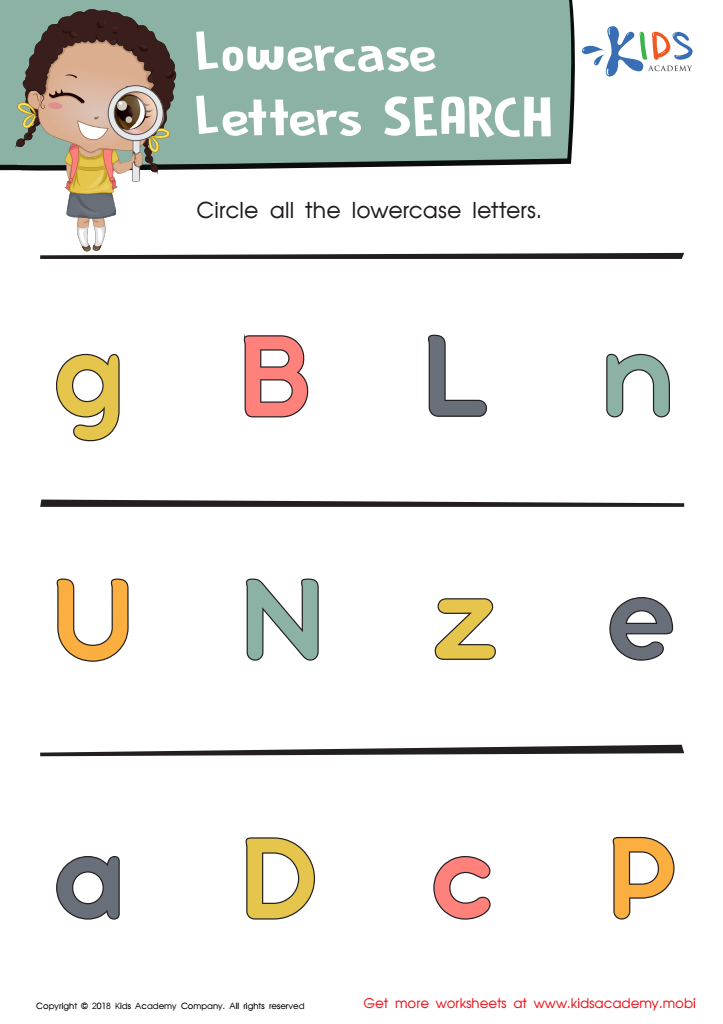
Lowercase Letters Search: Assessment Worksheet
 Assign to My Students
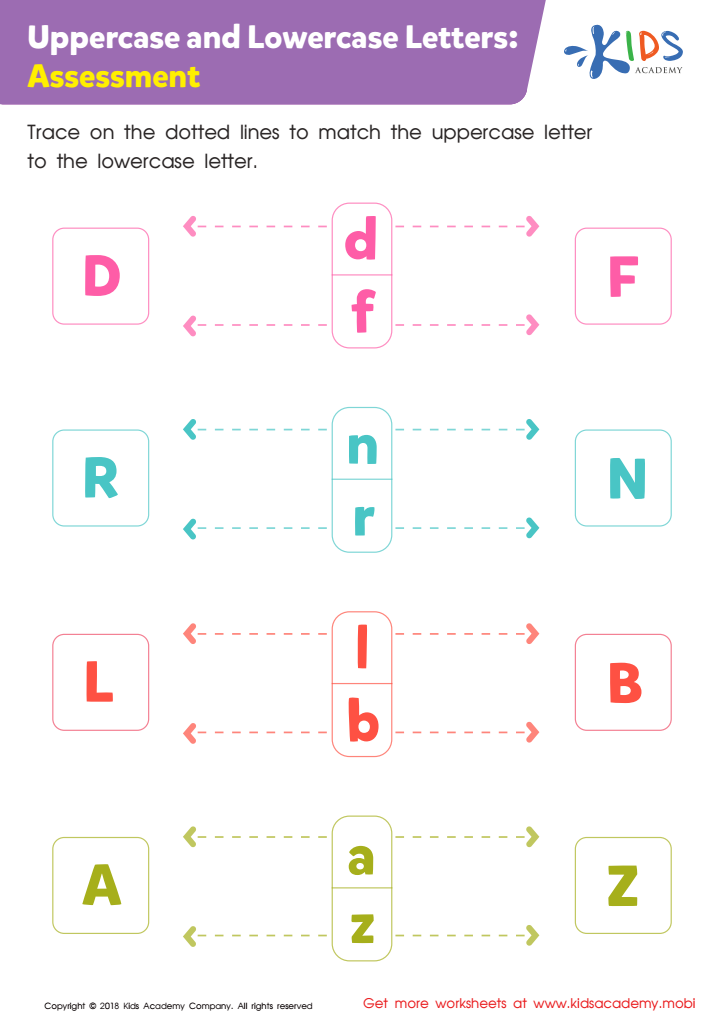
Uppercase and Lowercase Letters: Assessment Worksheet








Worksheets activities centered on Upper & Lowercase Letters offer an invaluable tool in the foundational stages of literacy and language learning. These educational exercises are not just mere paperwork; they are strategically designed to enhance a child's understanding and recognition of the alphabet in both its upper and lower case forms. Engaging in Upper & Lowercase Letters worksheets activities fosters a fundamental skill set that is crucial for reading and writing fluency, setting the stage for a lifetime of effective communication and learning.
The importance of mastering Upper & Lowercase Letters through worksheets activities cannot be overstated. For starters, these exercises promote visual discrimination—a crucial skill that enables children to distinguish between letters that look similar but have different orientations, such as 'b' and 'd' or 'm' and 'w'. This skill is essential not only for reading but also for writing, as it aids in the correct formation of letters and ensures legibility.
Furthermore, Upper & Lowercase Letters worksheets activities help reinforce letter recognition, a foundational block of phonemic awareness. By repeatedly interacting with both the uppercase and lowercase forms of letters, children become more attuned to the alphabet's dual nature, which is pivotal when decoding words and sentences. This familiarity also aids in the development of vocabulary and spelling skills, as learners can easily connect letters to sounds and words.
Moreover, these worksheets are designed to cater to various learning styles. Whether a child learns best through tracing, matching, coloring, or identifying letters in different fonts and contexts, Upper & Lowercase Letters worksheets activities offer a multifaceted approach to learning. This versatility ensures that every child’s learning needs and preferences are met, making the journey toward literacy more accessible and enjoyable.
In conclusion, Upper & Lowercase Letters worksheets activities are not just educational tools but are foundational pillars that support a child's literacy journey. They build crucial skills such as letter recognition, visual discrimination, and phonemic awareness, making them indispensable in the early learning curriculum. Through these engaging and diverse activities, children are better prepared to embark on a successful literacy journey, equipped with the skills necessary for reading, writing, and beyond.








