Rhyming worksheets activities for 6-Year-Olds
1 filtered results
-
From - To
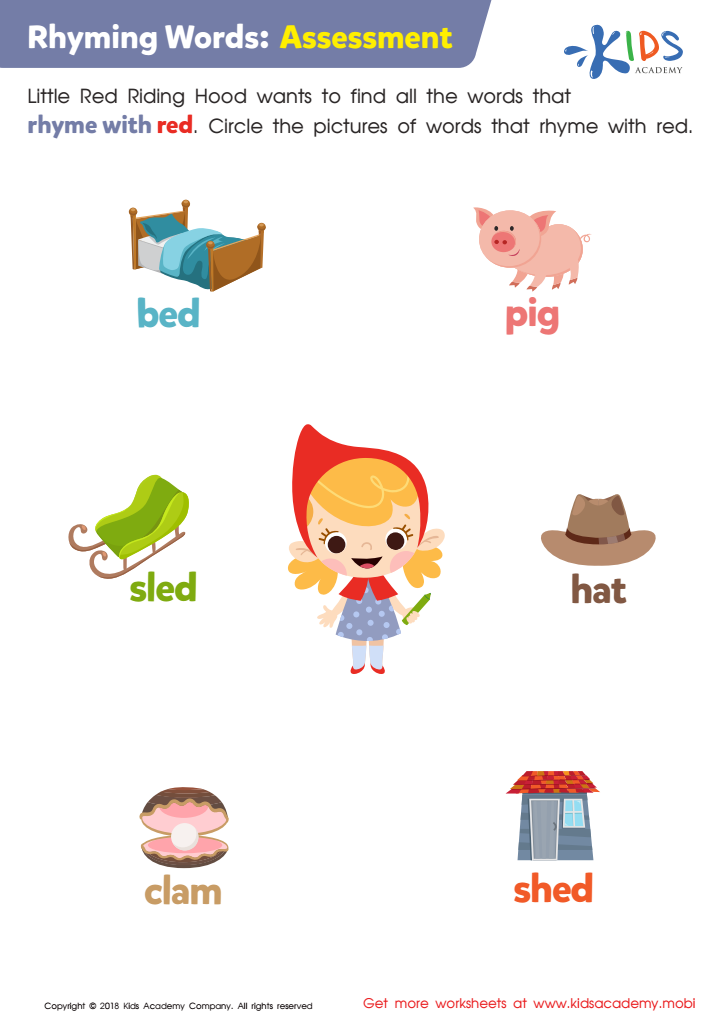
Rhyming Words: Assessment Worksheet
 Assign to My Students






Rhyming worksheets activities are not just fun-filled exercises; they play a pivotal role in enhancing various aspects of learning, especially in early childhood and primary education. These activities are instrumental in developing phonemic awareness, an essential component of reading skills. By engaging in rhyming worksheets activities, children learn to identify patterns in sounds, a foundational skill that significantly aids in decoding words during reading. This understanding of how sounds correspond to written symbols is crucial for literacy development.
Moreover, rhyming worksheets activities bolster vocabulary growth. As children explore rhymes, they are introduced to a plethora of words, many of which might be new to their lexicon. This exposure not only expands their vocabulary but also improves their understanding of word meanings and usages in different contexts. The repetitive nature of rhymes makes it easier for children to memorize and recall new words, thereby strengthening their language skills.
Another significant benefit of rhyming worksheets activities is their ability to enhance cognitive skills, including memory, concentration, and analytical thinking. When children engage with rhymes, they are required to focus, remember the sounds, and think critically to find matching words that fit the rhyme scheme. This exercise of the brain muscles enhances overall cognitive development and problem-solving skills.
Additionally, rhyming worksheets activities foster creativity and imagination. As children experiment with different words to make them rhyme, they tap into their creative potentials, often coming up with unique and imaginative ideas. This creativity is not just limited to rhyming but also extends to inventing stories or creating artworks inspired by the rhymes they work with.
In conclusion, rhyming worksheets activities are much more than simple learning tools; they are gateways to developing a wide array of skills in young learners. From phonemic awareness and vocabulary expansion to cognitive development and creativity, the benefits of engaging in these activities are manifold, making them an invaluable resource in the educational journey of children.








