Letter X Worksheets for Ages 4-6
5 filtered results
Difficulty Level
Grade
Age
-
From - To
Subject
Activity
Standards
Introducing our enchanting collection of Letter X worksheets, expertly crafted for children ages 4-6. Dive into a world where learning meets fun, with activities designed to captivate young minds and foster a love for literacy. Our worksheets are tailored to help little learners master the Letter X through a variety of engaging exercises, including tracing, identification, and matching games. Perfect for both classroom and at-home learning, this collection promises to enrich your child's educational journey. Unlock the magic of the alphabet for your preschooler or kindergartener and watch as they explore the wonders of the Letter X with joy and confidence.
Favorites
With answer key
Interactive
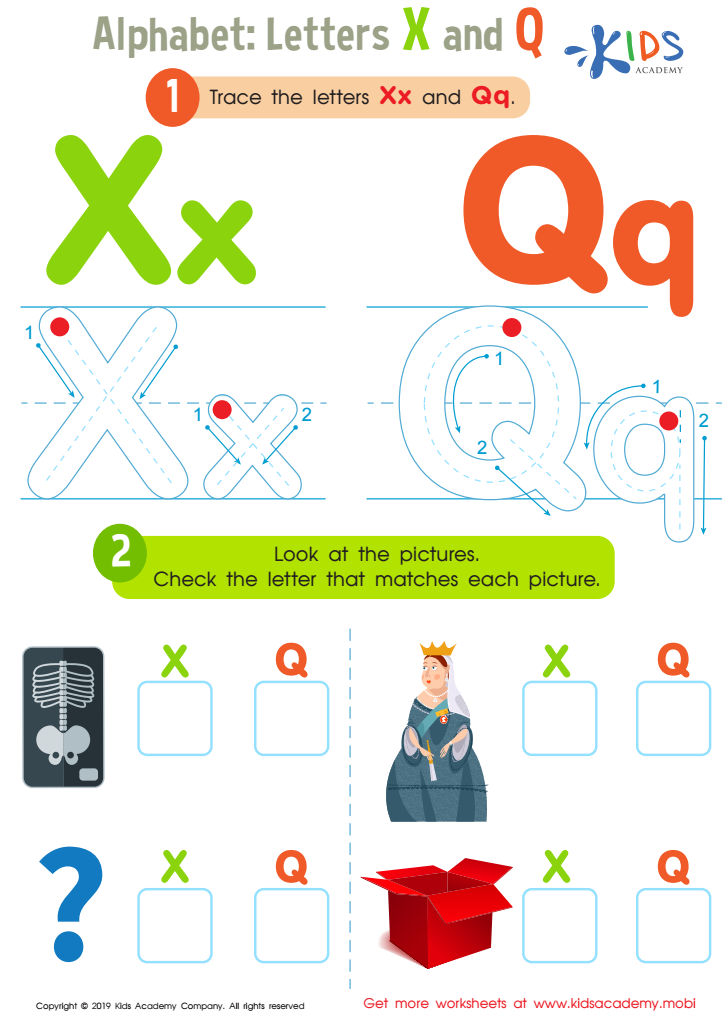
Letters X and Q Tracing Worksheet
Do you want your students to improve writing and letter recognition? This worksheet is a great place to start! Kids can trace the letters «X» and «Q» and identify pictures that match each letter. With a little encouragement, they'll do a great job!
 Assign to My Students
Letters X and Q Tracing Worksheet
Worksheet
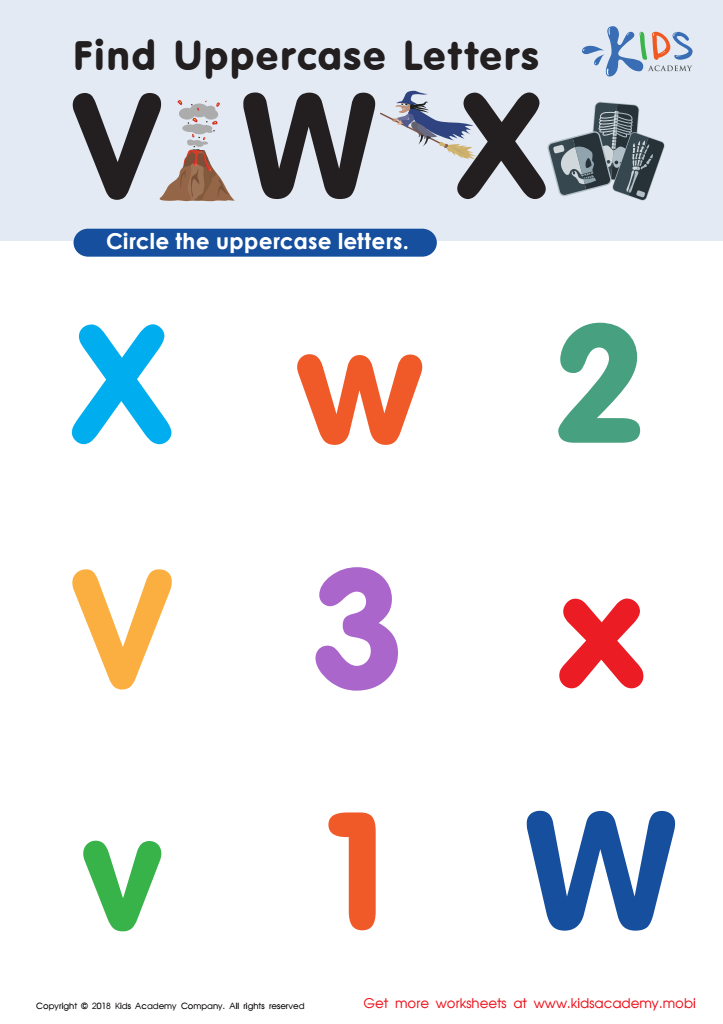
Find Uppercase Letters V, W, X Worksheet
Ask your kids if they can spot the uppercase letters V, W and X hidden in the lowercase letters and numbers, then have them circle them. After that, ask them to give you examples of words beginning with those letters. This worksheet will help them get started.
Find Uppercase Letters V, W, X Worksheet
Worksheet
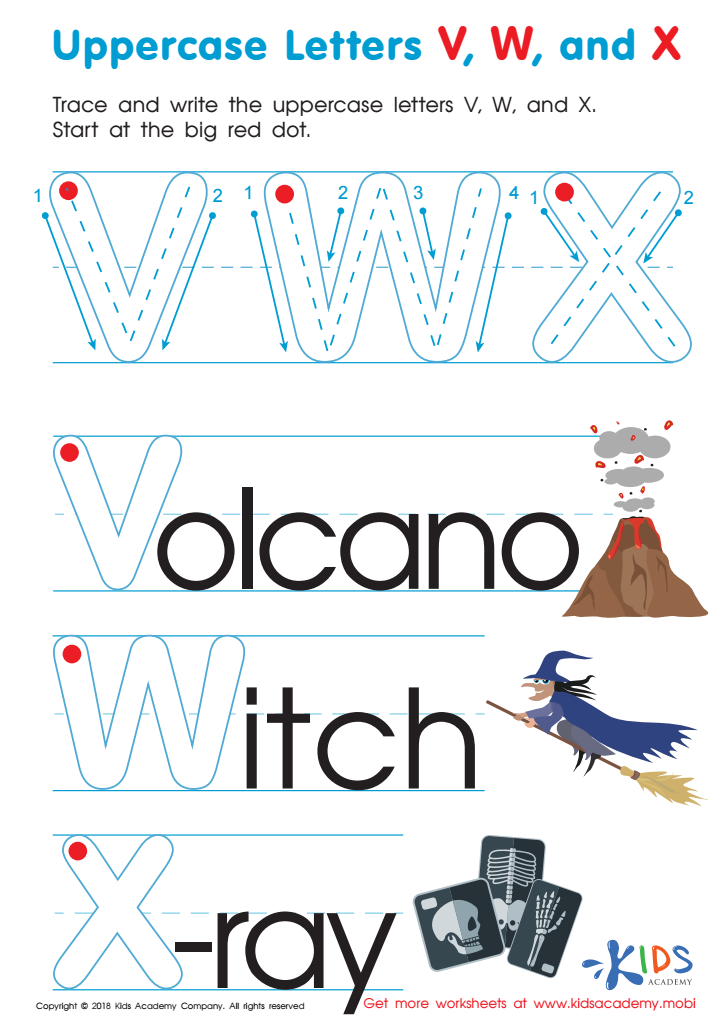
Uppercase Letters V, W, and X Worksheet
This worksheet is perfect for kids struggling to write uppercase letters V, W, and X. Warm up their brains first by having them name words starting with these letters. Then, help them trace and write each letter from the big red dot. With your assistance, they will quickly sharpen their writing skills.
Uppercase Letters V, W, and X Worksheet
Worksheet
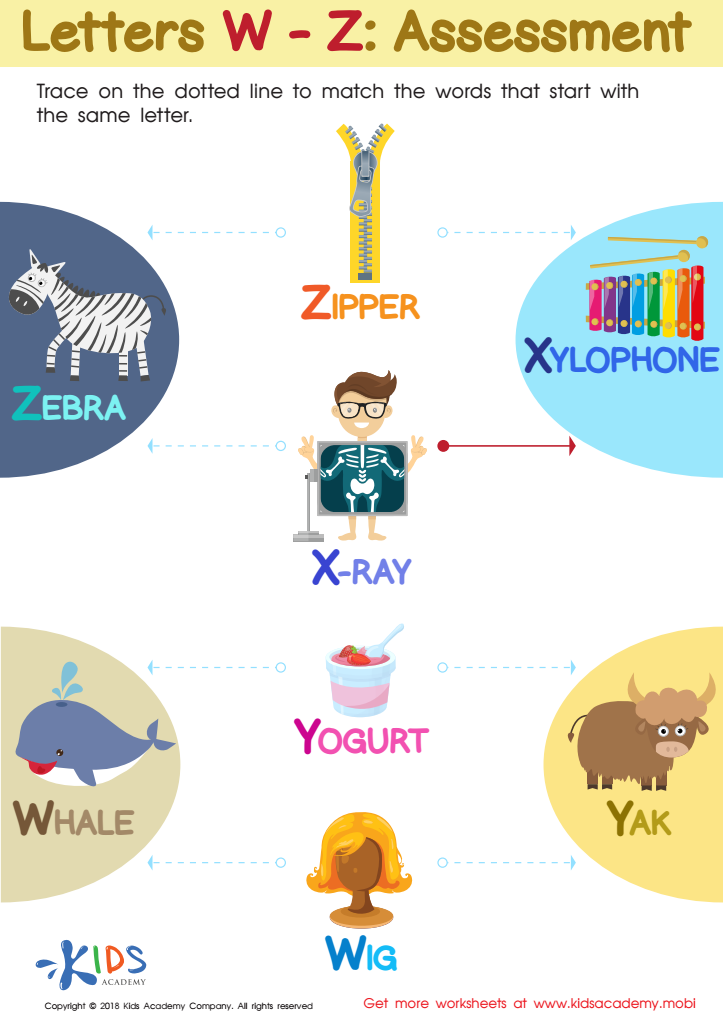
Letters W–Z Tracing Worksheet
Kids will draw a line between words that start with the same letter, like 'Zipper' and 'Zebra', or 'Xylophone'. This worksheet strengthens their reading and letter W-Z recognition skills. Children can sound out each word to figure out the correct match, boosting their confidence in letter sounds.
Letters W–Z Tracing Worksheet
Worksheet
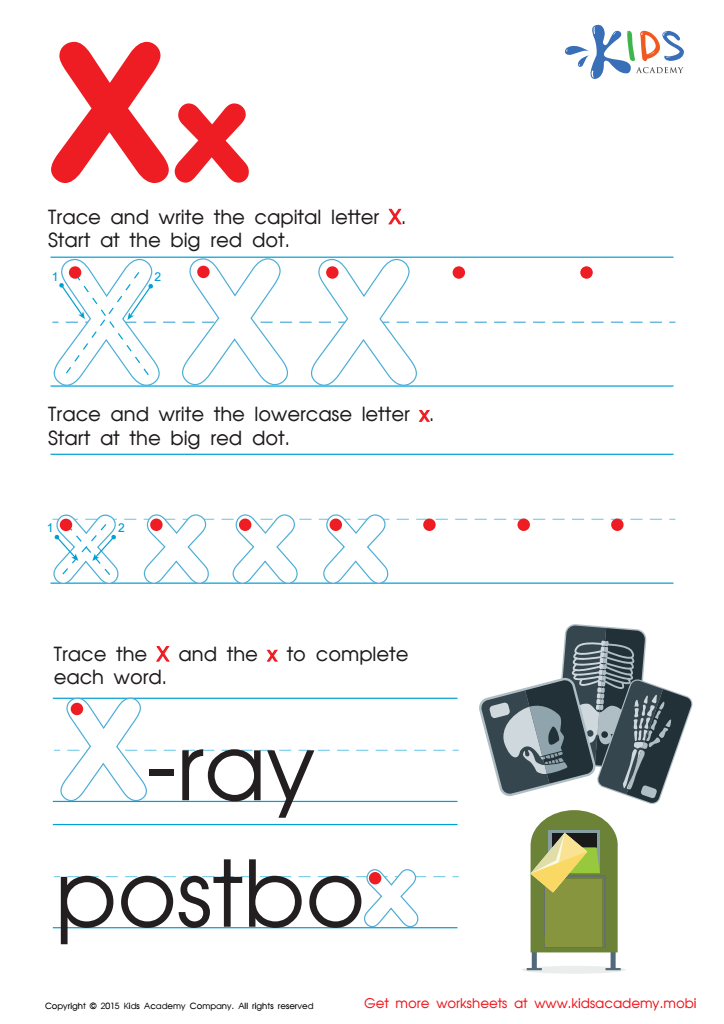
Letter X Tracing Page
Trace the uppercase letter "X" to learn, then write it yourself and practice. Then do the same with the lowercase "x" before completing the words "X-ray" and "postbox". Enjoy our alphabet printables!
Letter X Tracing Page
Worksheet
Join Kids Academy for Free
Who is primarily going to use this learning content?




Letter X worksheets specifically designed for ages 4-6 offer a multitude of benefits for early learners. At this critical stage of development, children are rapidly expanding their vocabulary and beginning to understand the complex world of letters and sounds. The Letter X, though one of the less frequently used letters in the English language, presents a unique learning opportunity for young minds.
Firstly, these worksheets introduce children to the intriguing shape and sound of the Letter X, piquing their curiosity and encouraging a deeper exploration of the alphabet. For ages 4-6, engaging with this uncommon letter through a variety of fun and interactive activities helps to solidify their understanding and retention.
Moreover, Letter X worksheets are crafted to enhance fine motor skills. Tracing, coloring, and matching exercises associated with the Letter X demand precision and control, aiding in the development of hand-eye coordination and pencil grip. These foundational skills are crucial for future writing success.
Additionally, these targeted worksheets support phonemic awareness. By isolating the Letter X, children learn to identify its unique sound within words, a skill essential for reading fluency. This early phonics practice sets the stage for confident readers and spellers, making Letter X worksheets an invaluable tool for educational advancement in children aged 4-6.